Como’s rise has brought the club into a new conversation in Italian football: not simply whether the Hartono family can keep spending, but whether their ownership can turn a lakeside club from a sequence of promotions into a durable European institution.
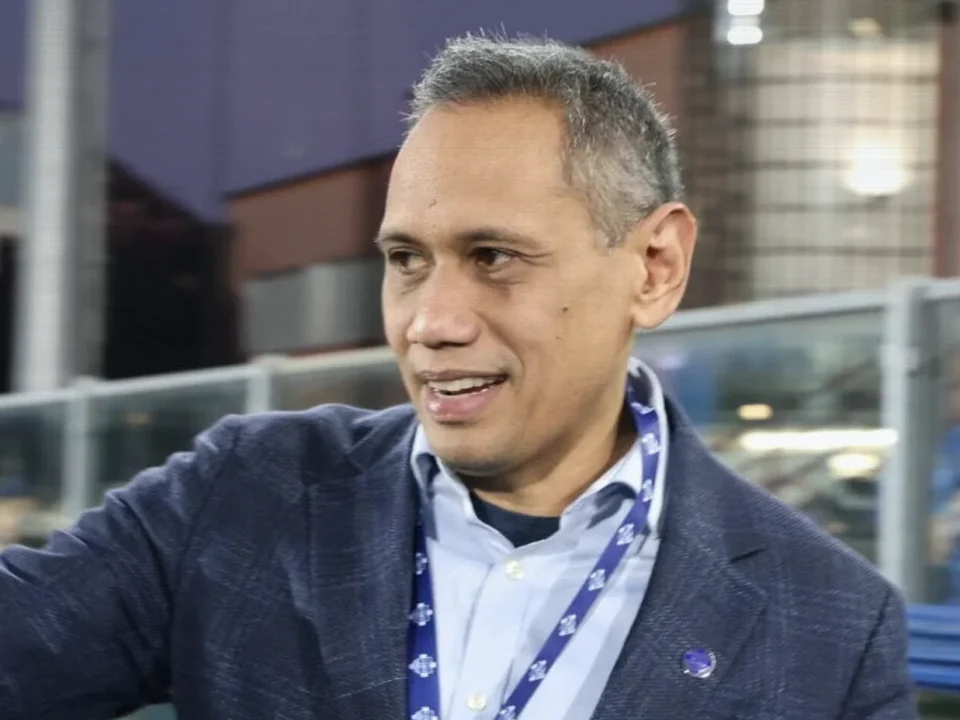
Mirwan Suwarso, the president and public face of the Indonesian ownership, has set out an answer built less around promises of trophies than around commercial growth, infrastructure, youth development and a club designed to withstand the cycles that have damaged Como in the past. The side from a city of around 80,000 people has reached the Champions League three years earlier than anticipated, after more than €400 million spent on the transfer market.
From an Indonesian youth project to a European campaign
- The Hartono family initially bought Como for a project connected to Indonesia’s youth national team, with the club’s proximity to Milan useful for documentary filming.
- Successive promotions made that original plan unworkable, forcing the owners to reassess their investment and develop Como as the central project.
- With each promotion came major rebuilding. Suwarso said an established team may replace only three or four players, whereas Como often needed nine or 10 new arrivals at a time.
- Champions League qualification then arrived ahead of schedule and increased the immediate need to strengthen the squad.
- Before proceeding, Como held discussions with UEFA to ensure its plans were developed within Financial Fair Play regulations.
Suwarso said the club is not concerned with declaring a Scudetto target. “You do not promise a title,” he said, arguing instead that a club can create the conditions needed to remain near the top. His central principle is that investment must establish sustainability rather than merely finance a short-lived push.
He compared Como’s early spending to the long investment periods that helped companies such as Uber and Netflix establish themselves. The transfer strategy, he said, has been directed towards younger players capable of improving and increasing in value, although age alone will not be an automatic selection criterion. Every signing must suit Como’s football.
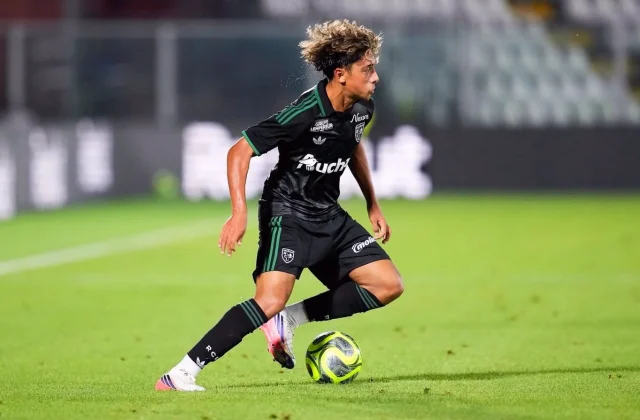
That approach is visible in a squad with an average age of 25, including Ramón, Máximo Perrone, Lucas Da Cunha, Martin Baturina, Assane Diao and Tasos Douvikas. Suwarso also highlighted Nico Paz’s decision to choose Como rather than return to Real Madrid in the summer, describing it as both important and an obligation on the club to provide the right environment for the midfielder’s development.
A business beyond matchday
The ownership’s argument is that a club of Como’s scale cannot support European ambitions through conventional football income alone. Only 14% of its commercial revenue comes from Como and its province, while shirts are being sold in London, Paris, Milan and New York.
Lake Como’s international appeal has become central to the strategy. The club has sought to make a Serie A visit part of a broader offer involving hospitality, travel and food experiences, while attracting celebrity guests to its waterfront stadium. Suwarso described the objective as a wider sporting-business platform, using the lake’s identity and global pull to expand merchandising, tourism and hospitality revenues.
Como is in talks with more than 24 organisations across football, tennis and basketball. The club does not intend to acquire other teams, however. Suwarso rejected a multi-club ownership model of the type associated with the Friedkin Group or City Football Group.
Instead, Como wants to develop services internally and later provide them to outside organisations. Retail was cited as an example: a club could use Como’s expertise to develop products and reach consumers without becoming part of the same ownership structure.
“Our focus will always be Como,” Suwarso said. “We are developing multi-club services, not a multi-club ownership model.”
Identity, academy and the work around the club
The commercial expansion has raised a natural question in a city accustomed to wealthy visitors arriving on yachts and departing again: can the local identity survive the global ambition? Suwarso’s view is that the identity of Como is not being replaced but used as the base for growth. As the business expands, he believes the city and its character should become more recognisable rather than less so.
The club has also developed initiatives in the local community, covering inclusion for young people with disabilities, support for homeless people, action against gender-based violence and research into childhood leukaemia.
At academy level, Como is attempting to build from the ground up through culture and facilities. Osian Roberts was appointed because of his work in Wales and Morocco, with the aim of developing players and coaches while creating a consistent methodology throughout the youth system. Bringing the academy closer to the first team is intended to offer clearer progression for young players and speed up their development.
Fabregas and the next stage
Cesc Fabregas remains a crucial figure in Como’s project, but Suwarso would not entertain the idea of a lifelong arrangement. He said the Spaniard’s contribution runs far deeper than team selection and includes shaping the club’s wider approach, while accepting that football does not allow guarantees over any coach’s future.
Inter, Roma and Napoli have all attempted to take Fabregas away, and Suwarso expects further interest. Como’s task, he said, is to support him adequately now while constructing an organisation strong enough to continue the work when his next opportunity arrives.
Managerial appointments are not Suwarso’s responsibility. They are handled by a football council, in which Fabregas will retain an important voice. When asked about Alberto Aquilani as a possible successor, Suwarso declined to identify a candidate.
Recruitment combines data, international scouting networks and an internal process for assessing players. Suwarso pointed to Bologna, Parma, Sassuolo, Verona and Empoli as Italian clubs he admires for finding and developing talent, adding that Parma and Fiorentina are also investing in young players.
A wider view of Serie A
Suwarso believes Serie A has become a more enjoyable competition, with fewer simulations and more effective playing time helping matches flow. He does not see Italian football as far behind the Premier League, La Liga or the Bundesliga as is often suggested.
In his view, Serie A’s strength lies in its uncertainty: in other major leagues, the discussion can often narrow to two or three sides, whereas Italy’s top four or five is harder to call. The challenge is to convert that competitive interest into stronger commercial growth. He considers Serie A an undervalued asset with substantial room to expand.
He singled out Inter president Giuseppe Marotta and Napoli president Aurelio De Laurentiis as visionaries. De Laurentiis, he said, has shown an ability to regard Napoli as a company and to handle its commercial side astutely; Marotta represents the value of experience and building a football organisation capable of sustaining success.
For Como, the final measure will not be a single transfer window or one Champions League season. Suwarso recalled that the club suffered three bankruptcies between 2004 and 2017 and insisted that such a collapse must not happen again.
He offered no promise of titles or permanent Champions League football. His pledge was more fundamental: to help lay the foundations for a financially secure club that can compete in Europe, remain a source of pride for Como and give future generations a sense that the club belongs to them.