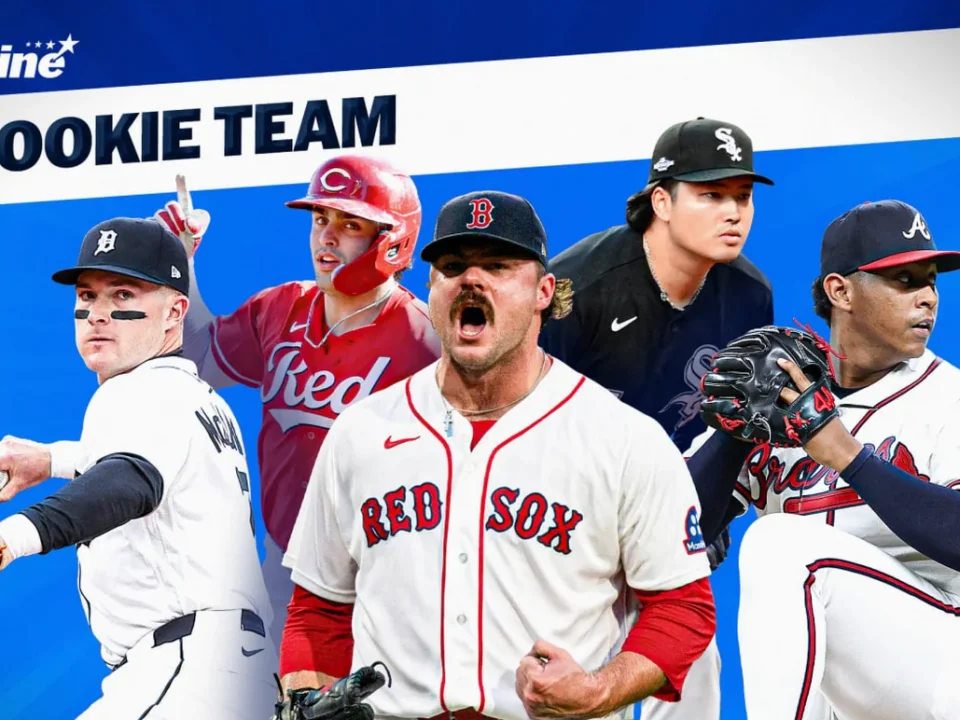
The 2026 rookie class did not wait for a soft landing. From Opening Day jobs to late-season pennant pushes, first-year players seized regular roles across the league, with 18 of the preseason Top 25 prospects reaching the Majors. The group produced All-Stars, long-term extensions, record-setting defense and a pair of rotations that suddenly looked a lot younger.
The 2026 All-Rookie First Team
- Catcher: Carter Jensen, Royals
- First baseman: Munetaka Murakami, White Sox
- Second baseman: JJ Wetherholt, Cardinals
- Third baseman: Kevin McGonigle, Tigers
- Shortstop: Konnor Griffin, Pirates
- Outfielders: Carson Benge, Mets; Chase DeLauter, Guardians; Tristan Peters, White Sox
- Designated hitter: Sal Stewart, Reds
- Starting pitchers: Parker Messick, Guardians; Payton Tolle, Red Sox
- Relief pitcher: Didier Fuentes, Braves
Position players who made the jump look easy
Jensen arrived in Kansas City as the No. 18 prospect in baseball and made the Royals’ Opening Day club. The hometown catcher hit .239/.323/.467 with 27 home runs, fourth most among rookies, while his 3.7 WAR ranked third among Major League catchers. Just as important for the Royals, Jensen improved behind the plate with strong framing work and above-average pop times.
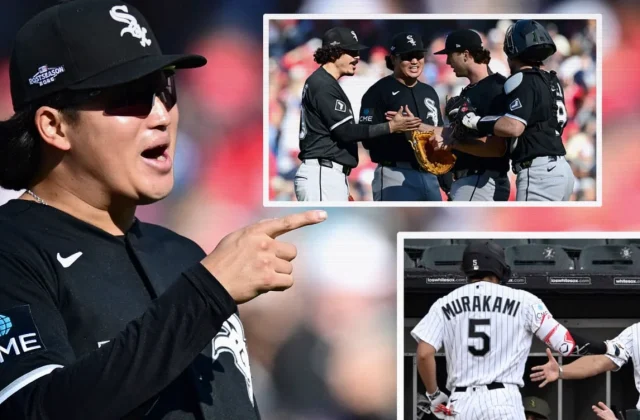
Chicago’s wager on Murakami has already paid off. The White Sox signed the 26-year-old for two years and $34 million despite worries over swing-and-miss in his game. He struck out at a 35.4 percent clip, second highest in baseball, but also led all rookies with 35 homers and drew walks 16.6 percent of the time. His first half included a .387 wOBA, 11th among hitters with at least 250 plate appearances.
Wetherholt gave St. Louis far more than a steady bat at second base. The West Virginia product led National League rookies with 4.6 WAR and finished with 25 Outs Above Average, trailing only Pete Crow-Armstrong’s 26 across the Majors. It was the highest Outs Above Average total ever posted by a rookie. Wetherholt, who entered the year as the No. 5 prospect, added 17 homers, 14 steals and a 101 wRC+.
Detroit moved quickly with McGonigle, agreeing to an eight-year deal worth at least $150 million only 17 games into his debut season. The former No. 2 prospect answered that confidence by leading the American League in Baseball Reference WAR. McGonigle, selected 37th overall in the 2023 Draft, hit .278/.376/.430 and nearly matched his 100 strikeouts with 95 walks.
Griffin brought major expectations to Pittsburgh when the No. 1 prospect reached the Majors in early April at age 19. A right elbow strain and left ring-finger injury limited him to 80 games, but the tools still showed up. The Mississippi prep product stole 23 bases in 27 tries and recorded a 29.9-feet-per-second sprint speed, 12th best in the Majors.
The outfield group carried both impact bats and plenty of range. Benge opened the season as the Mets’ right fielder after entering the year ranked No. 16 overall. His early adjustment in Queens gave way to a strong closing stretch: over his final 62 games, he batted .315/.381/.497 with nine homers. That surge put him squarely in the National League Rookie of the Year conversation. The former two-way player also stole 22 bases in 27 attempts and owned the fifth-strongest outfield arm in the league, averaging 96.9 mph on his hardest 10 percent of throws.
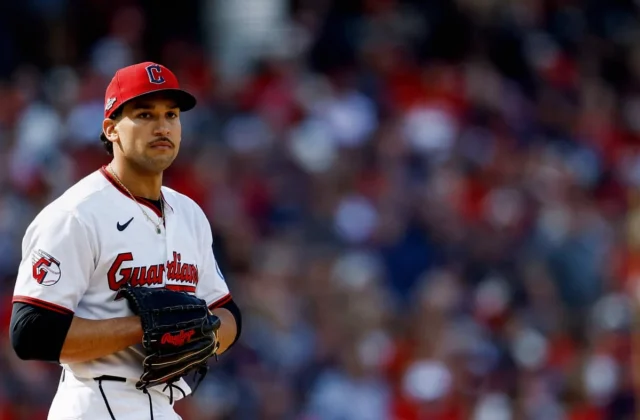
DeLauter’s talent was never much in doubt; availability had been the issue. Cleveland’s 2022 first-round pick had played only 130 Minor League games in more than three seasons before this year, yet he surpassed that total with 133 Major League appearances. Often hitting third, DeLauter posted a .287/.363/.457 line with 16 homers. His 14.7 percent strikeout rate was the third lowest among qualified rookies.
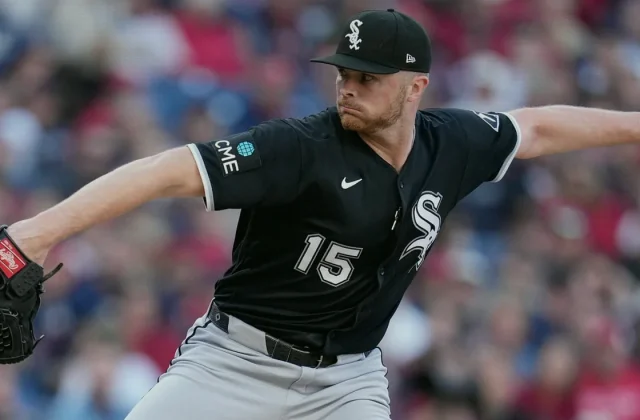
Peters began 2026 on Chicago’s bench after the White Sox acquired him from Tampa Bay for cash in December 2025. By season’s end, the 2021 seventh-rounder was an All-Star and a fixture in the lineup. Peters homered in five straight games in August, tying a White Sox club record that Murakami had also reached earlier in the season. He finished at .265/.337/.437 with 3.5 WAR, fifth among rookies and the best total by a White Sox rookie since José Abreu in 2014.
Stewart was the daily constant in Cincinnati. Whether he played first base, second, third or served as the designated hitter, the 22nd-ranked prospect from the preseason appeared in all 162 games, one of only seven players in the Majors to do it. He batted .263/.330/.457, drove in 111 runs to rank third in baseball and launched 32 homers, good for 15th. His production traveled, too: Stewart posted a 113 wRC+ at Great American Ball Park and a 111 mark away from home.
Two young rotations and a bullpen hammer
Messick gave Cleveland a rookie season that would usually command Rookie of the Year headlines on its own. The 25-year-old left-hander compiled 4.9 WAR, the best rookie pitching total since Hideo Nomo in 1995 and the highest in the American League since Mark Eichhorn in 1986. Messick worked 186 1/3 innings, struck out 193 and posted a 2.56 ERA, sixth among qualified starters, alongside a 3.07 FIP. He had begun the season ranked No. 96 among prospects, added roughly a tick and a half of velocity, and held opponents to a .248 wOBA against his fastball.
Tolle joined Boston’s rotation in late April and promptly became one of its most reliable arms. The 6-foot-6 lefty, who had entered the season as the No. 19 prospect, finished with a 3.03 ERA and 3.04 FIP. Among pitchers with at least 140 innings, he ranked 17th in ERA, 10th in FIP and 11th in K/BB rate at 21.7 percent. Tolle leaned on one of his three fastballs nearly 90 percent of the time, but his 7.4 feet of extension made the pitch play even quicker. His 36.4 percent chase rate was among the game’s best.
Atlanta shifted Fuentes from the rotation to the bullpen after his four-start Major League introduction as a 20-year-old in 2025. The move gave the Braves a multi-inning weapon with upper-90s velocity. Fuentes posted a 2.45 ERA, a 23.9 percent K/BB rate that ranked 11th among pitchers with at least 70 innings, and an 83.1 percent strand rate that ranked seventh in that same group.
The 2026 All-Rookie Second Team
- Catcher: Joe Mack, Marlins
- First baseman: TJ Rumfield, Rockies
- Second baseman: Travis Bazzana, Guardians
- Third baseman: Kazuma Okamoto, Blue Jays
- Shortstop: Cooper Pratt, Brewers
- Outfielders: Sam Antonacci, White Sox; Henry Bolte, Athletics; A.J. Ewing, Mets
- Designated hitter: Bryce Eldridge, Giants
- Starting pitchers: Nolan McLean, Mets; Logan Henderson, Brewers
- Relief pitcher: Bradgley Rodriguez, Padres
It was a rookie crop with no shortage of pedigree, but the season belonged to the players who turned prospect chatter into everyday Major League work. The awards may still sort themselves out, and some of these rookies remain in the postseason picture, but the regular-season ledger already carries a clear message: 2026 brought a fresh wave of difference-makers to big league clubhouses.