
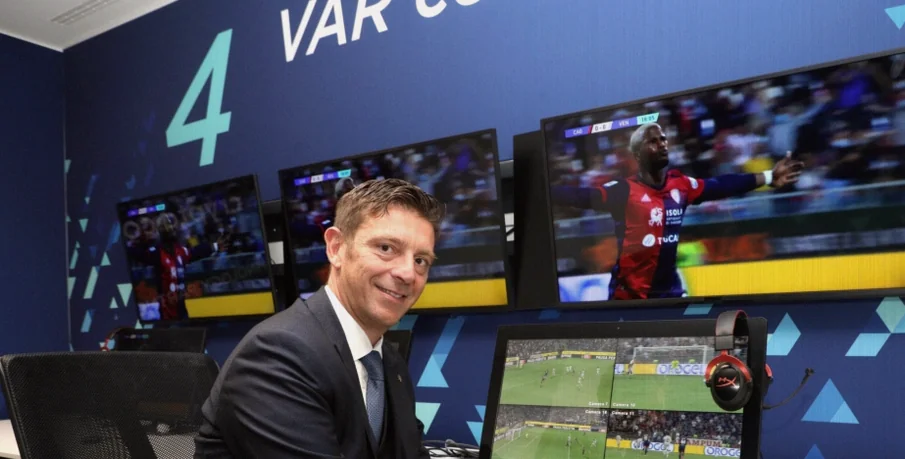
The investigation into alleged external contacts with the VAR operations room in Lissone has moved towards its final judicial stage, with the Monza Public Prosecutor’s Office requesting that the case be dismissed. The matter concerns the matches Udinese-Parma on 1 March 2025 and Salernitana-Verona on 8 March.
Former refereeing chief Gianluca Rocchi, former VAR supervisor Andrea Gervasoni and former VAR officials Luigi Nasca and Rodolfo Di Vuolo had been investigated on suspicion of complicity in sporting fraud. The Monza prosecutors found no evidence that the conduct examined was fraudulent or that it was carried out with the specific intention of influencing results on the pitch.
Case transferred from Milan
The strand of the investigation had initially been handled by the Milan Public Prosecutor’s Office, which sent the file to Monza in July because Monza held territorial jurisdiction over the matter. Milan had already closed its separate investigation concerning refereeing issues during the summer.
The Monza office’s request for dismissal now leaves the investigating judge to make the final decision. If accepted, it would bring another part of the wider case to a close.
Evidence did not support a fraud charge
Prosecutors said the material collected would not allow them to argue in court, with a reasonable prospect of conviction, either that the actions had a fraudulent character or that the required specific intent existed.
For a sporting-fraud offence, the alleged conduct would need to have been aimed at changing the match result rather than correcting refereeing mistakes. The investigation did not establish that threshold.
The authorities reviewed audio and video material, telephone records, data from the refereeing appointment portal, regulatory documents, witness information and conversations recorded after the matter became public. They concluded that further inquiries were unlikely to alter the picture already established.
In some instances, the investigation instead found that external intervention had been made solely to address an obvious on-field error which was subsequently recognised as such.