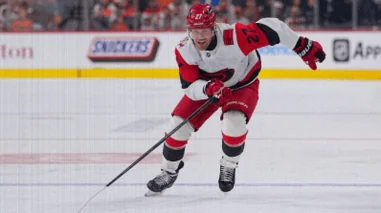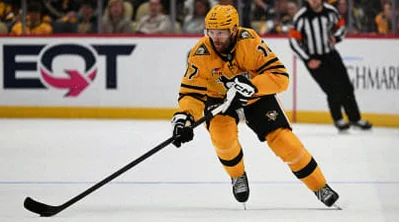
Fighting has made an early-season return to the NHL’s nightly conversation, not as the league’s central attraction but as a sharper edge to games that have already carried more bite than usual. Through 120 games, 34 contests had included at least one fight, compared with 25 at the same stage last season and 26 in 2024-25.
More gloves on the ice through 120 games
Veteran players around the league have noticed the change. One described a rise in both the physical temperature and the competitive push, saying that element remains one of the things that separates hockey from other major sports.
The numbers still need context. Fights are nowhere near their former place in the game: more than 41% of NHL games had a fight as recently as 2008-09, while only 19% did last season. The average has held between 0.23 and 0.25 fights per game over each of the past five seasons.
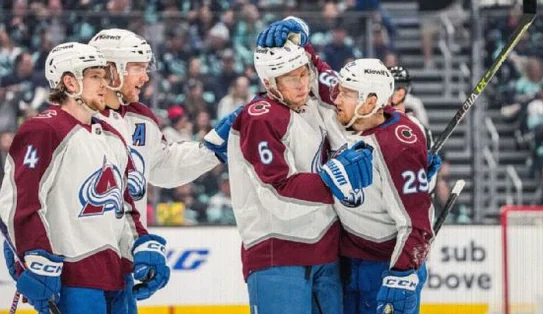
Still, a fight involving a top-line scorer lands differently now because it is unusual. Colorado Avalanche star Nathan MacKinnon is the clearest example. After leading the league with 53 goals last season, MacKinnon has already fought twice this year: first Los Angeles Kings defenseman Brandt Clarke, then Dallas Stars center Roope Hintz.
MacKinnon left the Hintz scrap with stitches over a bloodied nose and swelling beneath his left eye. Rangers forward Matt Rempe, one of the league’s more familiar combatants, called the exchange “crazy,” marveling at two high-skill players throwing hard punches rather than simply wrestling for position.
MacKinnon linked some of that edge to his Maritime upbringing, where he said players tend to grow up with a feisty streak. He admitted taking punches is not enjoyable, but said his teammates appeared to appreciate the gesture. He also joked that he may be finished fighting for the season — unless another moment calls for it.
Former Avalanche teammate Erik Johnson, now an analyst, said he is more surprised that MacKinnon does not fight more often. Johnson played 11 seasons alongside him and won the 2022 Stanley Cup in Colorado. In Johnson’s view, MacKinnon’s intensity is never far from boiling over.
MacKinnon has also incorporated Muay Thai into his offseason work, a detail that may help explain his willingness to exchange shots. Johnson believes prominent players taking that step can have an effect elsewhere in the league: if MacKinnon does it, another skilled player may see less reason to avoid the moment.
Why the early-season edge may be higher
-
Players joining new clubs can use a fight to show immediate commitment, whether they are defending a teammate, responding to a heavy hit or trying to establish trust in a new room.
-
Some veterans view an early regular-season fight as a reset button for their own game, a reminder that the NHL schedule is physical and unforgiving. Preseason bouts carry less value, but regular-season games offer more meaningful opportunities.
-
The switch to an 84-game schedule shortened training camp, potentially leaving players with fewer exhibition chances to make an impression before the standings begin to matter.
-
Teams continue to seek players who can keep up with today’s pace while also bringing a hard, confrontational element. Last season, 288 different NHL players recorded a fight, the highest number of unique fighters since 2013-14.
That combination has put fighting at something of a crossroads. The game’s most regular fighters remain players such as Columbus Blue Jackets winger Mathieu Olivier and Boston Bruins forward Mark Kastelic, who shared last season’s league lead with 10 fights apiece. Montreal Canadiens defenseman Arber Xhekaj, Tampa Bay Lightning forward Scott Sabourin and Utah Mammoth center Jack McBain are also names to watch when games turn nasty.
McBain has already supplied an early candidate for the season’s most memorable fight, trading heavy shots with Edmonton Oilers forward Trent Frederic before both headed off for repairs. Connor McDavid was shown grinning and tapping his stick on the boards as the exchange ended.
The clip also traveled beyond the usual hockey audience, ranking second among all videos across ESPN’s TikTok accounts last week, despite NFL, college football and MLB postseason content competing for attention.
That broader appeal has precedent. Three fights in nine seconds between the United States and Canada at the 2025 4 Nations Face-Off helped turn that event into a major success and made the Tkachuk brothers even more visible stars. Their offensive talent matters, of course, but a star player willing to fight remains a powerful visual in the sport.
There have been notable examples before. Jarome Iginla and Vincent Lecavalier delivered an unexpected heavyweight bout during the 2004 Stanley Cup Final. Joe Thornton, while producing at an elite level, routinely fought once or twice a season in his first dozen NHL campaigns and could lift the San Jose Sharks bench simply by taking that stand.
Johnson said teammates get a boost anytime a recognized fighter handles business, but it has a different effect when one of the club’s best players does it. MacKinnon’s two fights have carried that weight for Colorado. One NHL player who has never shared a dressing room with him viewed the bouts as evidence that MacKinnon is trying to set an uncompromising standard after an Olympic loss last year and Colorado’s playoff exit.
Buffalo Sabres forward Tage Thompson is another scorer who has mixed it up, already compiling eight spirited NHL fights. The next star fight, whenever it comes, would likely command attention. Leon Draisaitl has not yet entered that category, while McDavid’s last recorded fight came in 2014 with the OHL’s Erie Otters. San Jose Sharks center Macklin Celebrini, in his third NHL season, has yet to log a HockeyFights entry.
That does not mean teams want their franchise players seeking trouble. Johnson expects MacKinnon’s fighting to fade as the season moves toward the playoffs, when Colorado’s need to keep its best player healthy outweighs any emotional lift from a scrap.
The early spike may also prove temporary. Players and observers expect the frequency to settle as the schedule wears on, with year-to-year swings remaining part of the sport’s rhythm. Fighting still exists in the NHL, but it no longer defines it as it did in the 1970s.
Notebook: revenge, benches and a goalie with perspective
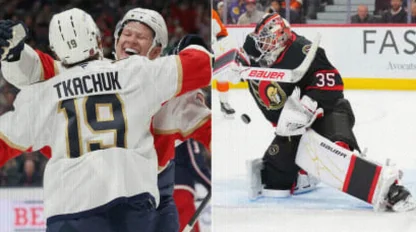
Brady Tkachuk’s return to Ottawa was a full-scale hostile reception. Senators fans booed their former captain, chanted against him and his podcast, displayed signs mocking him, and even placed Tkachuk-related items in arena urinals. It was not quite the rubber-snake fury that greeted John Tavares in his first return to Nassau Coliseum as a Toronto Maple Leaf, but it came close.
Tkachuk leaned into the role. He scored Florida’s only goal for a 1-0 lead, smiled through stoppage whistles as the boos continued, and announced on his podcast that any jerseys tossed onto the ice would be donated locally. Ottawa fans obliged by throwing several.
The Senators also played a tribute video for their former captain. The crowd jeered throughout it, turning images of Tkachuk’s community work and hospital visits into one of the stranger audio-visual scenes of the early season.
Mitch Marner received the opposite treatment in Toronto. During the Golden Knights forward’s contentious first return to face the Maple Leafs, Toronto fans paused their chants to cheer a scoreboard tribute before resuming the boos afterward.
Elsewhere around the rink:
-
Vancouver Canucks coach Manny Malhotra was rated the NHL’s most handsome head coach in a data-driven online exercise that used facial-mapping measurements and hundreds of reference points. Vegas Golden Knights coach Ryan Craig finished second. Both are in their first NHL head-coaching seasons.
-
Columbus coach Rick Bowness has publicly and privately challenged the Blue Jackets, but the poor results have continued. A mutual separation could become difficult to avoid if Columbus continues producing performances like its recent loss to Toronto.
-
The PWHL’s Vancouver Goldeneyes drew attention for a new sweater built around a standout logo, a strong look for a club featuring star player KK Harvey.
-
Fanatics teased upcoming Hometown Remix uniforms for 31 NHL teams through scrambled messages and partial jersey images. Toronto’s message resolved to “It’s Always About The Leafs.”
-
Edmonton’s overtime 4-on-3 power play remains appointment viewing. McDavid, Draisaitl, Zach Hyman and Evan Bouchard worked the advantage against Minnesota before Bouchard finished the winner.
-
Calgary Flames goaltender Devin Cooley continues to be one of hockey’s more compelling talkers. After his “nothing matters, nobody cares, we’re all going to die” calming line last season, Cooley explained that he felt almost nothing during a recent game because his unconscious mind plays goal better than his conscious one.
Next puck drops
| Matchup | When | Why it matters |
|---|---|---|
| Anaheim Ducks at Philadelphia Flyers | Saturday, Oct. 24, 1 p.m. ET, NHL Network | Leo Carlsson makes his first Philadelphia appearance since the Flyers’ offer sheet made him the NHL’s highest-paid player this season. Trevor Zegras also meets his former Anaheim club after scoring twice against the Ducks in Philadelphia last season. |
| Minnesota Wild at Vancouver Canucks | Sunday, Oct. 25, 10 p.m. ET, ESPN+ | Quinn Hughes returns to Vancouver following his departure under circumstances that invite comparisons to Tkachuk’s Ottawa exit, though Hughes’ chance to play alongside his brothers comes later. |
| Boston Bruins at Carolina Hurricanes | Tuesday, Oct. 27, 7 p.m. ET, ESPN | Boston opened 7-2-1, ranking seventh in offense and fourth in defense through 10 games. The defending Stanley Cup champion Hurricanes provide a major early test for Marco Sturm’s Bruins. |
Winnipeg’s Hellebuyck standoff reaches a new point
Connor Hellebuyck’s suspension ends Friday, a date tied directly to the goaltender informing the Winnipeg Jets on Oct. 2 that he was ending his training-camp holdout and intended to return.
-
Hellebuyck notified Winnipeg that he would report after being absent from camp.
-
The Jets then used a collective bargaining agreement provision allowing a club to suspend a player who leaves training camp without permission, provided the length is considered reasonable.
-
The suspension has cost Hellebuyck roughly $900,000 while doing little to improve his leverage.
-
There is no expectation of a trade before Friday, and Hellebuyck is expected to continue collecting his salary while training in Michigan rather than playing.
The greater question is whether there is any path back to the Jets. Hellebuyck has spent 12 seasons in Winnipeg, and teammates have offered different shades of reaction. Kyle Connor, a U.S. national-team teammate who had Hellebuyck in his wedding party, has appeared particularly hurt. Captain Adam Lowry has taken a more measured tone while acknowledging that any reconciliation would require serious healing.
The goaltender attended Lowry’s July wedding with current Jets teammates even though his desire to leave Winnipeg had already been widely reported.
Two explanations have emerged for the stalled trade talks. One holds that Hellebuyck, who has a no-movement clause, wants a clear Stanley Cup favorite, with Carolina, Vegas and Florida fitting that description more than clubs such as Utah, Buffalo or Los Angeles. The other says Hellebuyck would accept destinations including Buffalo and Los Angeles, but Winnipeg general manager Kevin Cheveldayoff has not received an offer matching his price for the franchise’s most valuable trade chip.
Given Hellebuyck’s résumé, a huge ask is understandable. The NHL Players’ Association is waiting to see what follows the end of the suspension before weighing in. A near-term grievance appears unlikely while Hellebuyck is being paid not to play, though that calculation could change if the situation drags on.
Larkin’s acceptable destinations grow
Former Detroit Red Wings captain Dylan Larkin has expanded the list of teams to which he would accept a trade to at least 10.
- Florida Panthers
- Minnesota Wild
- Vegas Golden Knights
- Carolina Hurricanes
- Colorado Avalanche
- Dallas Stars
- New Jersey Devils
- Tampa Bay Lightning
- Utah Mammoth
- Washington Capitals
The first three clubs were known during the offseason. The newer additions underline that Larkin is willing to consider a wide range of contenders, although the depth of Detroit’s discussions with any of those teams remains unclear.
Nine of the 10 teams sit among the league’s leading Stanley Cup contenders, with Edmonton the notable omission. Larkin does not want to be traded to a Canadian club, despite interest from Montreal fans.
Washington is especially worth tracking. The Capitals have been aggressive in reshaping their roster, adding players including Pierre-Luc Dubois, Jacob Chychrun, Jordan Kyrou and Boone Jenner. They possess a deep prospect pool that could interest Detroit, plus center Dylan Strome as an NHL-ready piece. Strome is signed through next season at a $5 million average annual value and does not have trade protection.
The Capitals may prefer to improve their blue line as they chase another Stanley Cup, but their assets and willingness to make major moves keep them in the frame if the Larkin market gains traction.