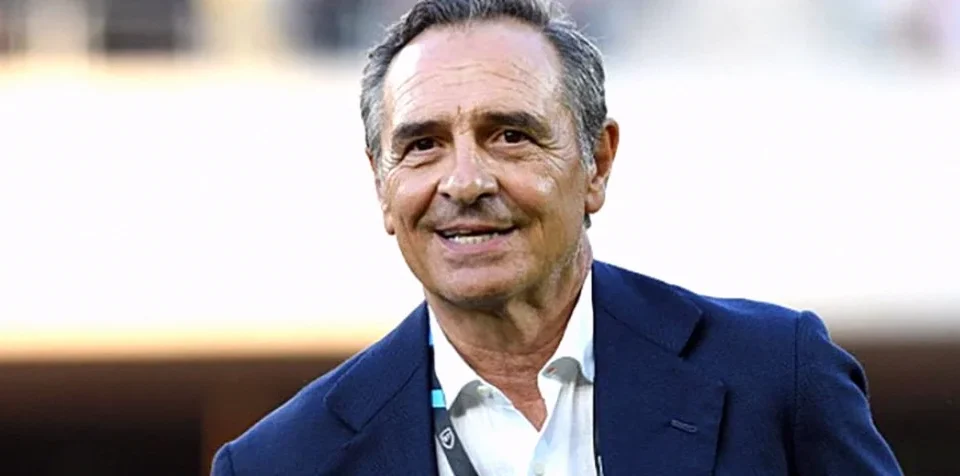
Juventus arrive at their meeting with Atalanta carrying the response of a European night: after the damaging league defeat to Sassuolo last Sunday, Luciano Spalletti’s side beat NEC 5-0 in the Europa League. For Cesare Prandelli, it was not simply a result but a sign of a dressing room answering the pressure around its coach.
The coach and the club
Prandelli, who guided Italy to the Euro 2012 final and has managed both clubs, sees Juventus as favourites at the Allianz Stadium. He felt the performance against NEC showed a united, convincing team, with players seemingly determined to take responsibility amid discussion of Spalletti’s position. Juventus displayed attacking depth, goals and a clearer collective identity.
The fixture also brings together two Tuscan coaches with distinct personalities but similar standards in their work. Spalletti and Maurizio Sarri both operate from clear principles, Prandelli said, and both prepare their teams with precise ideas. Spalletti won the Serie A title at Napoli, while Sarri claimed the Scudetto during his time at Juventus.
Prandelli also argued that Sarri had to wait far too long for a meaningful opportunity in Serie A. His return to Italy with Atalanta is therefore part of a larger rebuilding process, rather than a project to be judged in a few weeks.
He expects a cautious contest between two coaches who know and respect each other. The question, in his view, is who will choose to take the initiative first. Prandelli suspects Spalletti may be more willing to do so after the assurance provided by the NEC display.
The recent move to a back three does not, by itself, explain Juventus’ improvement. Prandelli believes Spalletti has the players to alter the team’s shape when circumstances demand it, and considers the change evidence of a coach with long experience rather than an ideological attachment to one system. Across three decades, Spalletti has tested different solutions and, Prandelli noted, has not presented his football as a fixed doctrine.
That adaptability has helped him answer the doubts that followed the Sassuolo defeat. It may also help him handle the continuing affection among some Juventus supporters for Antonio Conte, now without a club after leaving Napoli. Prandelli does not see Conte’s name as a threat to Spalletti; a coach with his experience understands those football dynamics, and can use them as motivation.
The figures who can alter the afternoon
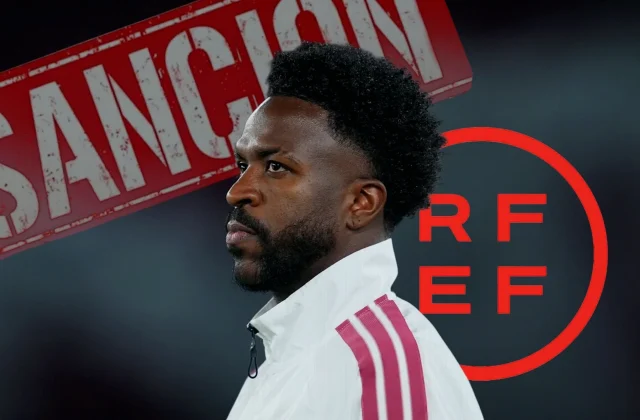
Prandelli’s Juventus choice for the decisive contribution is Nico Gonzalez. With Yildiz injured, he considers the former Fiorentina player Spalletti’s outstanding individual talent. Gonzalez has become a more rounded attacker, capable of operating on either flank or through central areas, always with pace and an Argentine edge to his game.
He believes Spalletti has managed Gonzalez well, making the player feel trusted. That relationship, Prandelli said, can change performances. He cited Douglas Luiz as another example: the Brazilian already looks markedly different from his first season in Turin, although Prandelli feels there remains another level available to him.
In the centre-forward debate, Prandelli would see Kolo Muani used where space can be attacked, rather than as a purely central reference point. His preference is Woltemade, whom he has followed since the Germany Under-21 side. Woltemade may not score heavily, but Prandelli values his understanding of the game.
He compared Woltemade’s build, rather than his power, to the young Zlatan Ibrahimovic. Ibrahimovic also began at Juventus without immediately becoming a prolific scorer before developing into a relentless finisher under Fabio Capello.
Atalanta’s new work under Sarri
Atalanta come into the match after an uneven league sequence of two wins and two defeats. Prandelli urges patience with Sarri because the change at the club has been extensive. Sarri’s football, he said, is sophisticated and needs time to settle into the habits of a squad.
He remains optimistic because of the support around the coach. Atalanta’s ownership has backed the project, while Cristiano Giuntoli knows Sarri well from their Napoli years.
Franck Kessie’s late-August decision to join Atalanta instead of Juventus was, in Prandelli’s reading, shaped less by money than by gratitude to the club that first launched him. Kessie brings personality and experience, but Prandelli also pointed to the options around him, including Rowe and Scamacca.
His Atalanta player to watch, however, is Giacomo Raspadori, whose record against Juventus gives him encouragement before the Allianz Stadium meeting.
If he could add one former teammate to each side, Prandelli would choose Marco Tardelli for Juventus and Glenn Stromberg for Atalanta. Leaving aside the incomparable Michel Platini, Tardelli would offer Spalletti the complete modern midfielder he needs at this stage. Stromberg, meanwhile, would give Sarri leadership and the ability to bring a group together.
The chapter is therefore not merely about Juventus recovering from one bad Sunday, or Atalanta searching for the first settled version of Sarri’s work. It is a meeting between two coaches with established ideas, two clubs at different points of their season, and several players capable of moving the afternoon in a single moment.