The Rays left American Family Field with a 3-2 Game 1 loss on Friday night, but Kevin Cash may have found a small measure of value in the way the Brewers had to finish it. Milwaukee handed the baseball to its preferred late-inning crew after starter Jacob Misiorowski completed five innings with the lead, and Tampa Bay’s hitters got a close look at arms they could be seeing repeatedly before this World Series is done.
Abner Uribe recorded four outs, Aaron Ashby worked five and Trevor Megill took the final three, though he allowed a ninth-inning run before closing the door. DL Hall also got loose when a possible left-handed pinch-hit matchup appeared, but was not needed. For the Brewers, it was the kind of Game 1 bullpen sequence a club wants: the best options were available, the lead held up, and the series began with a win.
Tampa Bay took a different route while trailing through the night. Cash did not call on closer Bryan Baker, left-hander Cam Booser or setup man Tyler Wells in an attempt to erase a one-run margin. Ian Seymour remained unused as well, and the Rays did not turn to either Freddy Peralta or Griffin Jax as a relief option.
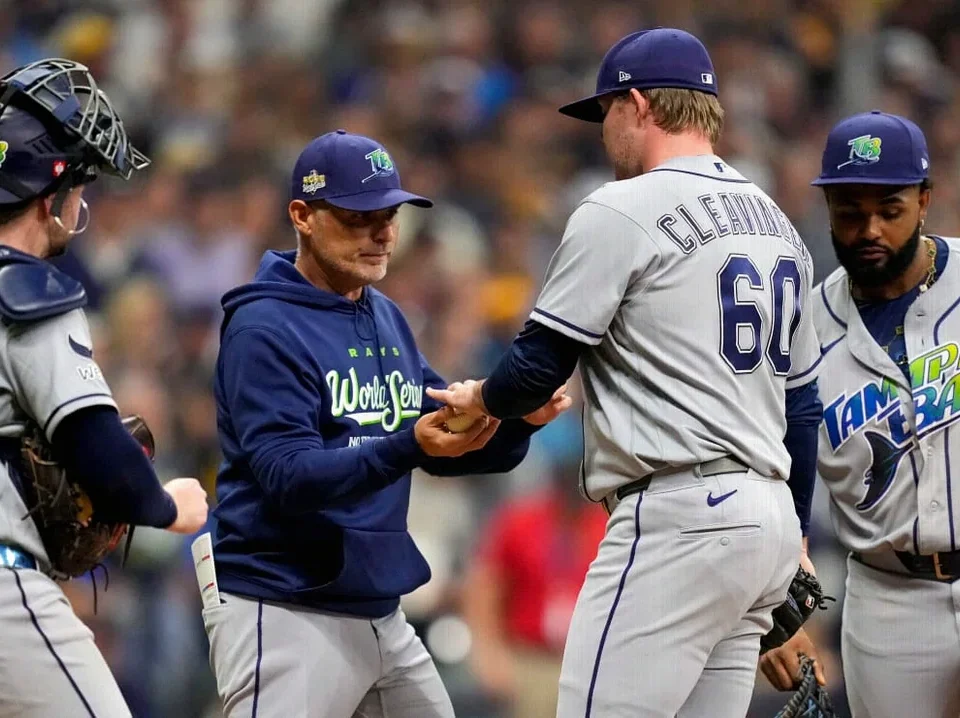
Instead, Tampa Bay used Steven Matz, Kevin Kelly, Garrett Cleavinger and Cole Sulser. That group allowed one run across three innings, keeping the game within reach even as the Rays’ offense struggled to produce more than two runs. Matz, who had made only one postseason appearance before Friday, came back for a second inning in the seventh and issued a leadoff walk. Kelly then allowed Jackson Chourio’s two-out RBI single, the hit that supplied Milwaukee’s decisive run.
“Our bullpen did a really nice job,” Cash said. He pointed to Chourio’s ball getting past Jonathan Aranda and praised the way Tampa Bay’s relievers handled innings that included traffic on the bases.
Fresh arms, familiar looks
The Rays’ Game 1 choices were not necessarily a statement about hierarchy. Tampa Bay has long shown a willingness to use its relievers in unconventional spots. Still, outside of Kelly, the pitchers Cash used had not regularly been in the club’s biggest moments this month. Cleavinger had not appeared in an official game since Sept. 4, while Matz and Sulser had each pitched just once during the postseason.
That decision could leave Tampa Bay well positioned behind Drew Rasmussen in Saturday night’s Game 2. Baker, Booser and Wells should be rested, as should Seymour and the potential starter-relief alternatives. Matz was the most heavily used of Friday’s relief group, throwing 31 pitches for five outs. Kelly faced four hitters on 12 pitches, Cleavinger saw three batters and threw 10 pitches, and Sulser needed four pitches against his lone hitter.
There is another possible advantage in defeat. Rays hitters faced Uribe, Ashby and Megill in Game 1, and Cash believes repeated exposure can matter over a seven-game series. A reliever’s repertoire can become less mysterious when the same lineup gets multiple looks on consecutive nights or later in the week, much the way a starter’s effectiveness can change as he works deeper into a game.
“Maybe there is some benefit from a loss,” Cash said. “We saw Ashby, Uribe and Megill. I’d like to believe that can help us a little going forward.”
The Brewers still own the early edge, and their bullpen earned it. But Tampa Bay enters Game 2 with its best late-inning options untouched and Milwaukee’s top relievers no longer strangers. Cash does not pretend the effect can be measured cleanly, but he sees it as real.
“The number of times you see somebody matters,” Cash said. “I don’t know exactly how much, but it matters to some extent.”