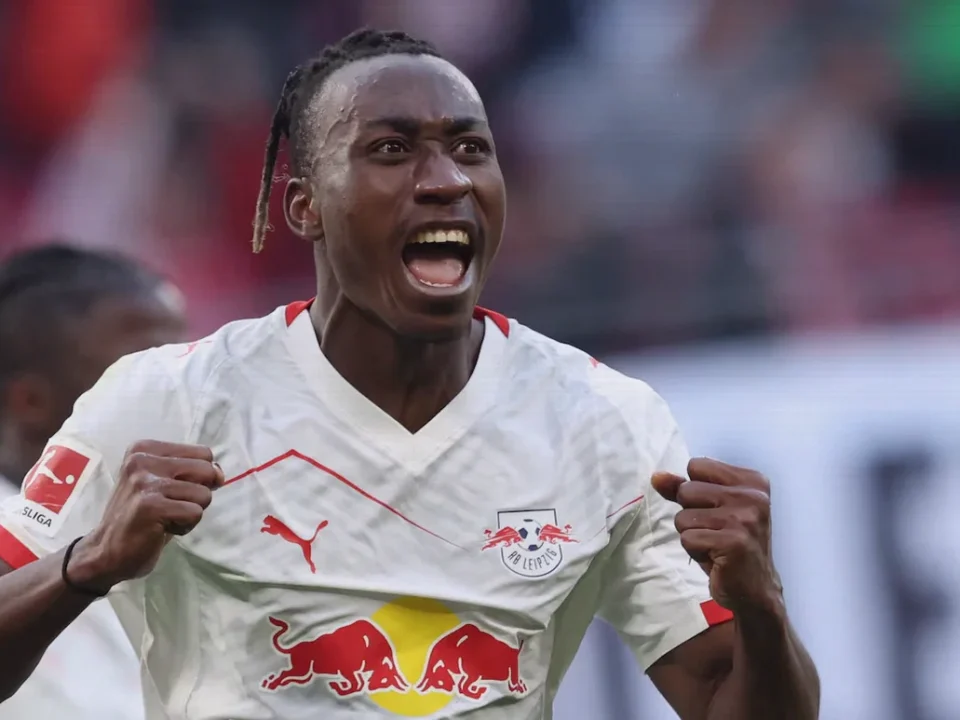
RB Leipzig arrive at another Champions League test against Real Madrid on Wednesday no longer as the unexpected visitor from Germany’s lower divisions, but as a club trying to turn rapid growth into lasting European authority.
From fifth-tier beginnings to the Champions League stage
- When Red Bull took over the club in 2009, Leipzig were operating in Germany’s fifth tier. Johann Plenge, now the club’s managing director, recalls a modest setup in which containers served as changing rooms, showers and staff areas, while matches were played on largely bare pitches.
- The project rose through the divisions and reached the Bundesliga in 2016, following two seasons spent attempting to get out of the second division.
- Leipzig immediately finished runners-up in their first Bundesliga campaign, confirming that their ascent had been built on more than momentum.
- Since then, they have won the German Cup twice, in 2022 and 2023, added a German Super Cup and reached the Champions League semi-finals in Lisbon in 2020, where Paris Saint-Germain ended their run.
Plenge says the club’s early ambition was never to be defined by its past. “We did not want to talk about the first 100 years,” he said. “We wanted to shape the present and future of the next 100.”
The scale of the transformation is visible at the training ground. Leipzig now operate from a 14,000-square-metre complex bringing together the business operation, academy and first team, a far cry from the facilities in place at the beginning of the Red Bull era.
A talent factory seeking greater control
Leipzig have developed into one of Europe’s most effective talent developers, using recruitment and coaching to identify players before they become elite names. Their sales since entering the Bundesliga total €704 million, while club turnover has risen beyond €500 million.
Naby Keita, Timo Werner, Dayot Upamecano, Ibrahima Konaté, Christopher Nkunku, Joško Gvardiol, Dani Olmo and, more recently, Yan Diomande following his move to Real Madrid, are among the prominent examples of that strategy.
“We recruit talent rather than stars,” Plenge explained. “We do not sign the league’s best defender; we aim to develop the best defender. The same applies in midfield and attack: we seek to help players fulfil their potential and become stars.”
That approach has created a difficult cycle. A player who breaks through in one season can be sold for a major fee in the next, forcing another rebuild. Leipzig believe, however, that their record has made them attractive to the next generation of players, their representatives and families, even when Premier League and La Liga alternatives are available.
Plenge argues that the important point is not solely the money received for departures, but the proof that ambitious young footballers choose Leipzig as a route to the top level.
The Red Bull network and a new ambition
Leipzig also benefit from connections across the wider Red Bull group, including New York RB, RB Bragantino and RB Salzburg. The network helps scouts monitor prospects in different markets and gives the club a longer view of development.
Plenge cited the example of a Bragantino defender monitored from under-15 level. The intention, he said, is not only to follow the player over several years, but to help prepare him tactically and culturally before a potential move to Europe.
Yet Leipzig’s next objective is to become less reliant on selling their best performers. Marcel Schäfer, the sporting director, has a central role in that shift, with release clauses removed from the contracts offered to new signings.
“We want to be in the driving seat and decide whether a player leaves,” Plenge said.
That ambition gives Wednesday’s meeting with Real Madrid a wider significance. Leipzig still want to return to the Champions League’s last four, but they also want nights against Europe’s established powers to become part of the club’s normal landscape rather than a brief interruption in a business model built around departures.