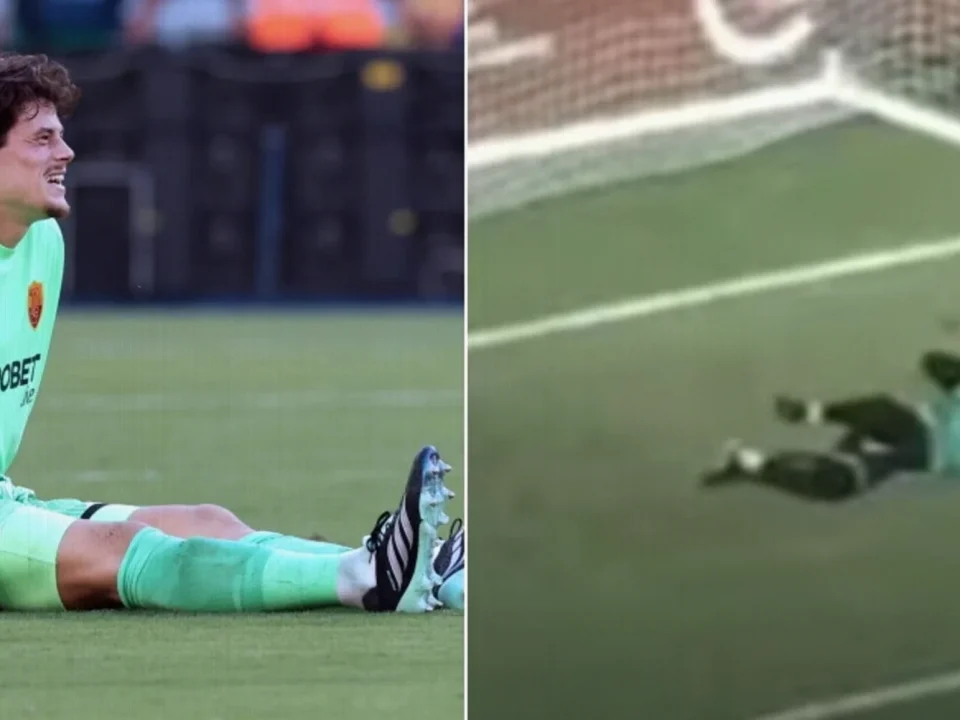
Roma’s season has been interrupted by an unexpected image: Mile Svilar injuring a toe in what appeared to be an ordinary fall. The footage quickly drew attention beyond the club’s support, while Gian Piero Gasperini described the goalkeeper’s problem as a stress fracture and indicated that his return would be measured in weeks rather than days.
The coach and the club
The immediate question for Roma is not simply the absence of their goalkeeper, but the course of treatment that will allow him to return without compromising the rest of his campaign. The injury concerns a stress-related microfracture, a condition caused by repeated pressure on a bone or joint rather than a single major impact.
Orthopaedic and trauma specialist Dr Alessandro Piperno explained that such injuries commonly involve swelling and internal bruising within the bone, alongside a partial rather than complete break. That distinction is important: a complete fracture would create a different clinical picture, while a stress microfracture does not involve the full separation of the bone.
The fracture has not been displaced. In practical terms, this means the affected bone remains correctly aligned, a factor that can support a quicker recovery than would be expected from a displaced break. Piperno noted that displacement is not a feature of this type of stress injury precisely because the bone segment has not fully broken.
A decision on treatment
Gasperini raised the possibility of inserting a screw, an operation known as osteosynthesis. The procedure would bring the affected parts of the bone together under compression and could shorten the recovery process.
It would not be considered a major invasive operation. The surgical access would measure only a few millimetres, with the wound itself expected to heal within several days. Conservative treatment remains another possible route, with the final choice dependent on the assessment made by Roma’s medical staff.
There is encouragement over the longer-term outlook. When properly managed, stress fractures of this kind usually resolve fully and should not leave consequences for an athlete’s physical performance.
A precise timetable, however, cannot be fixed from outside the club. Recovery varies according to the player’s biological response and the treatment selected, leaving Roma to balance the wish for a rapid return with the care required for one of the side’s most important positions.