Ron Duguay, the free-skating forward whose flowing hair and flair made him a Madison Square Garden favorite, died Thursday at 69. A 12-season NHL veteran and one of the most recognizable Rangers of his era, Duguay had been fighting Stage 4 cancer for more than a year after being diagnosed with a disease that began in his colon. He also underwent surgery to remove his appendix and gallbladder.
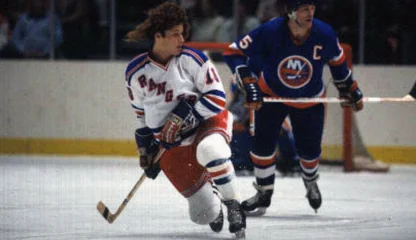
The Rangers remembered Duguay as one of the franchise’s enduring crowd favorites, a player whose speed, skill and personality connected with New York fans. His helmetless rushes, framed by his long curls, became a signature image of late-1970s and early-1980s hockey at the Garden. The club offered condolences to his family, friends and loved ones, while the NHL described him as a charismatic player who left a lasting mark on the game.
Duguay spent eight of his NHL seasons with the Rangers, first from 1977 through 1983 and again from 1986 through 1988. He produced 620 regular-season points, with 274 goals and 346 assists, across 860 games for New York, the Detroit Red Wings, Los Angeles Kings and Pittsburgh Penguins. In 89 playoff games, he added 31 goals and 22 assists for 53 points.
A Ranger at the center of a Garden run
New York selected Duguay 13th overall in the 1977 NHL Draft, bringing him straight from junior hockey. He quickly became part of the Rangers club that reached the 1979 Stanley Cup Final. Under coach and general manager Fred Shero, New York posted a 40-29-11 record to return to the postseason after a two-year absence.
That Rangers group mixed veteran star power, including Phil Esposito, with a young core featuring Duguay, Ron Greschner, Steve Vickers, Dave Maloney, Don Maloney and Don Murdoch. With John Davidson in net, New York knocked out Los Angeles and Philadelphia, then defeated the first-place Islanders in six games in the NHL Semifinals. The Canadiens ended the run in five games in the Final.
Duguay’s profile extended beyond the ice. He appeared alongside Esposito, Dave Maloney and Anders Hedberg in the memorable 1979 Sasson jeans television spot built around the “Oo La La! Sasson” refrain. On the rink, he owned a share of a Rangers record for the fastest goal to open a game, scoring nine seconds into an 8-3 victory over the Flyers at the Spectrum on April 6, 1980. Fred Cook and Jean Ratelle also scored nine seconds into games for New York.
Before the NHL, Duguay starred for his hometown Sudbury Wolves in the Ontario Major Junior Hockey League. He piled up 42 goals and 92 assists for 134 points in 1975-76 as Sudbury earned the Hamilton Spectator Trophy with a 47-11-8 regular-season record. The Wolves reached the OMJHL final before falling to Hamilton in six games. Winnipeg made him the third pick of the 1976 WHA Draft, and he later played for Canada’s runner-up team at the 1977 IIHF World Junior Championship.
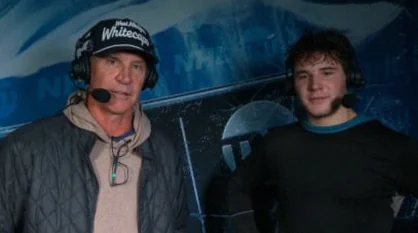
Detroit acquired Duguay in a June 13, 1983 trade. He returned to the Rangers through a deal with Pittsburgh on Jan. 21, 1987, then joined the Kings after another trade on Feb. 23, 1988. His NHL career concluded following the 1988-89 season. Duguay later worked 12 years as a Rangers analyst on MSG Network.
Current Rangers coach Mike Sullivan, who played alongside Duguay with San Diego in the International Hockey League in 1990-91, called the loss especially painful for the organization. Sullivan said Duguay was an excellent player and an even better person, recalling how much it meant to share a dressing room with someone he had watched as a young fan. He said Duguay and former NHL scorer Charlie Simmer were players he admired before becoming their teammate.
The NHL Alumni Association said Duguay approached life with passion, warmth and a larger-than-life smile, while putting his family above everything else. It also pointed to his lasting devotion to hockey and the generosity and compassion he showed people away from the rink. For Rangers fans, Duguay remains tied to an era when Broadway’s hockey club made a surprise spring run, and No. 10 flashed down the ice with the Garden rising behind him.