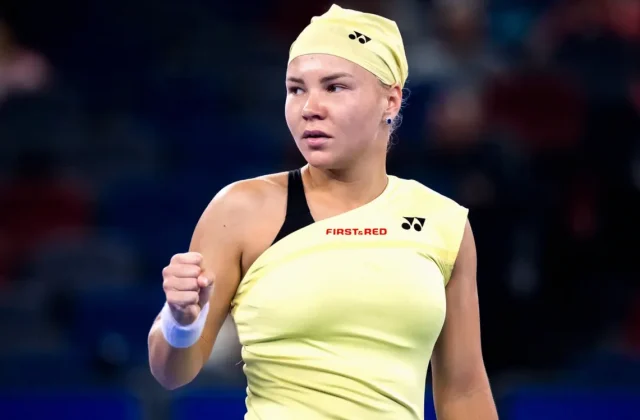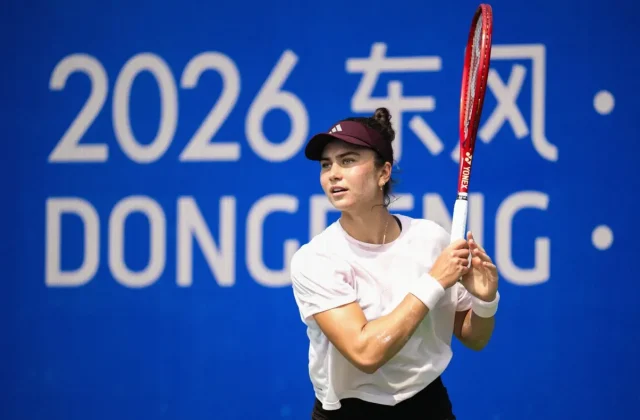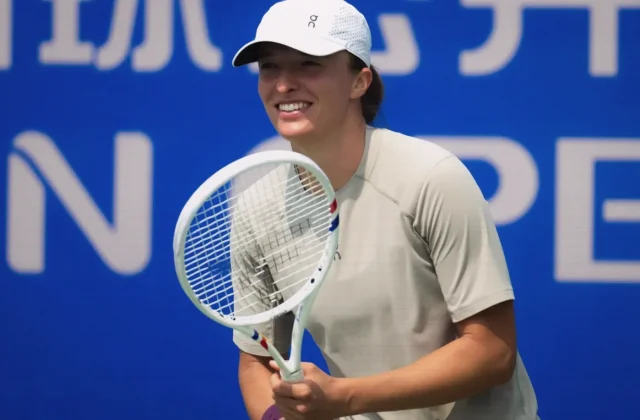
Elena Rybakina emerged as the defining player of the WTA hard-court season, lifting the US Open trophy and reaching No. 1 in the PIF WTA Rankings for the first time after a stretch that ran from mid-July to mid-September.
The WTA Tour’s North American hard-court swing visited 12 cities and produced 12 different champions, with breakthrough winners, teenage advances and a string of high-pressure matches shaping the road into the Asian swing. Rybakina’s New York triumph supplied the headline achievement, but Alexandra Eala, Sara Bejlek, Kristina Liutova and Zheng Qinwen each left a significant mark on the summer.
Eala breaks through in Washington
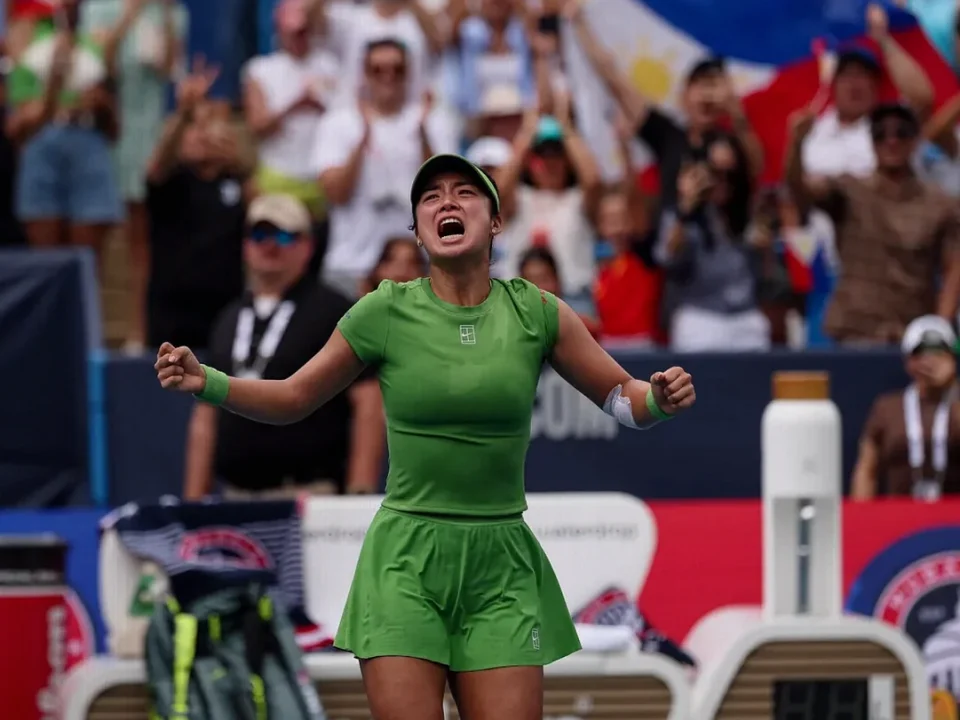
Eala arrived in Washington, D.C. still seeking her first WTA title, then delivered one of the most demanding title runs of the swing. Across six days, she defeated Zheng Qinwen, Leylah Fernandez, Elina Svitolina, Naomi Osaka and Jessica Pegula, beating Pegula in the final to secure the trophy.
The title pushed Eala into the Top 20 for the first time. Her subsequent results in Toronto, Cincinnati and at the US Open were more modest, but the Washington run confirmed her ability to compete with the leading names on hard courts.
Teenage champions and Czech momentum
Liutova’s Memphis Classic victory was among the season’s most striking developments. The 16-year-old came through qualifying in her WTA main-draw debut and became the youngest active champion on the tour, as well as the second-youngest player to win a title in her tour debut.
Her route was anything but straightforward. Liutova survived a deciding-set tiebreak in qualifying, then eliminated top seed Ekaterina Alexandrova, a Top 20 player, in the opening round. She also rallied from a set down twice, including against Darja Vidmanova in the final.
Ranked No. 229 before Memphis, Liutova had not previously contested even a WTA qualifying draw. She had, however, won three World Tennis titles earlier in 2026. In Memphis she beat her first three Top 100 opponents—Alexandrova, Maya Joint and Caty McNally—and became the first WTA title winner born in 2010.
Liutova followed that breakthrough by qualifying for the US Open on her first attempt. Her record for the season reached 36-5, and she climbed to No. 117 in the rankings.
Bejlek, the 20-year-old Czech who had won Abu Dhabi in February, reinforced her reputation as one of the circuit’s most inventive competitors. Her run to the Cincinnati semifinals included victories over Aryna Sabalenka and Madison Keys, achieved through movement, defensive retrieval and variation rather than raw power.
Her upset of Sabalenka was the centerpiece. Bejlek had lost all three previous matches against Top 10 opponents and trailed 5-1 in the first-set tiebreak, yet turned the set around before completing a 7-6 (7), 6-4 victory. She recovered from 4-1 down in the second set and reached her first WTA 1000 quarterfinal in her Cincinnati debut.
Bejlek’s defensive ability had already been apparent in Prague, where her opening-round win over Anna Blinkova featured a series of remarkable retrievals.
Zheng rebuilds her season
Zheng’s summer began with a difficult ranking reality: she entered Toronto qualifying, her first appearance in a qualifying draw since January 2023, and exited in the first round. She then undertook an intensive training block in Bradenton, Florida, opting out of the Cincinnati Open.
The reset paid off at the US Open. Playing as a qualifier, Zheng reached the quarterfinals and moved from No. 121 to No. 52. Her fourth-round defeat of Iga Swiatek, 7-5, 6-3, was the only occasion during the swing when a player ranked outside the Top 50 beat a Top 10 opponent.
Her ranking did not fully reflect her level, and she showed it in New York. Zheng also beat Madison Keys 1-6, 7-6 (3), 7-5 in the previous round, producing comebacks from 5-0 down in consecutive sets across those two victories.
Swiatek, meanwhile, revived her own campaign in Toronto. After a season affected by a coaching change and uneven results, she returned to her controlled, patient hard-court tennis to win her first title of the year.
US Open delivers the longest-lasting drama
The third-round meeting between Iva Jovic and Eala gave Arthur Ashe Stadium a three-hour contest between two rising young players. Jovic converted her second match point, falling to the court in exhaustion before Eala crossed the net for an embrace.
“It took losing my earrings, falling literally flat out on the floor, cuts on my knees, mental breakdowns,” Jovic said afterwards. “It took literally everything.”
Another New York classic saw Sabalenka, then a two-time defending champion, edge Wimbledon winner Linda Noskova 7-6 (1), 3-6, 7-6 [10-7] in the quarterfinals. The pair struck 30 aces between them, and neither player managed a run of more than three consecutive games. Noskova led by a break in the deciding set before Sabalenka recovered to win the match tiebreak.
On an outer court, Nikola Bartunkova came back to defeat Tatjana Maria 6-7 (5), 6-2, 6-3 in the second round. The 20-year-old Bartunkova and Maria combined for 99 points at the net, with each winning more than half of her approaches, in a match that contrasted Maria’s established touch game with Bartunkova’s more contemporary attacking version of similar court craft.
With the hard-court segment complete, the tour now shifts to Asia, carrying a season in which Rybakina reached the summit, Eala captured a first title, Liutova announced herself at 16, and a new generation repeatedly tested the established order.