The Mazzola name belongs to the great family history of Italian football, but the story of Sandro and Ferruccio was never simply one of two brothers following the same path. Their lives were divided early, briefly brought together by Inter, and later strained by the weight of memory, public argument and the immense legacy left by their father, Valentino.
A family separated before football reunited them
-
Sandro Mazzola’s younger brother, Ferruccio, was born in 1945 and died in 2013. The three-year gap between them mattered less than the circumstances of their childhood. Their father Valentino had left their mother, Emilia, and was living with a new partner, Giuseppina.
-
Sandro remained in Turin with Valentino, while Ferruccio went with Emilia, who came from Giovinazzo. The brothers therefore spent their earliest years in separate homes.
-
After the Superga disaster took Valentino’s life, Emilia immediately tried to find Sandro. For several days, those searches brought no result because Giuseppina had taken him to friends’ house. Giuseppina later described the episode as a short-lived attempt not to be parted from Valentino’s eldest son, whom she had raised with the affection of a mother.
-
Once Sandro and Ferruccio were living together again, they developed the ordinary relationship of boys close in age: separate friends, separate interests and, eventually, separate footballing routes.
Inter opened the door
The decisive visitor was Benito Lorenzi, the Inter forward who had played alongside Valentino Mazzola for Italy and held him in the highest regard. With Emilia’s approval, Lorenzi took responsibility for the sporting development of both boys and brought them into Inter’s youth set-up.
Giuseppe Meazza was in charge of the Nerazzurri academy and quickly recognised Sandro’s technical ability, taking a particular interest in him. Ferruccio also showed promise, but he remained within his own age group. For that reason, the brothers did not normally share a side.
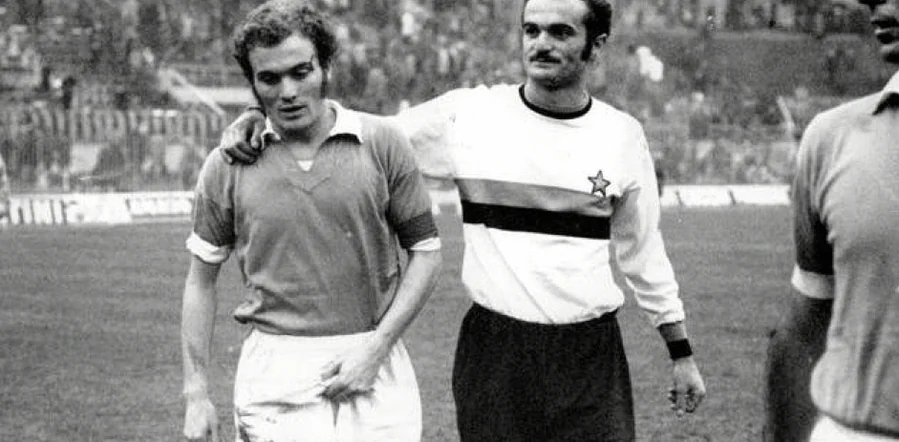
There was one exception: Inter’s match against Vicenza on 8 October 1967. It became the only senior occasion on which Sandro and Ferruccio Mazzola played together.
Ferruccio’s own career
-
In the November transfer window following that Vicenza fixture, Ferruccio left Inter on loan for Serie B side Lecco.
-
His playing career subsequently took him through Venice and Florence, before its most substantial spell: five seasons with Lazio.
-
He was regarded as a capable midfielder, equipped with passing range, acceleration and close control, though his career was inevitably measured against the far greater profile of his brother.
-
After retiring as a player, Ferruccio moved into coaching. Yet the comparison with Sandro, combined with Ferruccio’s difficult temperament, helped create a growing distance between them.
The Herrera dispute and a damaged bond
The break between the brothers became more serious after Ferruccio published a memoir about his time at Inter under Helenio Herrera. In the book, he referred to a mysterious tablet allegedly placed in players’ coffee after meals by the coach known as Il Mago.
The implication of doping angered figures associated with Herrera’s celebrated Grande Inter. Sandro publicly rejected his brother’s account, saying: “When my brother speaks, he never tells the truth.”
He later added an important clarification. Sandro said the coffee-and-tablet ritual had indeed existed, but maintained that laboratory tests commissioned privately had established that the substance was harmless. In his view, it had been another of Herrera’s psychological devices: the players were encouraged to believe they had received a scientific remedy capable of helping them recover quickly from fatigue.
Replies and counter-replies followed, with foreign media also entering the discussion. The controversy did not alter the standing of Inter’s European triumphs of the 1960s, but it deepened the fracture in a relationship that had already been fragile for years.
A late reconciliation
For Sandro, the loss of Valentino had long meant living with an absence at the centre of his life. The estrangement from Ferruccio came to feel like another such loss. In Ferruccio’s final years, after learning of his brother’s personal and health difficulties, Sandro moved closer again.
It was a late effort to repair a bond shaped by separation, football and the burden of a surname that had marked both brothers from childhood.