The Milwaukee Brewers’ road to the World Series carries a Seattle stamp that is easy to miss. Long before the Mariners arrived in 1977, Seattle’s first Major League club was the 1969 Pilots—the same franchise now chasing its first championship as the Brewers, 58 seasons later.
Milwaukee opens Game 1 of the World Series on Friday at 8 p.m. ET, with FOX, FOX Deportes and FOX One carrying the game. The club is four wins from its first World Series title, and its beginnings were anything but routine: one turbulent season in the Pacific Northwest, a bankruptcy sale, and a hurried relocation completed less than a week before the 1970 opener.
Seattle gets its first big league club
-
In 1967, Major League Baseball prepared to add four teams for the 1969 season. Seattle had wanted a place in the majors for years, but the bid required local approval to enlarge Sick’s Stadium, then the city’s Minor League park, while plans moved ahead for a permanent domed home.
-
The American League put its weight behind the campaign. League president Joe Cronin came to Seattle, joined by Joe DiMaggio, Mickey Mantle and Carl Yastrzemski. Voters approved the measure, renovations began at Sick’s Stadium, and construction on the future Kingdome would start in 1972.
-
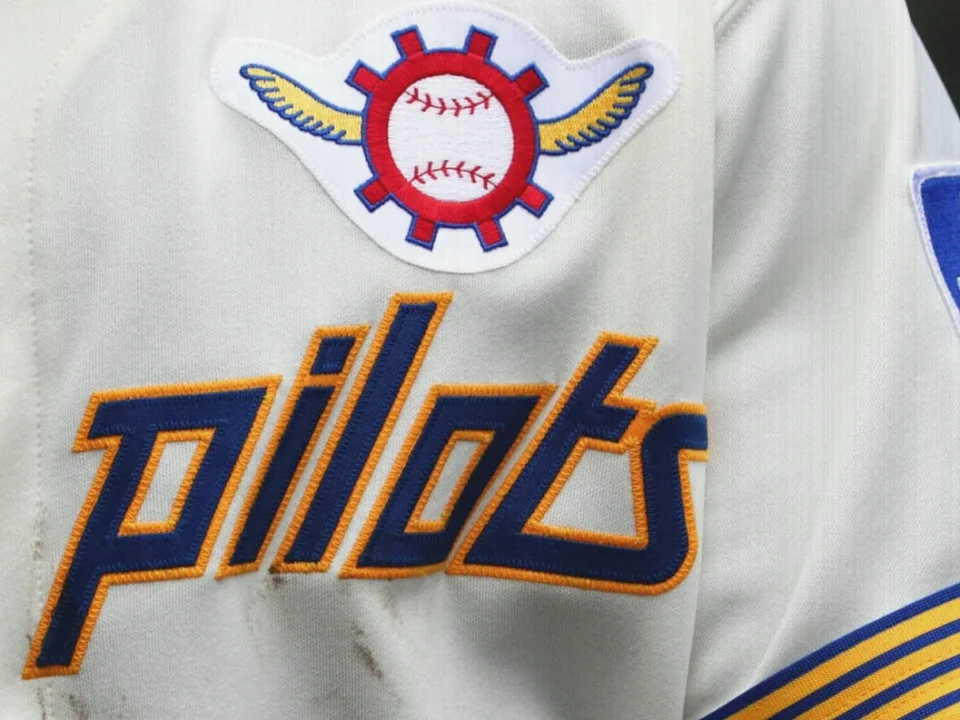
The expansion club adopted the Pilots name, nodding to the region’s seafaring tradition and aerospace business. Blue and yellow became the colors.
-
Seattle’s first pick in the 1968 Expansion Draft was first baseman Don Mincher, taken from the Angels. Mincher had made the 1967 All-Star team with California after hitting 25 home runs and posting an .854 OPS. The Pilots followed by selecting Tommy Harper from Cleveland; Harper would lead all of baseball with 73 stolen bases in 1969.
-
The Pilots made their debut on April 8, 1969, in Anaheim against the Angels. Four first-inning runs were enough to send Seattle home with a 4-3 victory.
-
For a while, the new club stayed in the fight. Seattle stood 35-39 on July 1. The rest of the summer got away from it, however, and the Pilots finished 64-98, with one tie in the official record.
A season with a 163rd game
Mincher remained the club’s biggest bat, hitting 25 homers in an All-Star season. But the Pilots’ lone year also included one of those old-rule oddities that would look strange on a modern schedule.
-
On Sept. 12, Seattle and the Angels played the second game of a doubleheader at Sick’s Stadium. Rain stopped the game in the 10th inning with the score tied, 1-1.
-
At the time, a weather-shortened tie after five completed innings still entered the clubs’ records, but it did not count in the standings. The game also had to be replayed in its entirety.
-
The next day, the Pilots and Angels met again in the first game of another doubleheader. Seattle won the replay, 6-4, giving a last-place club the unusual distinction of playing a 163rd game.
A Milwaukee stop before the move
The Pilots had already played a regular-season game in their future home city without realizing what was coming.
-
Milwaukee had been without a Major League team since the Braves left for Atlanta after the 1965 season. Allan H. “Bud” Selig organized local efforts to bring one back.
-
A 1967 exhibition between the White Sox and Twins at County Stadium drew a strong crowd. Chicago then agreed to move portions of its regular-season schedule to Milwaukee over the following two years.
-
One of the 11 White Sox games staged there in 1969 came June 16 against Seattle. Chicago beat the Pilots, 8-3, at County Stadium.
-
Within a year, that same park would become Seattle’s new home. It was a remarkable turn: the Pilots had played in Milwaukee before they were the Milwaukee Brewers.
Truck day turns toward Wisconsin
Seattle’s financial trouble became too severe to survive the winter. After the 1969 season, the franchise entered bankruptcy, and a court cleared its sale to an ownership group led by Selig.
-
The bankruptcy approval did not arrive until March 31, 1970, as Spring Training ended in Tempe, Arizona. The club’s equipment trucks were left in limbo: should they head west to Seattle or east to Milwaukee?
-
The trucks paused in Provo, Utah, while the paperwork was settled. The uniforms created another problem, with “Pilots” still sewn across the fronts.
-
On April 2, the transaction became official. The franchise was renamed the Brewers, the trucks were redirected to Wisconsin, and the existing uniforms were altered by removing “Pilots” and stitching on “Brewers.”
-
Five days later, on April 7, Milwaukee played its first home game at County Stadium. The Angels won, 12-0.
County Stadium remained the Brewers’ home for the next 30 years, before the club moved to Miller Park, now American Family Field. The franchise was only the second Major League team to spend a single season in one city before relocating; the other was the 1901 Milwaukee Brewers, who became the St. Louis Browns in 1902.
So the Brewers’ World Series moment belongs to Milwaukee, but the first page was written at Sick’s Stadium, nearly 1,700 miles away. The Pilots lasted one season. Their baseball life, though, never really ended—it simply changed uniforms in a hurry.