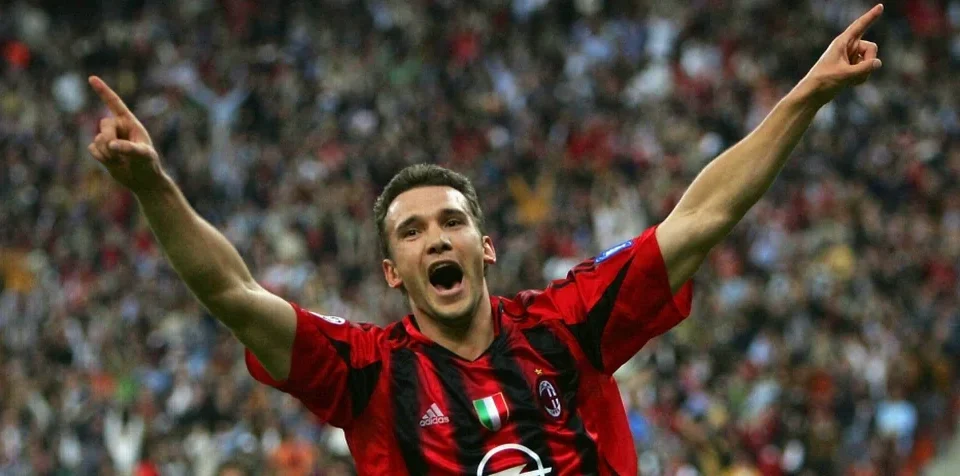
Andriy Shevchenko will turn 50 on Tuesday with his gaze fixed less on celebration than on the work still required in Ukrainian football. The former Milan forward, now president of Ukraine’s football federation, describes a game forced to operate through war, travel and an emergency that has become part of everyday life.
For a figure whose name remains tied to Milan’s great European nights, the present is defined by a different responsibility: protecting the place football can still hold for young Ukrainians and for a country under sustained pressure.
Quick facts
- Shevchenko turns 50 on Tuesday while serving as president of Ukraine’s football federation.
- Ukraine’s School League has grown from 12,000 participants to 50,000 in three years.
- Every Ukraine match is now played away from home, increasing organisational costs.
- Shevchenko’s Ballon d’Or has been returned to Ukraine after time in Milan’s museum.
- Andrea Maldera has been appointed Ukraine coach after previously working in Shevchenko’s staff.
Shevchenko said normal life no longer exists for many in Ukraine, particularly for younger generations living with shelters, remote schooling and continuing attacks. The federation’s task, he said, is to limit the damage and keep football functioning despite the circumstances.
European support has been crucial, with UEFA and FIFA funding forming an important part of the budget. Yet exile brings its own burden: without home fixtures, each match requires more costly arrangements away from Ukraine.
Football remains one of the few outlets available to children, in Shevchenko’s view. The School League, launched three years ago, has expanded sharply from 12,000 boys and girls to 50,000, offering activity and routine amid what he called a permanent state of emergency.
“Sport can help young people find their rhythm and avoid falling into crisis,” he said. “We are trying to give them some relief.”
A public role beyond the old goals
Shevchenko rejected the suggestion that his sporting status makes him a national symbol in the current moment. He reserved that description for those defending Ukraine in the armed forces and resistance, whose courage he has witnessed during the past five years.
Football’s contribution, he said, is more modest but still meaningful. Soldiers and supporters watch the national team, and a strong performance can offer a brief lift in circumstances where such moments matter.
His own career still carries immense weight in both Ukraine and Italy. He recalled his first youth call-up at Dynamo Kyiv, early Champions League matches against Barcelona, Real Madrid and Bayern Munich, then the move to Milan and the European Cup triumph that followed.
He also listed Ukraine’s first World Cup qualification, his Chelsea years and FA Cup success, Euro 2012 on home soil, and the Ballon d’Or. Shevchenko remains the third Ukrainian winner of the award, after Oleh Blokhin and Ihor Belanov.
The trophy has travelled back to Ukraine after a long stay at Milan’s museum. Together with Blokhin and Belanov, Shevchenko has taken part in an initiative built around the message that a fourth Ukrainian Ballon d’Or winner could emerge, using the three trophies to encourage a new generation.
Maldera and the next target
Ukraine’s new coach, Andrea Maldera, was chosen from a familiar circle. Shevchenko pointed to Maldera’s previous work in his staff, his understanding of the Ukrainian environment and his experience abroad, including alongside Roberto De Zerbi.
Maldera’s ambition also counted. Shevchenko insisted that difficult conditions do not remove the federation’s obligations to supporters, and that qualifying for a major tournament remains the objective.
At 50, Shevchenko continues to keep a strict personal routine. His mornings begin with cold water, either a plunge or a swim at temperatures of four or five degrees, followed by 45 minutes of exercise before office work or video calls.
In Ukraine he plays padel; in England he plays golf. He usually sleeps from 11.30pm until 7.15am, eats little meat, favours salads and fish, and keeps pasta in his diet from time to time as a lasting Italian habit.
His weight, he said, has barely moved since his thirties, staying around 84 kilograms and rarely above 85. He reads in several languages, checks news from Ukraine as soon as he wakes, and places family at the centre of his life.
Milan remains part of home
Shevchenko named family and charitable work as the defining images of his life away from the pitch. Through the federation’s foundation, a solidarity project has been launched to support people who have suffered amputations, especially during the war.
As a player, he sees Dynamo Kyiv, Milan, Chelsea and the national team as the central institutions of his story. Dynamo formed him, Milan represented an extraordinary chapter, and Chelsea also brought important satisfaction.
He believes supporters beyond Milan appreciated him because he understood the emotional weight of both victory and defeat. Making Milan fans happy mattered, he said, but he never ignored the disappointment felt by opponents.
“There is only a fine line between winning and losing,” Shevchenko said. “I have always respected everyone.”
Italy remains his second home, and Milan remains in his heart. He said his attachment to both is not a courtesy but a lasting truth from the years that shaped his greatest club achievements.
Shevchenko also offered a calm message to Italian football during a difficult period for the national side and the domestic game. Italy, he said, should not complain excessively: its history and talent remain substantial, and improvement requires changes rather than despair.
Asked whether he lives without regrets, Shevchenko chose the view that a life without them is not fully lived. Mistakes should be understood as experience, he said, rather than carried as permanent blame; positivity, respect and kindness remain values from which he draws strength.
For his 50th birthday, the wish is uncomplicated. He wants peace for Ukraine, a future for its next generation through football, and the chance to remain a good father while carrying forward the work of his federation.