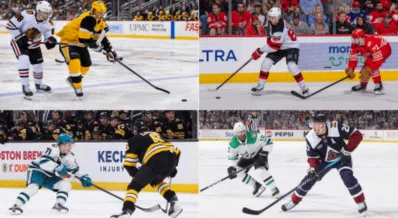
Early-season NHL games have carried a loose, unfinished feel, and the compressed runway into opening night is a major reason why. With training camps shortened and the preseason trimmed to four games, coaches have had limited ice time to install systems, sharpen special teams and get players accustomed to true NHL tempo.
Key takeaways
- Most clubs had only seven to nine possible full-team practice days during camp after preseason dates and scheduled off-days were accounted for.
- Teams opening on Sept. 29 could have had as few as six or seven practice days, while the Ottawa Senators had roughly 11 before their Oct. 3 opener.
- Through about 100 games, defensive breakdowns and high-scoring results have been a prominent early-season pattern.
- The Calgary Flames and Vancouver Canucks were allowing 5.40 and 5.00 goals per game, respectively.
- Philadelphia, Calgary and Los Angeles have already been put under pressure by winless or slow starts.
Short camp leaves coaches choosing what to teach
Training camp planning has become a tighter exercise than usual. Teams may have 13 to 15 days from the start of camp through the end of the exhibition schedule, but four preseason games and two or three off-days can cut that usable practice window nearly in half.
The complication is the size of a camp roster. Clubs can have around 55 players on hand, and coaches must decide whether to spend their first days evaluating the entire group or pull their projected NHL roster together immediately. The latter approach offers more time to establish structure, but it also asks a staff to make its early camp decisions quickly.
With veteran players generally appearing in the final two exhibition games, the earlier game days can be used as practice opportunities for the main group. Even then, there is not enough time to repeatedly cover every detail a coaching staff wants in place before the standings start counting.
A club can enter camp with perhaps 20 system items on its teaching list: defensive-zone coverage, forechecking responsibilities, tracking and sorting out opponents in transition, line-rush reads and special-teams work. In a seven-day practice window, each item receives only limited repetition.
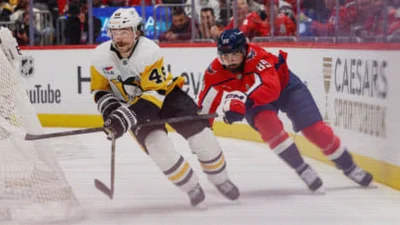
The Pittsburgh Penguins-Washington Capitals game offered one example of the questions that can surface at this time of year. When Washington went on a 5-on-3 early in the game, the immediate coaching question was not whether the Capitals had installed that situation, but how often they had actually been able to rehearse it.
Players may arrive in excellent condition, but fitness work in the summer cannot duplicate game speed, contact or the demands of skating against NHL opposition. Training camp is normally where players build that final layer of readiness, and the shorter format has made the adjustment more abrupt.
Goals against pile up as teams search for structure
The early results have reflected the lack of polished detail. Calgary was conceding 5.40 goals per game and Vancouver 5.00. The Chicago Blackhawks were at 4.33, the Los Angeles Kings at 4.25 and the Philadelphia Flyers at 4.00.
That combination of increased offense and defensive confusion is not unfamiliar after an abbreviated preparation period. The 2012-13 season, reduced to 48 games after the lockout, also began after a shortened camp. But the current setup will give coaching staffs another offseason case study as they reconsider how to divide camp time next year.
Some teams have chosen to narrow their focus rather than attempt a complete installation. The approach is to master a smaller package of priorities first, then layer in the remaining elements once the regular season is underway.
That may be the practical answer, but the standings can make a slow start costly. Philadelphia was 0-5-2 without a victory, Calgary was 0-5-0, and Los Angeles stood at 0-2-2 under new coach Peter Laviolette. The Kings had surrendered 17 goals across their first four games while adapting to a new system.
There is little room for panic, but there is also no surplus of practice time waiting in the NHL schedule. Clubs will have to use their available sessions efficiently to reconnect their structure, clean up coverage and keep the group aligned. A difficult October can be repaired, yet the points lost during that scramble can matter when the season reaches its final weeks.