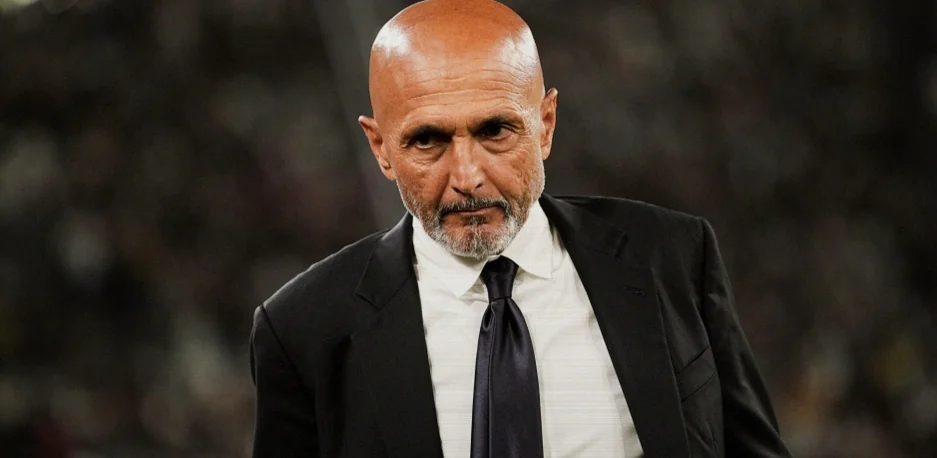
Juventus left Cagliari with a point, but Luciano Spalletti’s frustration was directed less at the final score than at the sense of an opportunity left unfinished. The draw improved the league position, yet it again exposed the difficulty his side have had in turning territorial control into a decisive presence around the opposition penalty area.
There was also a brief confrontation after the match at the Unipol Arena, involving Spalletti and Cagliari coach Fabio Pisacane. The Juventus manager played down the incident, explaining that he had complimented Cagliari on their quality before adding that they had also managed the clock well. Pisacane challenged the remark about time-wasting, and the two were separated, but Spalletti insisted there was nothing more to it.
The more significant discussion concerned Juventus’s attacking shape. Spalletti said he had started Weston McKennie on the left, with Nico Gonzalez in that area. He described Gonzalez as the strongest aerial player available to Juventus and someone capable of operating as a supporting striker. He was particularly pleased with the freedom given to Randal Kolo Muani, while the late decision to use him alongside Nick Woltemade finally gave Juventus two recognised forwards in the box.
Kolo Muani’s goal came amid a crowded penalty area, precisely the sort of situation Juventus have often struggled to make count. Spalletti praised the forward’s instinct in turning a difficult moment into a meaningful one, but that did not soften his verdict on the afternoon. “I am angry because these are matches we should win,” he said.
A demand for greater conviction
Spalletti did not believe Juventus lacked potential. Instead, he called for a stronger mentality from the group, speaking of the determination required from players with “strong heads”. His own perspective, he said, was not about protecting an individual result but about finishing his career properly, and that meant demanding high standards every week.
For that reason, he saw value in the performance despite the disappointment of the draw. Spalletti maintained that Juventus had played very well and argued that, if they can repeat that level consistently, victories will follow in considerable number. Yet the championship does not wait for potential to become habit, and the coach’s words carried the familiar pressure of a club that measures progress not only through possession or promising spells, but through the matches it is expected to take.
Asked whether the team had shown too little personality, Spalletti accepted that something more must be added. He also pointed to the experience of Cagliari defender Yerry Mina, saying the Colombian had again used his manner and game management to unsettle Juventus, as he had done last season. Spalletti felt his side should sometimes receive more protection against such behaviour, though he did not use it as an excuse.
His final point was directed inward. Winners, he said, possess more character and strength; Juventus cannot simply wait for victory to arrive. In Cagliari, that was the gap between a useful point and the result Spalletti believed his side should have imposed.