For the first time, Serie A will be halted for three weeks by the international window, an interruption long enough to alter the rhythm of a season rather than merely pause it. Coaches rarely welcome losing ten or fifteen players to national teams, with the familiar risk of injuries adding to the irritation, but the break also offers a rare stretch for recovery work, tactical detail and a modest physical reset.
Milan see a chance to give Amorim’s side clearer shape
Milan may be among the clubs best placed to turn the stop into an advantage. Their opening phase has been uneven and their identity has not always been clear, although the win over Lecce strengthened both confidence and league position.
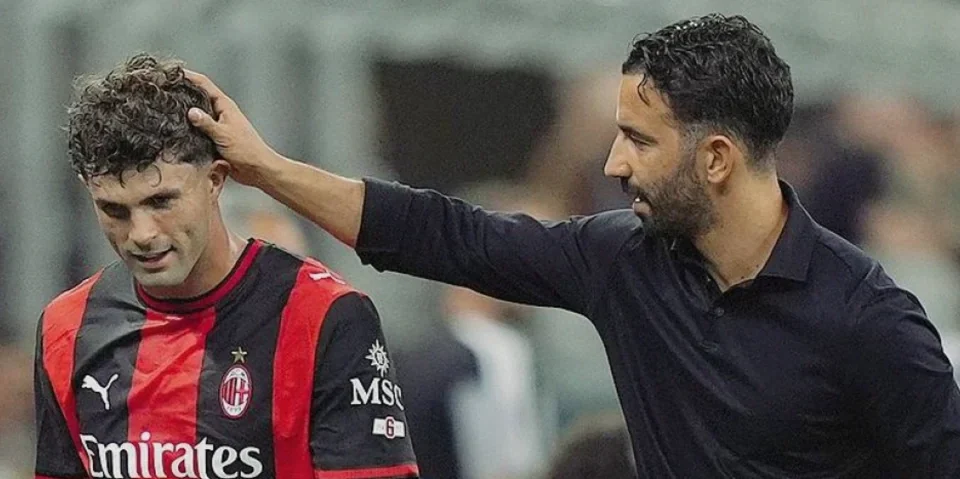
Ruben Amorim will have 14 players away on international duty, yet there is still useful work to be done at Milanello. Christian Pulisic remains with the squad after returning to full fitness and scoring again, and the American could become central to Milan’s attacking solutions as the coach seeks to define his ideas more sharply.
- The three-week interval gives Milan time to combine rehabilitation, training-ground work and preparation for the next league chapter.
- Pulisic’s presence is particularly valuable after his return to form and fitness.
- For Amorim, the objective is to turn a contradictory start into a more coherent team direction.
The pause should also suit two coaches still settling into new surroundings: Raffaele Palladino at Bologna and Paolo Vanoli in Florence. What resembles an autumn training camp gives both men a longer spell to work with the players available to them.
Injuries, defensive problems and coaches seeking answers
Napoli have perhaps the clearest need for time. Massimiliano Allegri’s injury list is extensive, while the players who have remained available have shown signs of being stretched. Not every long-term absentee will return immediately, but the prospect of recovering even two additional options would ease the pressure on the squad.
At Inter, Cristian Chivu is waiting on Hakan Calhanoglu, John Stones and Djed Spence. The break also allows him to examine the defensive concerns that have marked the campaign, above all the number of goals conceded and the recurring habit of falling 2-0 behind.
Juventus have recently shown signs of progress under Luciano Spalletti, but their improvement remains incomplete. Spalletti has generally handled international interruptions well, and he now has another opportunity to build on the steps already taken.
- Napoli hope a reduced injury burden can broaden Allegri’s choices.
- Chivu must address Inter’s early-match collapses as well as wait for key recoveries.
- Spalletti’s Juventus need to convert recent encouragement into steadier development.
Roma’s momentum and the teams reluctant to stop
Gian Piero Gasperini would have preferred the league to continue. Roma have started strongly, and few coaches place greater emphasis on demanding work on the training ground. Even so, Gasperini does not view international football with the same suspicion as many colleagues: competitive matches, in his view, are the best form of preparation for those selected by their countries.
Roma will retain seven players from their usual starting eleven at Trigoria, including Paulo Dybala and Donyell Malen. Rest can only help Dybala, whose workload has long required careful management.
Lazio, Frosinone and Cagliari will also regret a break in the calendar after enjoying their own strong moments near the top of the table. Como, meanwhile, do not particularly need extra tactical instruction under Cesc Fabregas, whose methods have already taken hold, nor are they waiting for a significant group of injured players to return. Yet Frosinone’s first defeat of the season will remain a subject for reflection during the long interval.
Atalanta face the most searching three weeks
Further down the standings, Atalanta could emerge looking markedly different when Serie A resumes. They enter the break carrying three successive defeats and having made a major tactical shift under Maurizio Sarri.
Sarri is meticulous, particularly over defensive movement, and the new approach has so far delivered little. Around 20 days of work on the pitch are therefore valuable. The complication is that international call-ups will prevent him from having anything close to a full group, limiting the time available to rehearse the details he wants.
The international window will lower the weekly competitive tension across the league, but it will not remove the pressure. For some clubs it is a recovery period; for others, it is an uncomfortable wait with problems still unsolved.