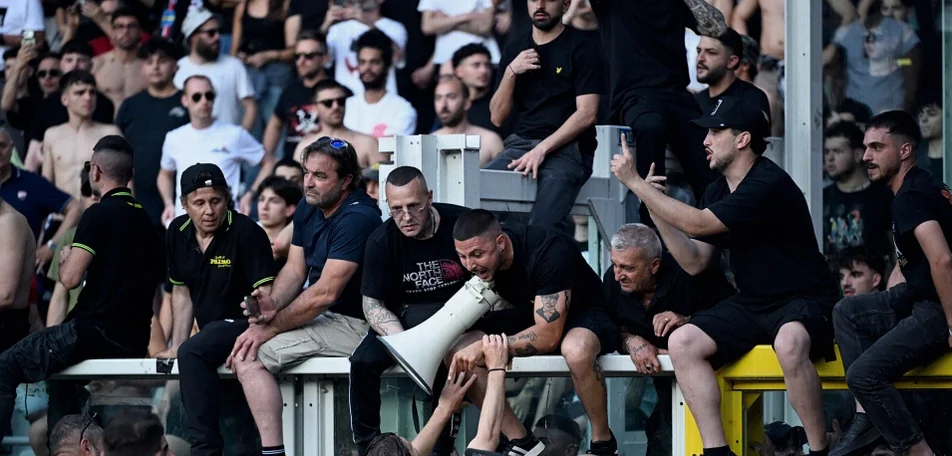
The Turin derby of 24 May has returned to the foreground not through its football, but through the consequences of the disorder that unfolded before kick-off. Police have issued more than 40 Daspo orders and carried out around 20 precautionary measures following an investigation into clashes linked to Torino and Juventus supporters.
The coach and the club
For Torino and Juventus, a derby is meant to belong to the city’s sporting calendar: a difficult afternoon, divided colours and a result that carries weight beyond the table. The events before the May meeting instead led to an investigation centred on organised supporter groups from both sides.
The measures were conducted by Turin’s Digos unit, with operations not limited to the city itself. Precautionary actions were also carried out in other northern Italian cities, including Milan and Genoa.
Those affected are believed to include Juventus and Torino ultras connected to established organised groups within the two fanbases. The police response includes more than 40 Daspo measures, which prohibit recipients from attending sporting events, as well as roughly 20 precautionary measures.
A derby day beyond the stadium
- Before the derby on 24 May, disorder broke out in Piazzale San Gabriele di Gorizia between Juventus supporters and police officers.
- There was also contact between Juventus ultras and the Torino supporters’ march as it travelled towards the Curva Maratona.
- During the incidents, Marco Leonardo Basoccu was injured after being struck by a tear-gas canister fired at head height.
- The subsequent investigation has now produced bans from sporting events and precautionary measures across several northern Italian cities.
The case leaves both clubs facing a familiar tension around one of Italian football’s most intense local fixtures. The derby remains a contest shaped by history and identity, but the authorities’ intervention underlines the boundary that must hold around it: rivalry cannot be allowed to become violence before the players even take the field.