French football is watching another fault line open in the global game, with UEFA and Concacaf challenging FIFA over how its vast reserves should be returned to the national associations beneath it.
Ceferin and Montagliani call for member payments
UEFA president Aleksander Ceferin and Concacaf president Victor Montagliani have written to FIFA president Gianni Infantino asking the governing body to guarantee a payment of at least $10 million to each of its 211 member federations during the 2027-2030 cycle.
The letter was sent on Friday and argues that FIFA’s financial position makes such a distribution affordable. The two confederation leaders said FIFA is expected to finish its 2023-2026 cycle with reserves of about $6 billion, a record level for the organisation.
- Requested minimum payment: $10 million per member association.
- Number of FIFA member associations: 211.
- Potential overall distribution: approximately $2.1 billion.
- Proposed payment period: the 2027-2030 cycle.
- Estimated FIFA reserves at the end of the current cycle: around $6 billion.
Ceferin and Montagliani argued that, on the basis of those reserves, FIFA should commit the money directly to its member associations. Their request would cover every federation in the global body, including the French Football Federation.
Governance dispute returns to the surface
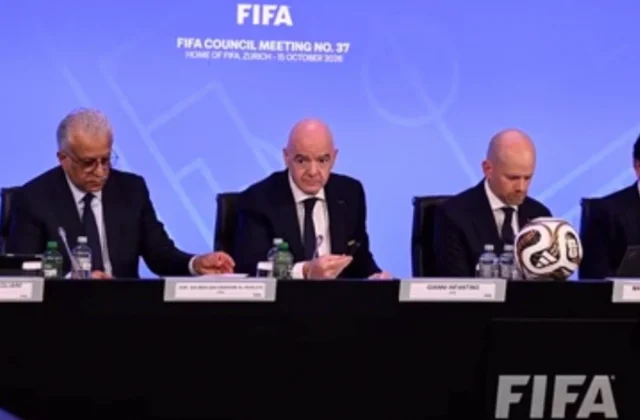
The intervention is also a direct challenge to Infantino’s governance of FIFA. It arrives during a wider period of tension in world football following the abandoned proposal to open the World Cup to private investors.
That plan had been pursued without consultation and was later dropped after widespread criticism. The new letter from UEFA and Concacaf keeps the focus on FIFA’s decision-making, financial priorities and the degree of influence member associations should have over the sport’s biggest commercial projects.
For the French game, where clubs and federation structures remain closely tied to the European football landscape, the dispute underlines a broader question: whether FIFA’s growing income will be retained at the centre or redirected more substantially towards the federations that run the sport on the ground.