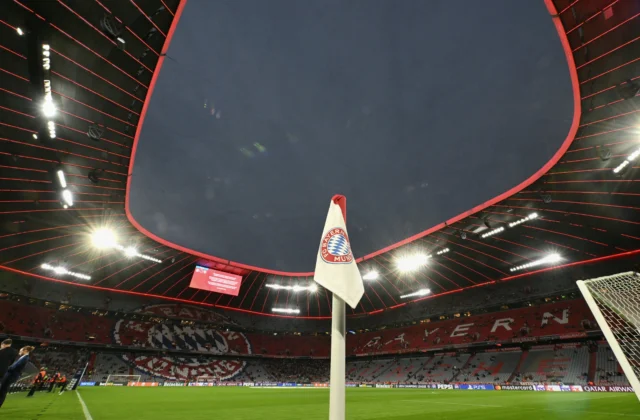
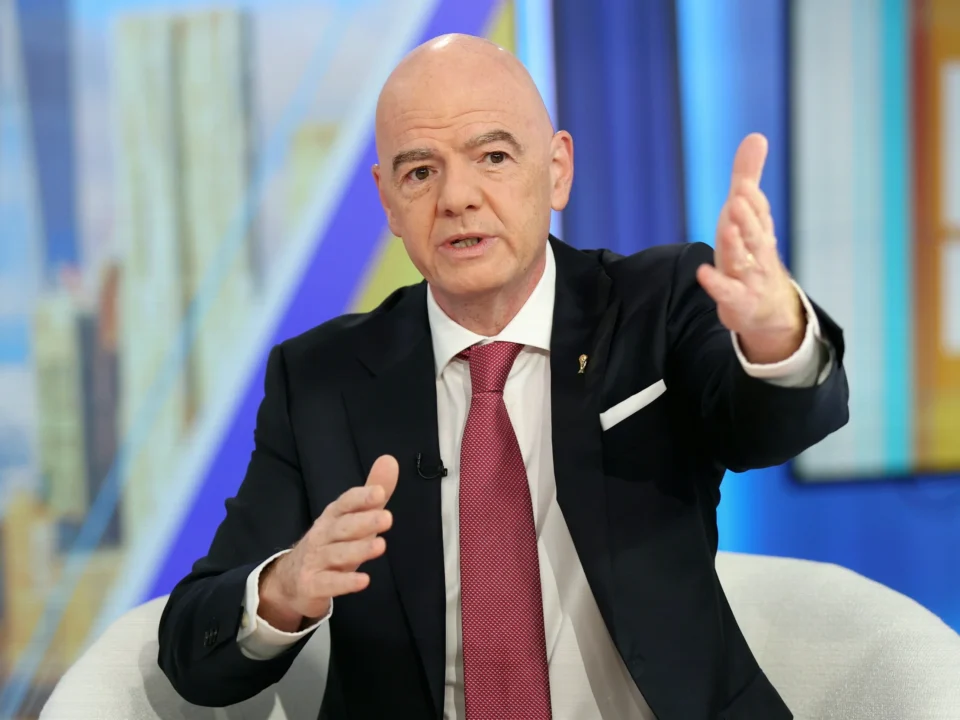
In the corridors between Nyon and Zurich, UEFA has taken its dispute with FIFA from public criticism to a detailed formal challenge. The European confederation has sent world football’s governing body a letter containing 42 questions about governance, financial decisions and the conduct of FIFA president Gianni Infantino, setting a two-week deadline for replies.
Theodore Theodoridis, UEFA’s general secretary, signed the letter to FIFA general secretary Mattias Grafstrom after European members raised concerns at last week’s FIFA Council meeting. UEFA said the explanations offered there by Infantino had failed to deal adequately with several outstanding issues.
At the centre of the confrontation is the abandoned FIFA Forward Enterprise plan, a proposed subsidiary that would have brought private investment into commercial operations connected to FIFA’s leading competitions, including the World Cup. FIFA had explored an exclusive arrangement with Thrive Capital, with the proposed transaction reportedly based on a post-investment valuation of $20 billion.
UEFA asks why the investment group was selected, why the Council was not consulted before an exclusivity agreement was signed, and what changed between 17 July, when the proposal had been due before the Council, and 28 July, when member associations were asked to back it. It has demanded access to all documents related to the project and wants an investigation that is genuinely independent, including scrutiny of Infantino’s own role.
The plan had envisaged increased funding for member associations, including through the FIFA Fast Forward programme, under which each association would receive $20 million. UEFA questions why additional distributions were tied to outside investment when FIFA has strong reserves, and why the governing body had not previously used its own resources to fund them.
Infantino subsequently dropped the idea, saying it had created divisions. That retreat has not eased UEFA’s opposition. The confederation had become the principal institutional critic of the proposal, joined by other football bodies, and had publicly indicated that it no longer trusted the FIFA president. What had looked like a highly likely re-election for Infantino during the World Cup has therefore become less certain.
Questions stretching from World Cup discipline to Washington
The letter goes far beyond the proposed commercial vehicle. UEFA seeks clarification over reports that Infantino received substantial additional payments in 2024 beyond his published salary, asking FIFA to disclose their nature, value and justification. It also requests details of any fees, payments, expenses or other financial benefits granted to singer Marc Anthony.
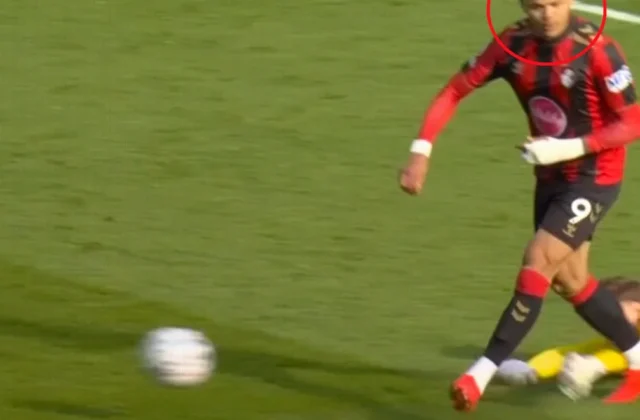
Another major section concerns the disciplinary case involving United States forward Folarin Balogun. His suspension was overturned during a World Cup co-hosted by the United States, and UEFA asks for the complete written reasoning behind that outcome. It also seeks an account of President Donald Trump’s publicly acknowledged call to Infantino requesting a review of the case: what Trump asked for, how Infantino responded, and whether the FIFA president or secretary general then contacted anybody inside the organisation.
UEFA further asks how FIFA has applied Article 27 of its disciplinary code in comparable cases, why it believed that provision needed to be amended, and what legal and factual grounds governed a separate eligibility matter involving a player who represented the Democratic Republic of Congo in World Cup qualifying. The letter asks Infantino to confirm that he did not intervene in that case.
The World Cup itself is another focus. UEFA points to the 27-minute half-time interval in the final, saying neither the International Football Association Board nor the FIFA Council had been consulted, and raises similar concerns over compulsory hydration breaks introduced across the tournament. It has also asked for a full list of VIP and VVIP guests at the final and whether premium hospitality suites used by celebrities and other visitors were provided without charge.
FIFA is asked to account for reports of private aircraft use by Infantino and accommodation costs, particularly in Qatar and the United States, including sums paid, purposes, approval procedures and compliance with travel and financial rules.
The letter also gathers together a series of potential conflict-of-interest questions linked to Infantino’s relationship with Trump and people close to the US president. These include the FIFA Peace Prize awarded to Trump; a seven-year, roughly $4 million lease for Trump Tower office space in New York involving Eric Trump, reportedly unused for much of the year; the proposed Thrive Capital deal; and discussions reported to concern a FIFA cryptocurrency involving Trump and associates.
UEFA additionally cites FIFA’s World Cup sponsorship agreement with Kalshi, a company said to have Donald Trump Jr as an adviser and investor; the late move of the World Cup draw from Las Vegas to the JFK/Donald Trump Center in Washington, D.C., at an alleged significant extra cost; and the participation of Trump’s daughter and grandson in the Club World Cup draw. It seeks explanation, too, of a $75 million investment in Palestine announced during a meeting of Trump’s Board of Peace, as well as public statements by White House figures including Andrew Giuliani and Trump supporting Infantino and criticising his opponents.
On the Peace Prize itself, UEFA asks who decided to create it, for what purpose, why Trump was selected, and what personal part Infantino played. It also wants FIFA to state whether Infantino would have held any role or received any direct or indirect financial benefit from the Forward Enterprise had it proceeded, either during or after his presidency.
Election safeguards under scrutiny
The final strands of UEFA’s challenge concern FIFA’s internal oversight and the coming presidential contest. The letter refers to information that, two days before the Bureau of the Council was to vote on the Forward Enterprise proposal, Infantino told members that US authorities were investigating FIFA’s administration. UEFA asks whether he made that statement, what it was based on and whether he considered the pressure it might create immediately before the vote.
It seeks details of measures intended to prevent misuse of FIFA resources and protect a fair presidential election. UEFA questions the independence of FIFA Electoral Committee chair Chiomento, citing an acquaintance with Infantino of around 20 years and invitations to FIFA events and competitions paid for by FIFA. It also says it has documentary and other material supporting concerns that the administration has not remained neutral during the campaign.
The European body refers to a complaint understood to have been filed by the Norwegian Football Federation with FIFA’s Ethics Committee, and asks how FIFA can ensure the independence of the relevant judicial bodies. It raises specific questions about the impartiality of Rojas, president of the Adjudicatory Chamber, including whether she would step aside from proceedings involving Infantino if required.
For UEFA, the two-week reply period is intended to test more than the fate of one discarded investment project. The questions range across commercial control, tournament administration, presidential conduct and electoral safeguards, placing FIFA under sustained pressure as the game’s institutions navigate an increasingly open divide.