The Utah Mammoth enter 2026-27 with the honeymoon over and the bar raised. After going 43-33-6, finishing fourth in the Central Division and taking a 2-1 series lead over the Vegas Golden Knights before falling in six games in the Western Conference First Round, Utah is expected to push deeper when the NHL regular season opens Sept. 29.
Andre Tourigny begins his sixth season behind the bench with a more established operation around him. Utah’s first campaign after taking over the former Arizona Coyotes hockey assets came with understandable growing pains: a rushed launch, no permanent club identity and no dedicated practice facility. The Mammoth now have their name, their new facility and a playoff appearance on the ledger.
What they also have is a Central Division that will not offer much room to coast. Colorado finished first in the NHL standings last season, Dallas was third and Minnesota seventh, putting three of the League’s top seven clubs in Utah’s division.
Veterans added to a young core
Captain Clayton Keller remains the offensive centerpiece after producing 26 goals and 62 assists for a team-leading 88 points in all 82 games last season. He is 28, while Utah’s younger scorers are still climbing.
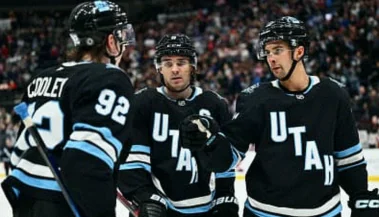
Dylan Guenther, 23, paced the Mammoth with 40 goals. Logan Cooley, 22, posted 24 goals and 43 points in 54 games despite missing time with a lower-body injury. Cooley’s next step could be one of the biggest factors in Utah’s season.
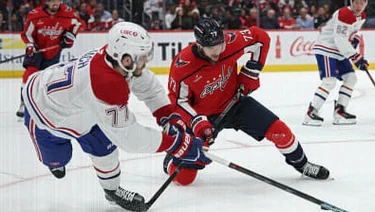
The offseason additions were aimed at giving that skilled group more edge and playoff seasoning. Utah signed 36-year-old forward Anders Lee to a three-year, $16.2 million contract, carrying a $5.4 million annual cap hit, and acquired 33-year-old Vincent Trocheck from the New York Rangers on July 1.
Trocheck brings 56 playoff games to a room where Cooley and Guenther have six each, Keller and Lawson Crouse have 15 apiece, and Nick Schmaltz has played 10. His postseason total is greater than those five teammates combined. He also won Olympic gold with Team USA at the 2026 Winter Games.
He can work at center or on the wing, contribute on both special-teams units and handle faceoffs from either forward spot. Trocheck has already been working with younger Mammoth players on draws in practice. In camp, he has been stationed at left wing beside Schmaltz and Keller on the top line, though his long-running offseason work with Pittsburgh-area training partner Cooley leaves another possible fit at even strength.
Trocheck’s all-around game gives Utah options
Trocheck recorded 16 goals, 37 assists and 16 power-play points in 67 games for New York last season, while delivering 193 hits. He had a career-best 77 points in 2023-24 and has scored at least 20 goals in four of the past five seasons.
His physical profile is equally notable. Trocheck has registered at least 175 hits in five consecutive seasons. Since 2022-23, he is the only NHL player with a minimum of 70 goals, 700 shots, 700 hits and 240 blocked shots; his totals over that stretch are 89 goals, 756 shots, 764 hits and 257 blocks.
Tracking data last season put his hardest shot at 91.12 mph, his top skating speed at 23.04 mph and his total distance covered at 218.77 miles. For a Utah club looking to become harder to play against without losing pace, those details explain the appeal.
Cossa joins Vejmelka in net
Karel Vejmelka is set to remain Utah’s primary goaltender after starting 63 games last season, but Sebastian Cossa should get a real NHL runway behind him. The 23-year-old was acquired June 26 after appearing for only 45 minutes with Detroit, a single relief outing in 2024-25.
The 6-foot-6, 221-pound Cossa was the No. 15 selection in the 2021 NHL Draft. He went 26-8-4 for Grand Rapids in the American Hockey League last season with a 2.33 goals-against average, a .915 save percentage and five shutouts.
With the regular-season slate expanding from 82 to 84 games, Utah will need more than a light backup workload. Cossa’s development and his ability to give Vejmelka meaningful relief could become one of the club’s most important internal stories.
Youngsters pressing for larger roles
Defenseman Dmitri Simashev is positioned to compete for the left side of the third pairing. The 21-year-old, listed at 6-foot-4 and 198 pounds, was the No. 6 pick in the 2023 draft by Arizona. He had one assist in 28 NHL games with Utah last season, while putting up eight goals and 27 assists in 40 games for Tucson in the AHL.
Forward Daniil But, another 21-year-old first-rounder from Arizona’s 2023 class at No. 12, also has a chance to force the issue. The 6-foot-5, 203-pound winger recorded three goals and four assists in 29 games for Utah, then added 19 goals and 20 assists in 41 Tucson appearances. He had a goal and an assist in Utah’s 6-3 preseason victory against the Los Angeles Kings on Tuesday.
Projected Mammoth lineup
| Position | Projected unit |
|---|---|
| First line | Vincent Trocheck — Nick Schmaltz — Clayton Keller |
| Second line | Dylan Guenther — Logan Cooley — Anders Lee |
| Third line | Jack McBain — Barrett Hayton — Lawson Crouse |
| Fourth line | Michael Carcone — Kevin Stenlund — Kailer Yamamoto |
| First defense pair | Mikhail Sergachev — MacKenzie Weegar |
| Second defense pair | Nate Schmidt — John Marino |
| Third defense pair | Dmitri Simashev — Andrew Peeke |
| Goaltenders | Karel Vejmelka; Sebastian Cossa |
The Mammoth have moved beyond being a new-market curiosity. Their test now is to turn a promising first playoff trip under the Utah name into a season that holds up against the weight of expectation in the Central.