Two days before Christmas in 1979, a Serie B afternoon at Marassi became memorable for reasons that reached far beyond the scoreline. Genoa’s 2-1 win over Taranto was shaped by goals, tension and a referee determined to restore order — even if that meant showing red cards to four ball boys and, later, both managers.
An uneasy afternoon at the Ferraris
The match took place on 23 December 1979, in the 15th round of the Serie B season, under clear skies at Genoa’s Luigi Ferraris Stadium. Genoa had entered the fixture without a victory in three league matches and were protecting a narrow lead as the winter light faded in Marassi.
- Carlo Odorizzi put Genoa ahead.
- Taranto responded through an Antonio D’Angelo penalty.
- Giancarlo Tacchi restored Genoa’s advantage, making it 2-1.
The visitors’ goalkeeper, Zelico Petrovic, an Istrian from Pula known for his imposing moustache, soon found himself involved in the day’s most unusual confrontation. Frustrated by the slow return of the ball behind his goal, Petrovic chased down a ball boy, stopped him and pulled at him in an effort to get the ball back into play. The game resumed, but the dispute was far from settled.
When Tacchi later fired over the crossbar, Petrovic turned towards the youngster with whom he had clashed. The ball boy responded with raised arms and a mocking smile. Petrovic looked for another ball boy, only to find no immediate assistance and, more importantly, no ball. It had apparently disappeared from the area behind the goal.
Lo Bello takes control
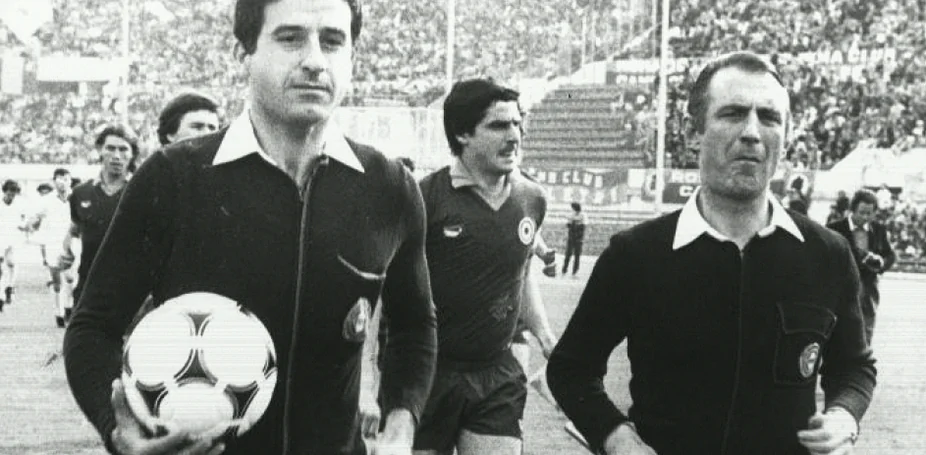
Rosario Lo Bello, then 34 and already an emerging referee with Serie A experience, had recognised a wider pattern. The Genoa ball boys, drawn from the home club’s youth system as was customary at the time, were repeatedly taking an excessive amount of time to return the ball. Whether they had been instructed to do so or were acting on their own initiative was never established.
Lo Bello was the son of Concetto Lo Bello, one of Italian football’s defining referees of the 1960s and 1970s, and he responded with the same visible authority associated with his father.
- Lo Bello initially warned the youngsters about the delays.
- When the behaviour continued, he issued a stronger threat.
- After another interruption, he called together the four ball boys stationed behind Petrovic’s goal.
- He produced a red card and sent all four away from the pitch, directing them towards the tunnel.
The episode gave the fixture its lasting identity: Genoa-Taranto became known as the match of the “sent-off ball boys”. The home supporters applauded as the four left their posts, fittingly at the same unhurried pace that had provoked the referee.
The dismissal did not alter Genoa’s immediate task. Taranto pushed harder in search of an equaliser, while the home side held on to the one-goal advantage until the final whistle.
Neither bench escaped the referee
Lo Bello’s interventions did not end behind the goal. Before full time, he also dismissed both coaches in quick succession.
- Taranto manager Gianni Seghedoni protested after Genoa full-back Fabrizio Gorin fouled Giovanni Quadri, demanding Gorin’s dismissal. Lo Bello instead sent Seghedoni off.
- The decision was particularly painful for Seghedoni, who had only taken charge of Taranto that week after replacing Adelmo Capelli.
- On the next phase of play, Genoa coach Gianni Di Marzio objected to a foul by Taranto sweeper Natale Picano.
- Lo Bello ordered Di Marzio from the technical area. Di Marzio protested that he had merely stood up from the bench, and the referee’s answer was blunt: “You should have remained seated.”
It was an afternoon in which a league match became a small portrait of Italian football’s old stadium culture: a home crowd guarding a result, young ball boys trying to influence the rhythm, coaches contesting every decision and an official refusing to let the occasion slip away.
The wider season brought neither club great comfort nor disaster. Genoa finished ninth in Serie B, settled in mid-table. Taranto survived by the narrowest possible margin, ending one point above the relegation line.