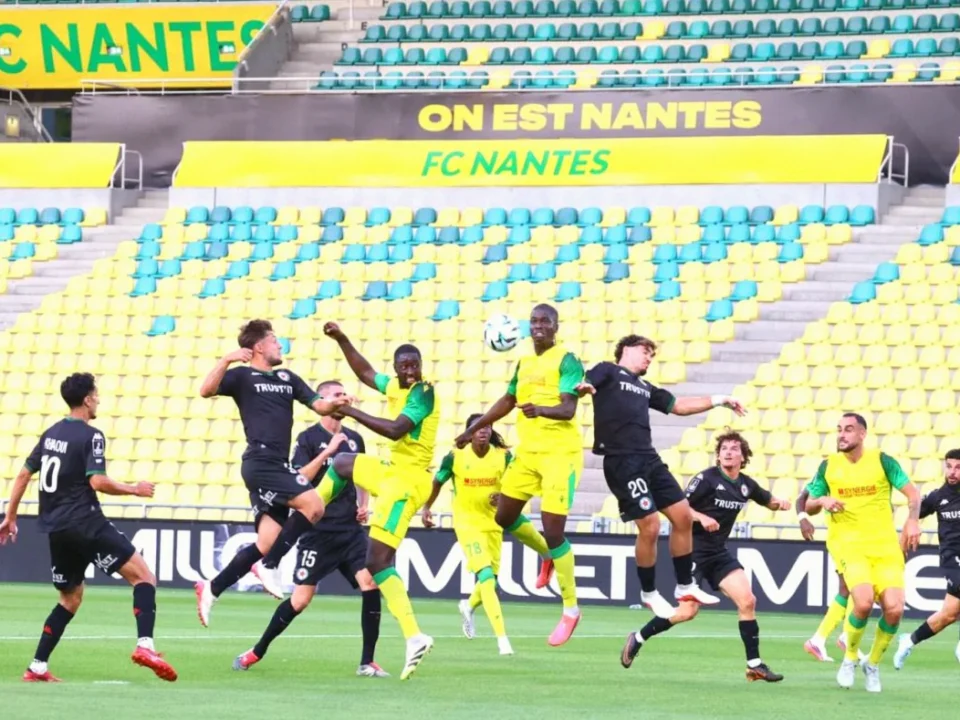
French football’s balance sheets can look forbidding under the floodlights. Yet even after another season of heavy operating losses, buyers continue to circle clubs placed on the market, with Nantes the latest example of an asset attracting interest despite the risks attached.
The figures underline the contradiction. By 30 June 2025, the DNCG’s accounts showed French professional clubs had recorded operating losses of €1.4 billion for the season, before player-trading income and shareholder funding were included.
That has not stopped potential takeovers. Investors of varying credibility have continued to emerge whenever a French club becomes available, although putting a reliable price on a team remains one of the game’s least exact calculations.
Quick facts
- French professional football posted €1.4 billion in operating losses for the 2024-25 season before transfers and owner injections.
- Club sales can range from a symbolic €1 deal with debts assumed, as in Bordeaux’s case, to Chelsea’s near-€5 billion takeover in 2022.
- Buyers commonly examine revenue multiples, projected cash flows, assets and football-specific performance indicators.
- Relegation, European qualification, broadcast income, transfers and wages can rapidly alter a club’s projected value.
One straightforward approach uses comparable transactions. If a similar club generated €100 million in revenue and changed hands for €900 million, that deal can produce a revenue multiple to apply to another prospective sale.
Such comparisons offer a starting point, not a certainty. Football clubs can have sharply different debt positions, stadium arrangements, supporter bases and sporting prospects, even when their annual revenues look similar.
Another widely used calculation is discounted cash flow, or DCF. It estimates the money a club could generate in future years, making it especially attractive where a buyer expects growth.
But the model rests on forecasts that can quickly move. European qualification, television-rights income, salary costs and transfer activity all change the picture, while a poor run on the pitch can have an immediate financial effect.
“It is very fragile because certain factors can have a major impact, particularly the sporting uncertainty that investors dislike,” said Christophe Lepetit, head of studies at the Centre for Sports Law and Economics in Limoges. “Relegation, for example, can significantly reduce revenue.”
Buyers can also use an asset-based assessment. That means examining debts, receivables, infrastructure and the value of the playing squad, including whether the club owns its stadium or training centre.
The calculation extends beyond bricks, land and players. Brand strength, supporter access, ability to secure sponsorship and local political connections can all be counted as intangible value when a price is being built.
Over the past decade, prospective owners and investment funds have increasingly mixed those approaches rather than relying on one number. Research published by Irish analyst Tom Markham around 2013 helped establish models that combine financial and operational data specific to football.
Those broader assessments can include revenue, net assets, profit or loss, stadium occupancy and the proportion of income spent on wages. They are now regularly used before a takeover process reaches its decisive stage.
There is a limit, however: many of the models were developed largely from the English market. Applied mechanically to Ligue 1 or another competition, they can mislead, particularly where media income and commercial conditions differ.
For that reason, the combined methods are mainly used to establish an initial range and compare clubs rather than set a final sale price. Lepetit believes the approach is nevertheless broadly effective, saying it “works reasonably well.”
For French clubs, the numbers rarely tell a clean story. A squad can lose value in a bad season, a relegation can reshape income overnight, and a buyer may still see opportunity in a business where the books have long resisted simple logic.