Yahoo’s High Score format opens the season with a different draft-room math problem: managers are chasing one eruption from each starter every week, not 82-game accumulation. Assists count for two points, turnovers do not create a deduction, and shooting efficiency, 3-point volume and free-throw percentage carry far less weight than they do in category leagues.
Key takeaways
- Nikola Jokić sits at No. 1 because his scoring, rebounding and elite assist totals give him the largest single-game ceiling in the pool.
- Ball-dominant guards such as Luka Dončić, Cade Cunningham, Trae Young, Josh Giddey and James Harden get a major format bump with turnovers removed.
- Availability concerns are softened when only one top performance is needed, lifting players such as Anthony Davis, Kawhi Leonard, Joel Embiid, Zion Williamson and Paul George.
- Efficiency-first players and 3-and-D specialists lose some ground because clean shooting, low turnovers and made 3-pointers do not receive their usual fantasy premium.
- The draft board is built around explosive usage, assist volume and the chance to post one massive line, not around steady season-long totals.
The first six rounds: assist engines and one-night ceilings
Jokić heads the board ahead of Lakers lead creator Dončić, Heat forward Giannis Antetokounmpo and Spurs centerpiece Victor Wembanyama. Jokić’s assist production from the middle is especially valuable under the two-points-per-assist setup. Dončić no longer pays for the more than four turnovers per game attached to his high-possession workload after LeBron James’ departure. Antetokounmpo brings a 30-point, 11-rebound, six-assist profile on major minutes, while the format also removes the sting of his turnovers and free throws. Wembanyama remains an elite all-around bet, although his passing volume is lighter than the guards and big initiators around him.
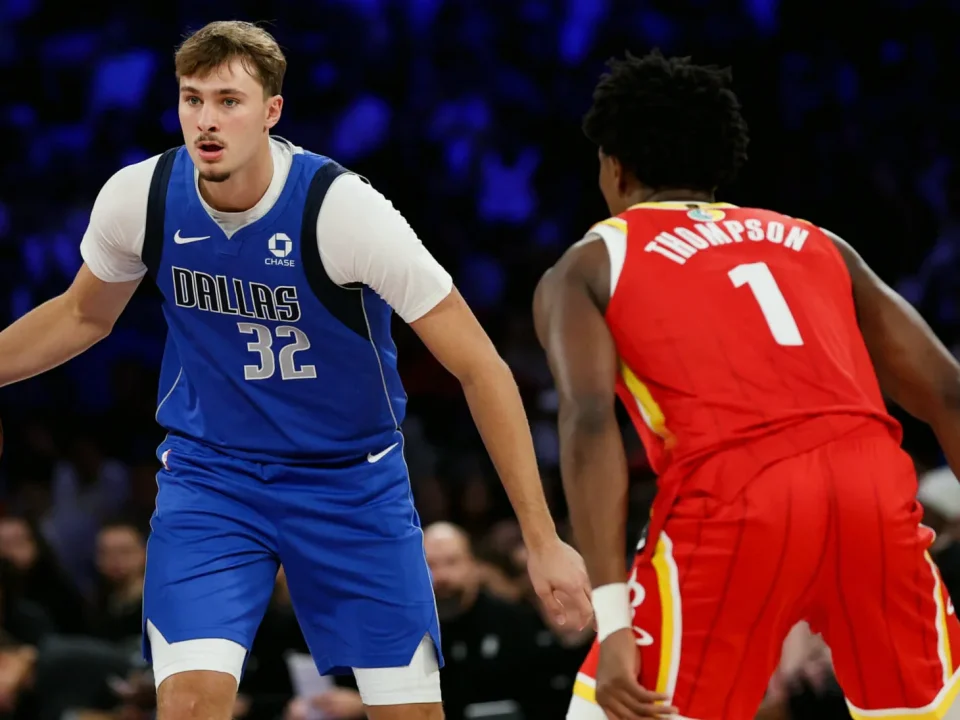
Shai Gilgeous-Alexander lands fifth despite his real-world efficiency, because neither his shooting accuracy nor free-throw precision earns extra High Score value and his assist numbers are solid rather than elite. Cunningham at No. 6 is a format favorite: Detroit’s lead guard can pile up double-valued assists without a turnover penalty. Anthony Edwards follows, though LaMelo Ball taking on more Minnesota creation could trim Edwards’ assist output. Dallas forward Cooper Flagg is eighth after a strong rookie campaign, with his limited 3-point production carrying no special downside here.
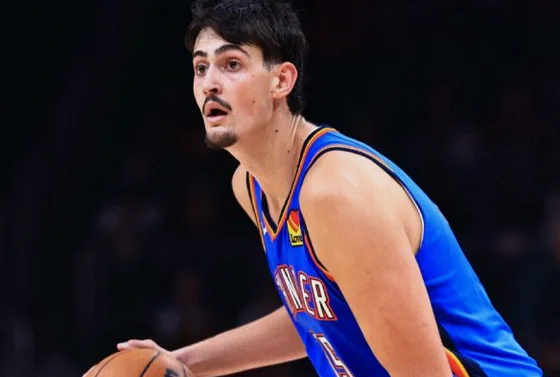
Atlanta’s Jalen Johnson, ranked ninth, has 20-10-10 potential and does not need to be available for a full slate of games to justify the selection. Jayson Tatum is Boston’s clear lead option following Jaylen Brown’s exit, and early-season workload management matters less when a single big outing can cover the week. Houston center Alperen Sengun is another major riser thanks to career-best assist potential from the five spot. Washington’s Trae Young closes Round 1 at No. 12; a 10-assist night becomes 20 fantasy points before any scoring is added, with his customary turnovers no longer dragging down the line.
Orlando forward Paolo Banchero begins Round 2 as a high-usage player whose turnovers have been neutralized. Tyrese Maxey is less appealing than in category formats with Jaylen Brown and LeBron James set to absorb touches in Philadelphia. Chicago’s Josh Giddey carries triple-double upside as the Bulls’ primary hub, while Sacramento’s Domantas Sabonis should reclaim more usage with Russell Westbrook and DeMar DeRozan no longer in the picture.
Donovan Mitchell is still a reliable volume scorer in Cleveland, but James Harden’s playmaking role limits Mitchell’s assist case. Jalen Brunson remains the usage anchor of New York’s stable offense. Toronto’s Scottie Barnes may lose some possessions to Kawhi Leonard, yet he has the rebounding, passing and defensive production to hold value. Minnesota’s LaMelo Ball is a prime High Score fit because the format forgives both his turnovers and uneven availability while retaining the massive per-game output.
Devin Booker is Phoenix’s top creator and highest-usage scorer, with his declining 3-point rate irrelevant in this scoring. Karl-Anthony Towns remains locked into his Knicks role and brings regular 20-and-10 potential plus improved postseason playmaking. Davis, now in Washington, played only 20 games last season but carries a first-round per-game profile whenever he is active. Denver’s Jamal Murray, coming off a career year, rounds out the second round as the Nuggets’ clear No. 2 offensive engine.
Houston’s Amen Thompson opens Round 3 with points, boards and assists, while poor shooting percentages are not part of the calculation. Austin Reaves should remain a high-volume secondary creator for the Lakers without an efficiency or turnover tax. Indiana’s Tyrese Haliburton has an offense built around his passing, and a lighter game week can still be enough if he posts one monster line. Harden’s 20-point, 10-assist potential makes him one of the format’s bigger risers in Cleveland.
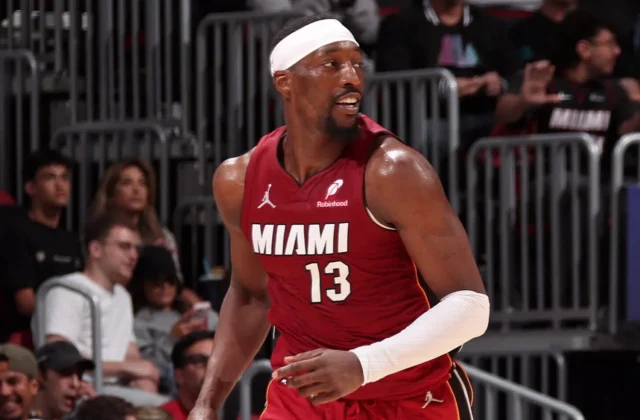
Leonard’s Toronto availability risk is far more tolerable here because one dominant night is enough. Miami’s Bam Adebayo separates from several similarly ranked centers with his passing and his stable 30-minute role. Kevin Durant remains an elite scorer for Houston, but efficiency alone does not elevate him. Brown will have fewer touches in Philadelphia than last season, though he remains better suited to this format than to category leagues. Spurs guard Stephon Castle is a notable value because the format does not punish his efficiency or turnover issues.
Portland forward Deni Avdija offers scoring, rebounding and genuine passing, although Ja Morant and Damian Lillard could squeeze his touches. Cleveland’s Evan Mobley projects as a steadier 18-point, 10-rebound, four-assist contributor in a third-option role. Stephen Curry is pushed to No. 36: at age 38, much of his normal value is tied to 3-point volume in a setup that does not award a 3-point bonus.
Darius Garland should have frequent 20-point, 10-assist opportunities as the Clippers’ lead playmaker. Brooklyn’s Julius Randle is projected to lead the Nets in combined points, rebounds and assists. Detroit’s Jalen Duren has regular 20-and-10 upside as his two-way game develops. Oklahoma City’s Jalen Williams provides healthy, balanced 20-point wing production, although he has more relative appeal in category formats.
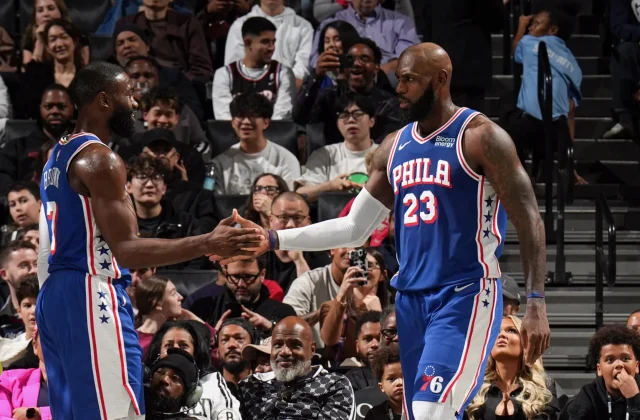
LeBron James, now in Philadelphia, remains a per-minute force whose assists are particularly valuable. A 28-minute night or a rest day hurts less in a best-game format. Memphis rookie Cameron Boozer is expected to receive immediate minutes and playmaking responsibility, and the setup absorbs the mistakes that come with a first-year role. Pascal Siakam is Indiana’s dependable No. 2 option. Brandon Miller could become Charlotte’s biggest usage beneficiary after LaMelo Ball, while Trey Murphy III faces a usage squeeze when Dejounte Murray returns for New Orleans.
Chicago’s Matas Buzelis led every Bull other than Giddey in counting production while playing under 30 minutes. Derrick White’s low-turnover edge disappears in this format, and Boston has fewer shots available with Tatum back and Paul George added. Murray brings points, assists and steals when healthy, though his eventual minutes and usage remain unsettled.
Tyler Herro enters Milwaukee’s first true lead-guard role of his career, and his injury history is less costly in this setting. Kyrie Irving’s exceptional efficiency and low turnover rate do not receive their usual reward. Utah’s Jaren Jackson Jr. faces a ceiling issue in a crowded frontcourt, while Portland’s Donovan Clingan comes off a 27-minute double-double average and has a chance to claim the Trail Blazers’ center job.
Michael Porter Jr. is muted by a format that does not directly reward shooting efficiency or 3-point volume. Keyonte George flashed All-Star-level output in a limited stretch, but Utah now has Darryn Peterson, Jackson and Lauri Markkanen competing for possessions. Zion Williamson is a volume scorer who adds rebounds and assists, and his availability discount largely disappears. Chet Holmgren’s 3-and-D big profile is more valuable in category leagues, while Franz Wagner’s balanced Orlando offense and two shortened seasons are less concerning in High Score.
Markkanen scores and rebounds but offers limited playmaking on a Jazz roster with more offensive mouths to feed. Embiid remains an elite per-game swing in Philadelphia; even a 40-game season can be workable when the rules reward spike outings rather than total accumulation. Milwaukee’s Ryan Rollins is coming off a breakout year, but a crowded Bucks backcourt clouds his role.
Boston reserve Payton Pritchard is heavily tied to 3-point production and is facing reduced volume. Lakers center Walker Kessler should collect rebounds, dunks off Dončić feeds and blocks. Indiana’s Ivica Zubac is positioned for a bounce-back year with Haliburton creating interior opportunities. George has played 56 or fewer games in six of the last seven seasons, but that record is less alarming in this format.
Morant brings elite per-game points and assists to Portland, and his high turnover rate is no longer a major concern. De’Aaron Fox remains capable of a 22-point, six-assist season in San Antonio, even if Castle and Dylan Harper absorb usage. Atlanta’s Nickeil Alexander-Walker offers a lower-volume 3-and-D line, while Orlando’s Desmond Bane is stable as the Magic’s third option but does not offer much beyond scoring and modest secondary production. Hawks wing Dyson Daniels supplies a balanced line, though without enough scoring or passing volume to chase a massive ceiling. Washington rookie AJ Dybantsa has self-created offense and a jumper that does not need to be efficient here, but Young and Davis create a crowded usage environment.
Rounds seven through 13: discounted injury bets and rotation swings
Harper is a strong second-year breakout candidate, but San Antonio’s packed backcourt limits his immediate ceiling. Memphis center Zach Edey has excellent per-minute scoring and rebounding; recurring ankle concerns are less damaging when managers only need productive weeks. Portland’s Lillard still produces points and assists in volume, and a season coming off an Achilles absence is easier to carry in High Score than across a full roto schedule.
Atlanta center Onyeka Okongwu has a double-double baseline if he holds 32 minutes per night. Charlotte rookie Kon Knueppel has 20-point upside and possible assist growth, though his lower-end outcome is mainly efficient shooting without an extra fantasy payoff. He is opening the year with a hamstring injury. Phoenix’s Jalen Green is a burst scorer with limited peripheral production, but bursts are exactly what this format wants. Sacramento rookie Darius Acuff Jr. should bring the familiar starting-point-guard mix of high assists and high turnovers, with only the assists showing up positively.
Toronto’s Immanuel Quickley is pushed down because much of his appeal comes from 3-pointers and free throws, and the Raptors have a crowded roster. Milwaukee’s Kel’el Ware needs playing time, which a rebuilding Bucks team could provide. Brooklyn’s Day’Ron Sharpe owns an elite rebound rate, has expanded his offensive game and is expected to start. Ausar Thompson offers transition scoring, boards and steals for Detroit, with his shaky shooting largely ignored; reaching 30 minutes is the key hurdle. Chicago rookie Caleb Wilson should have a starting opportunity on a roster with minutes available, and his defensive upside is a meaningful part of the case.
Memphis sophomore Cedric Coward is a breakout candidate with more minutes projected on a young roster. OG Anunoby’s Knicks role is safe, but his 3-and-D value does not translate as strongly. Ty Jerome posted career-best per-game numbers in 15 healthy Memphis appearances, and a format that rewards healthy spike weeks fits that bet. New Orleans rookie Derik Queen played all 81 games as a rookie and has an all-around fantasy game, though his role and minutes remain uncertain.
Mikal Bridges’ durability is a major asset over an 82-game schedule, but it means less when weekly production is reduced to one best score. Charlotte’s Naz Reid crossed 30 minutes for the first time and supplies scoring, rebounding and some passing. Coby White is Charlotte’s undisputed starting point guard but begins the year managing the same calf strain that limited him last season. Philadelphia’s VJ Edgecombe has secure minutes, although a second-year jump in touches is not guaranteed.
Phoenix’s Miles Bridges has a modest but reliable role as the third option behind Booker and Green. CJ McCollum is Atlanta’s defined No. 2 option behind Johnson. Peterson is a promising Jazz rookie shooting guard, though he must earn touches in a reworked Utah offense. Minnesota’s Jaden McDaniels is becoming a more capable self-creator and could benefit from easier looks next to Ball. Miami’s Davion Mitchell loses the advantage created by his very low turnover rate; what remains is a safe role and assists. Josh Hart still contributes rebounds and passing from the wing, but his minutes have fallen and New York’s rotation is established.
Rudy Gobert enters the year healthy despite his age and remains a dependable double-double source for Minnesota. Toronto’s RJ Barrett offers a regular 20 points with enough supporting production to stay useful in points formats. Jaime Jaquez Jr. has an inside lane to Milwaukee forward minutes in an open rotation.
The supplied board then skips from No. 99 to selected later-round targets. Lakers guard Collin Sexton is ranked No. 109 and is expected to work as a sixth man, a role that suits his microwave scoring. Toronto center Jakob Poeltl appears at No. 121 because last season’s standout field-goal percentage has no extra High Score value. Phoenix reserve Collin Gillespie is No. 133, with his 3-point-based appeal expected to shrink further once the Suns are healthy. Spurs wing Devin Vassell is No. 145, facing declining usage on a rising San Antonio team without a 3-point bonus to rescue his fantasy profile.