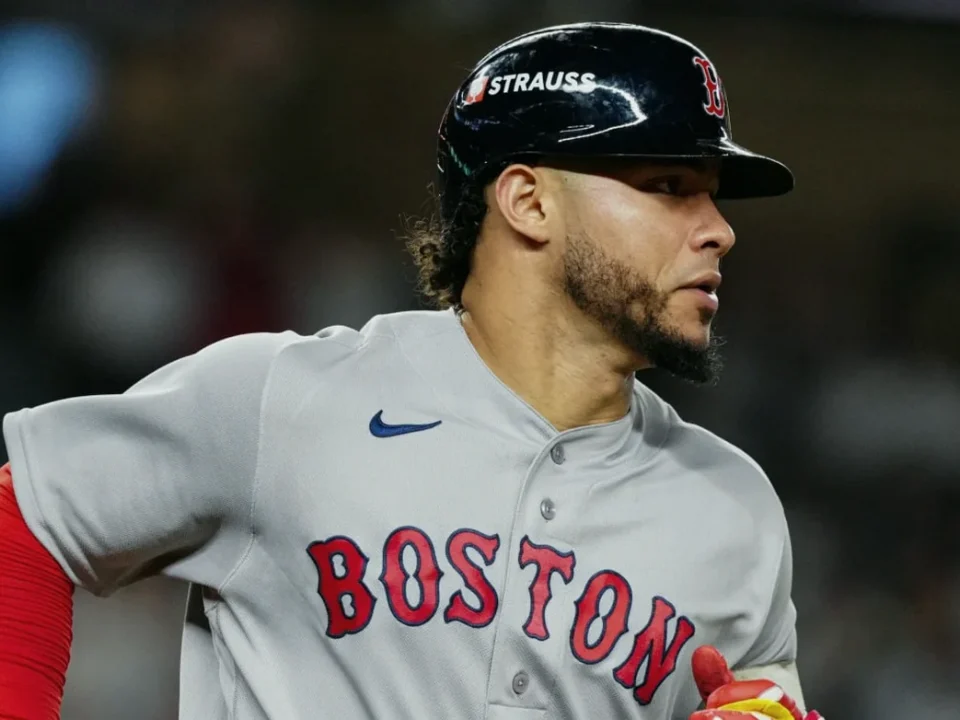
NEW YORK — The Red Sox arrived in the postseason carrying the memory of a summer when nearly everything worked, but their October stay lasted only two games. Wednesday’s 9-2 loss to the Yankees completed an American League Wild Card Series sweep, leaving Willson Contreras to weigh a season Boston had revived so sharply against an ending that never found traction.
Boston had been one of the sport’s hottest clubs from June 25 through Aug. 8, going 32-5 while its lineup surged. Contreras, often one of the club’s most direct voices, did not offer a full explanation for the falloff after that run. He made clear, though, that the Red Sox did not deliver in the areas that decide a short series.
“We came here to win, and we didn’t get it done,” Contreras said after Game 2. “We didn’t execute in any phase, and that’s why we lost.” He remained proud of the club’s turnaround, but said a strong regular season only earns the chance to play in October. It does not guarantee anything once the bracket begins.
Contreras points to execution and experience
The catcher’s comments carried an understated message about Boston’s decision-making process. Asked whether he agreed with Sonny Gray being removed before facing the Yankees’ order for a third time, Contreras responded with a finger over his lips. Gray had also addressed the topic after the game, and the two postgame moments pointed toward the same broader tension: how far a club should lean on data when a game turns on feel, experience and the players on the field.
Contreras said the Red Sox have work to do in the running game and in controlling opponents who steal bases. Talent, information and computer-driven preparation all have a place, he said, but cannot replace veteran judgment or on-field execution. “The data is there to help,” he said, “but you still need experience and veteran players to win games.”
He stopped short of assigning blame or demanding organizational changes. Contreras said players can share thoughts with the front office, but acknowledged that roster-building and broader strategy decisions are not theirs to make. His responsibility, he said, is to prepare fully, take care of his body, support teammates and help maintain a strong room over the long season.
That body had taken a beating by the time Boston reached October. Contreras said his hamstring was tight, his right hand was sore and his right hip was also bothering him. He nevertheless pushed to return with help from the training staff because he did not want to miss the postseason. The injuries contributed to time on the injured list and several missed games, absences he said he regretted.
Even with the bruising finish, Contreras called his first year in Boston a success personally. He described it as his best all-around offensive season and said he began to feel at home with the club in May. After arriving in a trade, he had not set expectations beyond taking each day as it came. Now, with the Yankees having ended Boston’s run, he sees a foundation worth carrying into 2027.
“I feel like I fit well with this team,” Contreras said. “I found my place, and I had a lot of fun.” The Red Sox will have an entire offseason to sort through why a 32-5 summer did not translate into October wins. Contreras, meanwhile, leaves New York with the same practical assignment he described after the loss: heal up, return ready, and make sure the next opportunity lasts longer than two games.