The guard board for 2026-27 has been rearranged by a handful of franchise-moving exits and arrivals. Luka Dončić now owns the Lakers’ offense after LeBron James’ departure, while Philadelphia’s additions of James and Jaylen Brown squeeze the room that once supported bigger workloads elsewhere. LaMelo Ball leaving Charlotte, Kawhi Leonard returning to Toronto and Boston losing Brown have created several new minutes-and-usage lanes before drafts begin.
| Player | Team | Draft indicator | Opportunity note |
|---|---|---|---|
| Immanuel Quickley | Raptors | Yahoo ADP: 96.3 | Leonard’s arrival is expected to have limited effect on his backcourt role |
| Coby White | Hornets | Three years, $74 million | Set to absorb much of Ball’s former offensive responsibility |
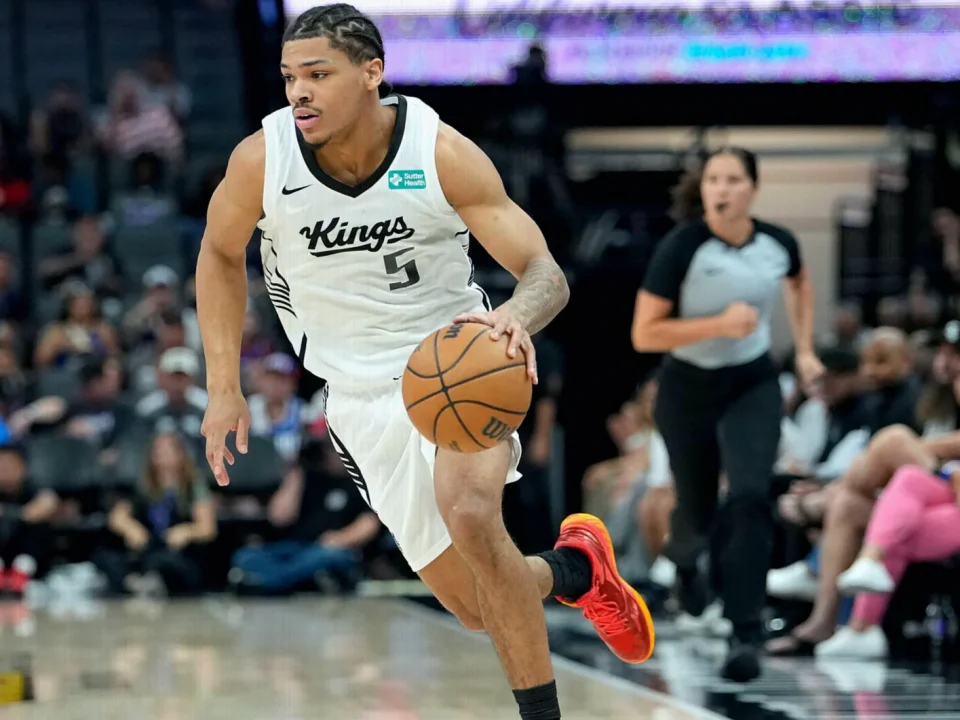
| Darius Acuff Jr. | Kings | No. 7 pick | Expected to clear 30 minutes per game immediately |
Usage has moved to new addresses
Dončić and Shai Gilgeous-Alexander sit at the top of the guard tier, but the more useful draft question starts after that elite group: who is about to handle more possessions than the market expects? Dončić already carried one of the league’s heaviest offensive burdens, and the Lakers’ post-LeBron structure should put even more in his hands. Austin Reaves is positioned to benefit beside him.
Charlotte presents the opposite side of the Ball move. White signed his $74 million deal to become a major part of the Hornets’ plans, and he enters his first full Charlotte campaign with a chance to run more of the attack. Brandon Miller remains a central piece, but White has the path to the lead guard job that was unavailable before Ball left. A calf strain will keep White out during preseason, making the severity of that issue worth monitoring.
Philadelphia’s reshaped roster brings the warning label. James and Brown will command touches, which lowers the margin for players such as VJ Edgecombe to return a premium draft investment. The same roster math applies everywhere: an outgoing high-volume creator leaves shots, assists and ballhandling behind; an incoming star generally takes them away.
Guard sleepers with a clean runway
White is one of the clearest opportunity plays, but Oklahoma City’s Ajay Mitchell also has a rotation opening after Aaron Wiggins, Isaiah Joe and Lu Dort departed. Mitchell produced several big performances late last season. Jared McCain and Cason Wallace remain available for backcourt minutes, though Mitchell has a chance to move ahead if his late-season form carries over.
Sacramento’s Darius Acuff Jr. enters a favorable rookie setting. Russell Westbrook and DeMar DeRozan are no longer on the Kings, while Zach LaVine is no longer viewed as being in his prime. Acuff can work around a reliable frontcourt pairing of Keegan Murray and Domantas Sabonis, and the Arkansas product is expected to receive more than 30 minutes a night from the start.
Quickley’s current 96.3 Yahoo ADP leaves room for profit if he stays available. Leonard’s return gives Toronto another high-end option, but Quickley’s job is expected to remain relatively stable compared with the likely usage decline for RJ Barrett and Scottie Barnes. His injury history remains part of the calculation, yet his efficiency outlook improves with more talent around him.
- Ty Jerome, Grizzlies
- Egor Dëmin, Nets
Breakout cases start with role expansion
Reaves should see a career-best workload in Los Angeles. With James gone, he has a realistic opening for a major scoring and creation jump, particularly alongside a Dončić-led offense that will need another reliable initiator.
Boston’s Derrick White has a similarly direct case after Brown’s exit. White projects as the Celtics’ No. 2 scoring choice behind Jayson Tatum, unless Paul George delivers an unexpected peak season. George’s history of missed games also means White could be asked to carry additional scoring stretches during the year. Payton Pritchard merits a boost, but White’s overall two-way role gives him the stronger claim.
Cooper Flagg qualifies at guard and forward, and Dallas’ healthier group could make his second season considerably more productive. Kyrie Irving may be ready from opening night, while Dereck Lively II and rookie Morez Johnson Jr. could soon reinforce the frontcourt. That supporting cast would give Flagg a more functional lineup context than he had as a rookie.
- Dylan Harper, Spurs
- Davion Mitchell, Heat
Injury cost matters more in a deep guard pool
Drafting guards still requires a discount for unreliable availability. Stephen Curry and Damian Lillard have recently missed time as they age, Ja Morant has a longer history of absences, and Trae Young’s outlook has become less certain after injuries despite his previous durability. Daily status checks remain essential near tipoff, but draft value should also reflect how often a player has landed on the injury report in the first place.
That is where guard depth changes roster construction. Managers who miss on Dončić or Gilgeous-Alexander do not need to force a reach, because useful guards can remain available beyond pick 100 and even into the range around pick 150. In category formats, the later pool can address specific needs: assists, steals or, in Ausar Thompson’s case, unusually helpful rebounding from the position. The best late selection may not carry the biggest name, but a guard who beats his draft slot can reshape a roster.