The 2026-27 fantasy guard pool has no shortage of lead options, from Shai Gilgeous-Alexander and Luka Dončić at the very top to a deep middle class built around high-minute starters, returning stars and rookie upside. Standard nine-category managers will weigh efficiency and steals differently than Yahoo High Score players, where a single huge weekly performance can decide the matchup.
High Score’s setup particularly boosts explosive scorers and playmakers: assists carry two points, while steals and blocks are worth three. Field-goal percentage is not part of the equation, and a player who misses a portion of the season can remain valuable if he posts one dominant line each week.
The first-round guard anchors
Gilgeous-Alexander and Dončić sit alone in the top tier. Gilgeous-Alexander has collected MVP honors in consecutive seasons and is one of only two active guards with the award. He put up 31.1 points, 4.3 rebounds and 6.6 assists per game in 2025-26, marking the third time in four years that he topped 31 points a night. He belongs in the overall top-three conversation with Victor Wembanyama and Nikola Jokić regardless of format.
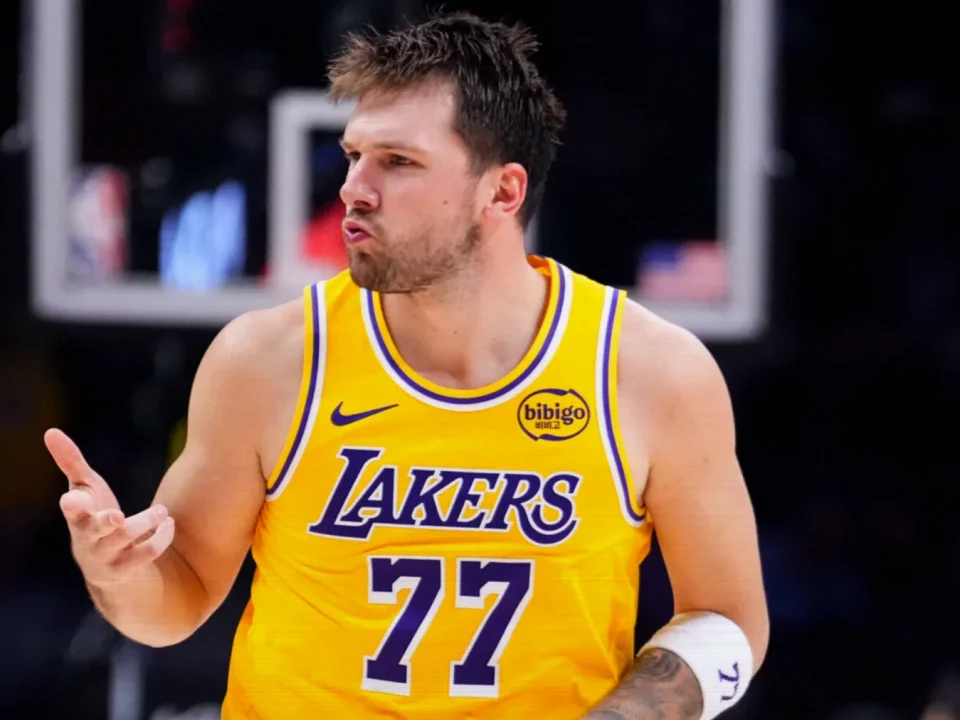
Dončić enters a new Lakers setup as the franchise’s primary star after LeBron James left in free agency for Philadelphia. His triple-double upside gives him extra juice in High Score leagues, where the concern around a 65-to-70-game campaign is softened by the format’s emphasis on weekly peaks rather than cumulative production.
Anthony Edwards and Cade Cunningham make up the next group. Edwards has increased his scoring average in each of his six NBA seasons and finished 2025-26 at 28.8 points, five rebounds, 3.7 assists and 1.4 steals per game. With LaMelo Ball now beside him in Minnesota, Edwards has a path to 30 points per night and remains a first-round pick.
Cunningham’s Detroit season included a fifth-place MVP finish and averages of 23.9 points, 5.5 rebounds, 9.9 assists, 1.4 steals and 0.8 blocks over 64 games. He shot 46.1 percent from the field, but it is the near-10-assist average that matters most in High Score. A 15-assist outing can be enough to flip a weekly result.
Second- and third-round playmakers
| Tier | Guards | Draft outlook |
|---|---|---|
| Tier 3 | Tyrese Maxey, Jalen Brunson, Donovan Mitchell, Devin Booker, Jamal Murray, Austin Reaves, Tyrese Haliburton, Trae Young | Primary targets after the elite first-round group |
| Tier 4 | LaMelo Ball, Stephen Curry, James Harden, Josh Giddey, Brandon Miller, Derrick White, Stephon Castle, Darius Garland, Tyler Herro, Keyonte George, Jalen Green | Early-to-middle-round contributors, with most expected to clear 30 minutes per game |
Maxey and Brunson both carry enough scoring responsibility to threaten the higher tier. Mitchell remains productive while sharing creation duties with Harden in Cleveland, Murray continues to operate next to Jokić in Denver, and Reaves has a clear lane alongside Dončić in Los Angeles.
Haliburton returns after an Achilles injury wiped out his 2025-26 campaign. His assist production gives him a strong chance to regain fantasy value quickly. Young is also coming off a limited season, having played 15 games and averaged 17.9 points and eight assists while shooting 45.8 percent. Both guards are more attractive in High Score, where one breakout night matters more than weekly availability and shooting efficiency carries no penalty.
Curry remains a useful producer even at 38. In 43 games last season, he averaged 26.6 points, 3.6 rebounds, 4.7 assists and 1.1 steals in only 30.9 minutes per night. Harden’s role has shifted away from being the offense’s sole engine, but the complementary workload still leaves room for strong fantasy lines.
Miller, Garland, Herro, Giddey and Green all have prominent roles with plausible 20-point scoring upside plus secondary numbers. White and Castle receive a High Score bump because their defensive events carry real value in the scoring system.
Middle rounds bring injury returns and defensive value
| Tier | Guards | Key angle |
|---|---|---|
| Tier 5 | Dyson Daniels, De’Aaron Fox, Damian Lillard, Dejounte Murray, Nickeil Alexander-Walker, Payton Pritchard, Dylan Harper, Ryan Rollins, Fred VanVleet | Steals, comeback cases and changing backcourts |
| Tier 6 | Mikal Bridges, Coby White, Ja Morant, Cedric Coward, Ty Jerome, Darius Acuff, CJ McCollum, Ayo Dosunmu, Immanuel Quickley | Reliable roster depth across veterans, young players and rookies |
Daniels leads Tier 5 in category-league appeal because of his steals ceiling, and his ability to approach triple-doubles travels well to High Score. Atlanta teammate Alexander-Walker offers a similarly disruptive defensive profile with more scoring potential.
Lillard is back from an Achilles injury, VanVleet returns from a knee issue, and Murray enters after two shortened seasons. Each can justify a middle-round High Score investment with one standout performance per week. Fox has the clearest path in San Antonio’s backcourt next to rookie Dylan Harper.
Pritchard, the 2024-25 Kia NBA Sixth Man of the Year, started frequently last season and projects for substantial minutes whether he opens games or comes off the bench. Rollins is part of Milwaukee’s rebuilt guard rotation.
Tier 6 blends established names with developing players expected to hold steady minutes in 12-team formats. Morant’s one-game eruption potential makes him especially suited to High Score. Acuff is the rookie worth monitoring as Sacramento works through its backcourt hierarchy.
Late-round guards still have a role
- Brandin Podziemski, Golden State Warriors
- Ajay Mitchell, Oklahoma City Thunder
- DeMar DeRozan, Denver Nuggets
- Jalen Suggs, Orlando Magic
- Jeremiah Fears, New Orleans Pelicans
- Davion Mitchell, Miami Heat
This final group is worth consideration around the eighth and ninth rounds. DeRozan gives Denver another proven bucket-getter and will compete with Christian Braun and Cameron Johnson for starting minutes. Suggs and Davion Mitchell bring defense-first identities while handling point-guard responsibilities on offense.
The position’s depth means managers can attack guards in several ways: spend early for an MVP-level scorer, target assists and defensive counting stats through the middle rounds, or wait for a rotation guard whose weekly ceiling plays above his draft slot in High Score.