October does not always belong to the club with the loudest regular-season record. It belongs to the team that can turn one matchup, one ball in the gap, one catcher’s challenge or one unhittable pitch into an extra out. The postseason field is loaded with those kinds of edges in 2026.
Quick facts
- Atlanta, San Diego and St. Louis share the National League lead in overall bat speed, with the Braves leading the league in fast-swing rate.
- The Cubs have saved 68 runs defensively, the best team Fielding Run Value of the Statcast era.
- Tarik Skubal’s changeup produced 27 postseason strikeouts across 2024 and 2025, more than any other single pitch in that span.
- Jacob Misiorowski has thrown two-thirds of his regular-season fastballs at 100 mph or better.
- Mason Miller’s slider owns a 56% whiff rate and 75 strikeouts for San Diego.
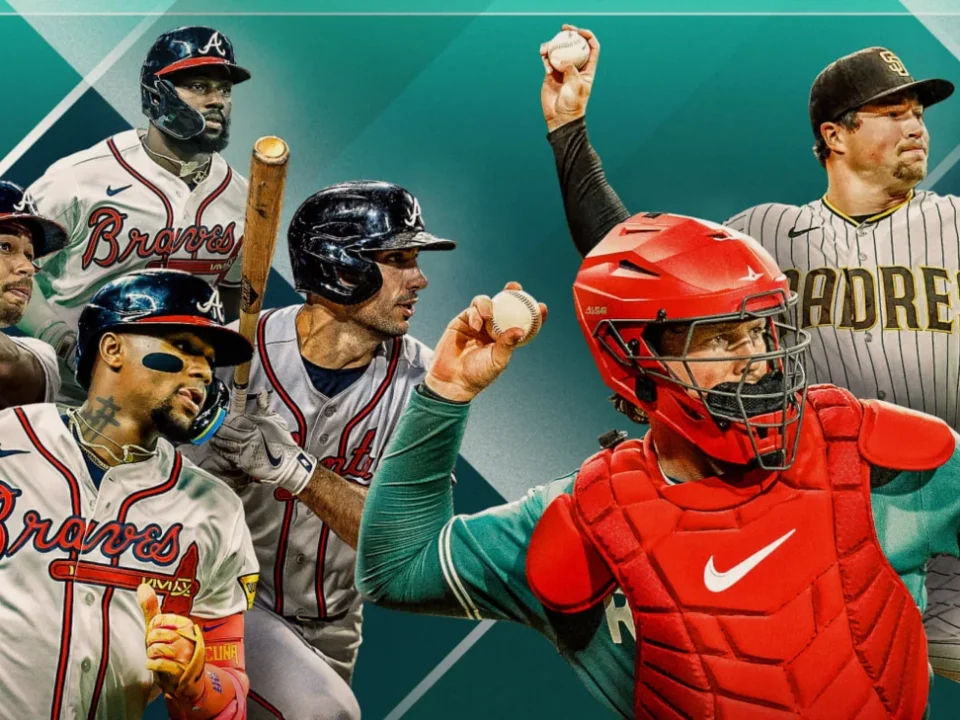
Atlanta’s October case starts with the violence of its swings. More than one-third of Braves swings have reached 75 mph, the threshold for a fast swing, and that is the highest such rate in baseball.
Ronald Acuña Jr. and Austin Riley both carry average bat speeds of 75.8 mph. Drake Baldwin is at 75.4, Michael Harris II at 74.9 and Matt Olson at 74.8. Each of those five hitters has reached the fast-swing threshold on more than half his cuts.
That kind of lineup plays in October, when starters bring sharper stuff and relievers arrive throwing their best bullet. The Braves have the kind of bat speed that can make a small mistake look very large.
Tampa Bay presents a different sort of problem. Junior Caminero and Chandler Simpson give the Rays two completely different paths to a rally.
Caminero is one of only five hitters with at least 60 barrels, and his 79.6 mph average bat speed is the fastest in the majors. He leads the American League with 41 home runs, including 27 that would have cleared the fence in every MLB park.
Simpson has not recorded a barrel at all, making him the only one among 245 qualified hitters on the Statcast exit-velocity board without one. His 65.0 mph bat speed sits near the bottom of the league, but he has hit .311 by finding the sweet spot with remarkable regularity.
The Rays speedster also ranks in the top 1% of hitters in both swing-and-miss rate, at 10.4%, and strikeout rate, at 7.9%. Caminero can change a game with one launch-angle swing; Simpson can make a defense keep working until it cracks.
Chicago may carry the most dependable October advantage of all: turning batted balls into outs. The Cubs have posted a plus-68 Fielding Run Value, passing the 2018 D-backs’ plus-64 mark for the strongest team defensive season tracked by Statcast.
Pete Crow-Armstrong is the center-field engine. His plus-27 runs prevented rank as the best outfield season in the Statcast era and third among all individual defenders, behind catcher Patrick Bailey’s plus-31 in 2025 and shortstop Nick Ahmed’s plus-28 in 2018.
Javier Báez recorded plus-26 in 2019, while Byron Buxton and Adam Eaton each reached plus-24 in earlier seasons. Crow-Armstrong has joined that company, but this is not a one-man show. Dansby Swanson and much of Chicago’s regular defense have supplied quality behind a staff that throws the slowest pitches, on average, in the majors.
That matters with Shota Imanaga’s fly-ball profile and Clay Holmes’ ground-ball tendencies sharing the same staff. The Cubs need defenders who can handle every flavor of contact, and they have them.
Skubal, now with the Dodgers after his headline-making acquisition, brings a postseason weapon with a history. The back-to-back Cy Young winner has struck out 27 hitters with his changeup during the past two playoff runs with Detroit.
No other pitch from any pitcher reached that total in the 2024-25 postseasons. Trey Yesavage’s splitter was next at 22 strikeouts, followed by Kevin Gausman’s splitter at 21, Skubal’s own four-seamer at 19, and the 18-strikeout offerings from Carlos Rodón’s slider and Blake Treinen’s sweeper.
More than half of the plate appearances settled by Skubal’s changeup ended in strikeouts. Hitters swung and missed 71% of the time against it in those playoffs, the highest rate for a pitch type that drew at least 25 swings over that two-year stretch.
Milwaukee’s Jacob Misiorowski gives October a different kind of fear. His fastball does not merely touch triple digits; it lives there.
About 67% of Misiorowski’s heaters have been 100 mph or harder this season. More than 40% have reached 101, over 20% have hit 102, and nearly 10% have climbed to 103 mph or above across a workload of more than 1,000 fastballs.
His velocity already rose from 99.3 mph in the 2025 regular season to 101 mph in the postseason, when he worked in relief and more than three-quarters of his fastballs hit 100. This year he has averaged 100.6 mph as a starter. With shorter outings and everything on the line, the Brewers have reason to wonder whether another gear is waiting.
Boston’s Adley Rutschman has not yet found much rhythm at the plate since arriving in the Trade Deadline deal, but a catcher can steer an October game without taking a big swing. Rutschman has saved 12 runs defensively, leading all catchers on clubs currently positioned for the postseason.
San Diego’s Freddy Fermin follows at plus-10 runs saved, with Yankees catcher Austin Wells at plus-7, Guardians catcher Patrick Bailey at plus-6 and Astros catcher Christian Vázquez at plus-3. Rutschman has helped through framing, blocking and control of the running game.
He also has been one of the game’s best at the new automated ball-strike challenge process. Rutschman is 41-21 on challenges this season, a two-thirds success rate, and has gone 19-9 since joining the Red Sox. In a tight inning, a reversed call could be as valuable as a double into the corner.
Philadelphia’s power rests on a simpler October truth: even elite arms have to throw fastballs. Kyle Schwarber and Bryce Harper have punished them all season.
Only Yordan Alvarez, at plus-32 batting runs against fastballs, has created more value than Schwarber’s plus-30 and Harper’s plus-28. Schwarber has hit 27 home runs against heaters, the most in the majors, while Harper has hit 18. Willson Contreras is next at plus-25 runs created and Ben Rice at plus-23.
The Phillies’ two left-handed stars have handled premium velocity, too. Against fastballs at 97 mph or above, Harper owns a .523 slugging percentage with three homers; Schwarber is at .525 with six, the most in baseball.
The track record carries into the postseason. Since Philadelphia’s 2022 playoff run began, Harper has been the top fastball hitter in the playoffs, slugging .778 with seven homers. Schwarber ranks fourth behind Alvarez and Juan Soto, with a .722 mark and 10 home runs against fastballs.
The Yankees can attack hitters with more than pure speed. Cam Schlittler’s 98 mph four-seam fastball is tied for the most valuable pitch in the majors this year, but his ability to pair that pitch with a sinker and cutter gives opponents more than one look.
Max Fried works from the same three-fastball menu. Their 2025 playoff usage showed how that variety can change in short-series baseball.
Schlittler moved from a regular-season blend of 56% four-seamers, 20% cutters and 6% sinkers to 43% four-seamers, 24% cutters and 22% sinkers in the postseason. Fried shifted from 29% cutters, 18% sinkers and 12% four-seamers in the regular season to 22% cutters, 20% sinkers and 12% four-seamers in October.
That does not mean every fastball looks alike, even when the radar gun says it is. A hitter can prepare for one version and receive another, then see a new mix the next time through the order.
San Diego has offense worth watching, too. Since the All-Star break, Fernando Tatis Jr., Jackson Merrill and Ty France have all ranked among the top 10 hitters. But the Padres’ bullpen may be their clearest October calling card.
By expected ERA, which weighs contact quality along with strikeouts and walks, San Diego has three relievers in the top 10: Mason Miller at No. 1, Adrian Morejon at No. 7 and Bradgley Rodriguez at No. 10.
Miller is the finishing act. His slider has generated a 56% miss rate, tops among qualified pitch types, and has produced 75 strikeouts. On average, swings miss that slider by nearly 10 inches, the largest miss distance attached to any pitch type in the league.
He used the slider 60% of the time during last year’s postseason. Opponents can expect it again this October. Knowing it is coming has not made it any easier to touch.