Alex Ovechkin’s decision to return for a 22nd season gives the Washington Capitals something few NHL clubs can claim: a franchise player who has remained convinced that his best place to win is the city that drafted him. His new one-year deal came after Washington spent an offseason preparing for the possibility that its captain might finally move on.
That possibility was real enough for the Capitals to map out two summer plans, one with Ovechkin and another without him. At 40, with his previous contract finished and Washington coming off a missed playoff berth, Ovechkin said his choice rested on family, health and whether the club could still chase another Stanley Cup.
Washington’s response was forceful. The Capitals acquired winger Jordan Kyrou, signed former Columbus captain Boone Jenner in free agency and gave veteran forward Alex Tuch an eight-year contract. Ovechkin called general manager Chris Patrick the day after free agency opened, and the new agreement was completed quickly.
“I’m really excited about the group and the fans,” Ovechkin said. “On paper, we look like one of the top teams. Now we have to earn a playoff spot first, then work toward the Cup.”
In an NHL where elite players increasingly exercise control over their destinations, Ovechkin’s continued commitment stands out. Brady Tkachuk pushed his way to Florida, Quinn Hughes’ future drove major league discussion before his move to Minnesota, and Dylan Larkin’s request to leave Detroit added another example of a star seeking a larger role in deciding his future.
Washington president of hockey operations Brian MacLellan sees those situations as a reflection of clubs and players occasionally moving on different tracks. In his view, a player can fairly decide an organization no longer matches his timeline. The key for the Capitals has been making sure Ovechkin never reached that conclusion.
Trust built from the first day
When Washington won the 2004 draft lottery, the club was not a finished contender waiting for a centerpiece. It had stripped down a roster after its expensive Jaromir Jagr gamble failed to turn the team into a winner. Owner Ted Leonsis remembered a franchise lacking momentum, attention and a strong business footing. Its practice home, the public rink at Piney Orchard outside Baltimore, hardly represented NHL-level infrastructure.
The scouting presentation on Ovechkin was modest: video from Russia, shown on a television, of a teenager from Moscow whom the hockey staff believed could reshape the franchise. Once Washington made him the first overall selection, Leonsis invited Ovechkin to a summer barbecue at his home. Ovechkin swam, played basketball with Leonsis’ children and ran around the yard with the family dogs.
That afternoon helped form a bond rooted in family. Leonsis, whose parents immigrated from Greece, recognized a similar value system in Ovechkin. He also made a frank promise to the young winger: Washington had picked him because it was not good enough, but the organization would keep improving its facilities and investing around him.
Patrick believes the relationship began in that conversation. Leonsis was still a relatively new owner, but his care for Ovechkin and the player’s family established respect that has endured through nearly two decades of roster changes and championship pressure.
Washington reinforced that commitment in 2008. While Sidney Crosby had signed a five-year, $43.5 million contract, former Capitals executive Dick Patrick urged Leonsis to think much further ahead with Ovechkin. If Ovechkin continued to develop as expected, every major market would want him when unrestricted free agency arrived.
The Capitals instead offered the long-term security of a future unrestricted free-agent contract years early: 13 years and a deal that made Ovechkin the NHL’s first $100 million player. Leonsis saw it as certainty for the player and an anchor for the organization. When the contract was announced, he recalled the crowd’s reaction as a sign that Washington could believe it was building something much bigger.
By the time Tom Wilson entered the organization as a 2012 draft pick, much of that promise was visible. Wilson still remembers a pre-draft meeting with scout Ross Mahoney, who runs Washington’s draft operation. Rather than lean into the intimidation that often surrounds interviews for teenage prospects, Mahoney encouraged Wilson to relax and simply play his game.
“He told me I was an honest player and that they liked the way I played,” Wilson said. “As a 17-year-old, that let me breathe. That feeling is what I remember about Washington.”
The difficult years held the core together
The Capitals became one of the league’s strongest regular-season teams with Ovechkin, Nicklas Backstrom and John Carlson at the center of the roster. They added free agents and veteran trade acquisitions around their homegrown group, captured three Presidents’ Trophies over seven seasons and repeatedly entered the playoffs expecting a long run.
Then came the annual frustration against Pittsburgh. Washington’s postseason exits brought louder questions about whether Ovechkin could lead a champion, whether the core needed to be broken apart and whether the captain should seek a better chance elsewhere. MacLellan said the club was close to major changes in the season before its 2018 title run.
Leonsis felt the stakes personally. He did not want to become the owner who could not deliver a Cup during Ovechkin’s prime, nor did he want Ovechkin to eventually ask for a trade. Wilson knows the captain could have followed the increasingly common path of seeking a championship in another market, but believes Ovechkin always intended to see Washington’s project through.
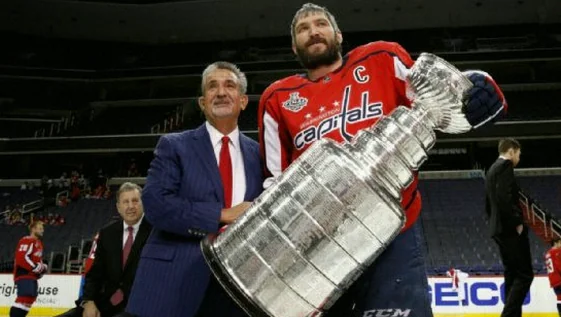
That patience paid off in 2018, when the Capitals won the Stanley Cup. For Wilson, that achievement carried a different weight because Ovechkin won it in the only NHL city he had known.
MacLellan says the strain of the pre-Cup years strengthened the partnership, though trust still required constant work. Washington’s hockey operations staff meets privately with Ovechkin several times each season to explain its thinking. The captain is not asked to approve every move, but he is told which players are available, what the club needs and why decisions are being made.
“We don’t see every situation the same way,” MacLellan said. “But we keep the communication open.”
That approach mattered when the moves became personal. Washington traded defenseman Dmitry Orlov, one of Ovechkin’s close friends, in 2023. This past season, the Capitals dealt Carlson, who had spent 17 years with the team and ranked second only to Ovechkin in organizational tenure. The Carlson trade came with Washington only four points outside a playoff position.
Ovechkin was shaken by those departures. MacLellan said the message from the front office was that the club was not surrendering; it was retooling and intended to act once July 1 arrived. The Kyrou, Tuch and Jenner additions became the proof of that message, and Ovechkin chose to stay.
The next challenge is extending that sense of belonging beyond Ovechkin’s era. Wilson has already taken on part of that responsibility, speaking about creating the same environment for Ryan Leonard, Cole Hutson and the players who will follow them.
“I want those guys to feel they can spend their whole careers in D.C.,” Wilson said. “That is something I learned from Ovi.”