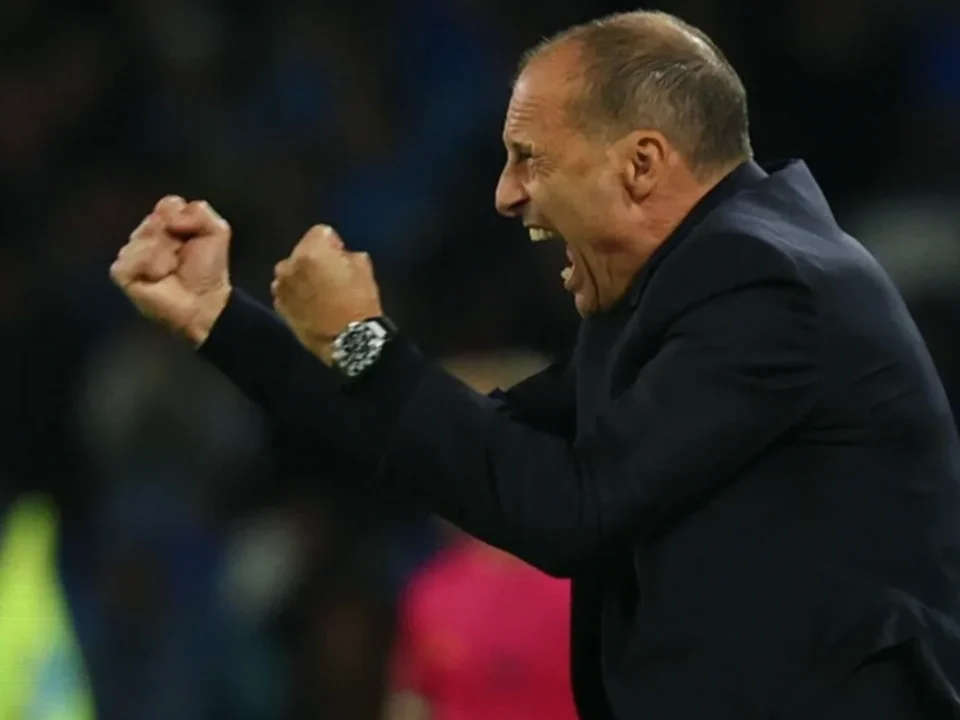
Napoli’s 3-0 victory over Frosinone was more than a useful result in the table. It showed Massimiliano Allegri adjusting to a midfield shortage and to defensive concerns that had troubled the opening weeks, with Kevin De Bruyne accepting a deeper responsibility he had initially preferred to avoid.
De Bruyne finds the game in a deeper role
- At the start of the season, Allegri asked De Bruyne to operate closer to the defence and help begin Napoli’s moves with greater technical control.
- The Belgian, now 35, initially declined the idea. He considers himself an attacking midfielder, a view supported by a career return of 203 goals and 300 assists.
- Allegri later confirmed that response after the win over Frosinone: De Bruyne had not wanted to make the positional change.
- Napoli’s midfield circumstances then forced a reconsideration. André-Frank Zambo Anguissa was unavailable, Scott McTominay was among the substitutes following surgery, and Billy Gilmour arrived exhausted after starting Scotland’s four matches, totalling 327 minutes.
- De Bruyne moved roughly 20 metres further back, playing alongside Stanislav Lobotka in a two-playmaker midfield. He scored twice and directed a match Napoli controlled throughout.
- When McTominay entered after an hour, De Bruyne was able to return to a more advanced area.
The episode recalled Allegri’s earlier conversation with Luka Modric at Milanello. When the Croatian arrived last year, Allegri proposed that the 40-year-old should withdraw in front of the back line to prolong his career. Modric accepted, although he explained that Real Madrid had traditionally used more physically imposing players in that position, citing Sergio Busquets and Casemiro as the usual model in Spain.
Even in Carlo Ancelotti’s final outstanding Real Madrid side, Toni Kroos rather than Modric had been the principal deep organiser. At Milan, however, Modric embraced the revised assignment and became one of the campaign’s leading figures. De Bruyne’s case began differently, but Napoli’s emergency gave Allegri the opportunity to test the same broad principle.
A more robust defensive line
De Bruyne’s positional change was only part of the explanation for Saturday night. The more significant intervention came behind him.
Napoli had conceded six goals in their first five league rounds. Among the top nine sides, only Inter had let in more. The goals surrendered against Como, Inter and Fiorentina particularly angered Allegri and prompted a rethink.
- Allegri abandoned the earlier defensive arrangement in favour of a three-man central unit.
- Rather than placing Giovanni Di Lorenzo among the three centre-backs, he selected three specialist defenders: Benoît Badiashile, Amir Rrahmani and Rafa Marin.
- Di Lorenzo supported the right flank, while Leonardo Spinazzola provided the corresponding cover on the left.
- Badiashile, heavily criticised after his contribution to Inter’s comeback at San Siro, completed the match to applause.
The revised structure gave Napoli more physical presence and defensive solidity, while the double pivot of Lobotka and De Bruyne supplied control in possession. The result was a clean sheet, three goals and a meaningful rise in the standings.
Allegri’s response to the season
Whether the three-man defence was entirely Allegri’s own idea or something discussed with assistant Marco Landucci matters less than the timing of the decision. Allegri is not presenting himself as a tactical theorist competing with Cristian Chivu or Gian Piero Gasperini. His value in this moment lies in recognising a shift in the weather of a season: a side taking too many blows, a midfield running short of options, and an experienced player capable of solving a problem when asked differently.
Napoli are now back in the Champions League places. For Allegri, the Frosinone win was not the end of an argument over De Bruyne’s role, but evidence that a coach’s request can become useful when the team’s needs make it unavoidable.