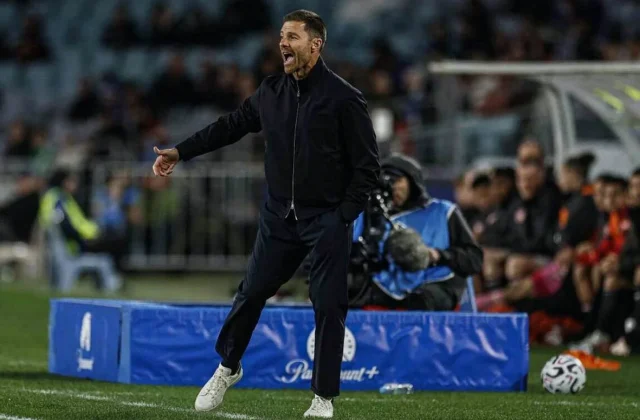
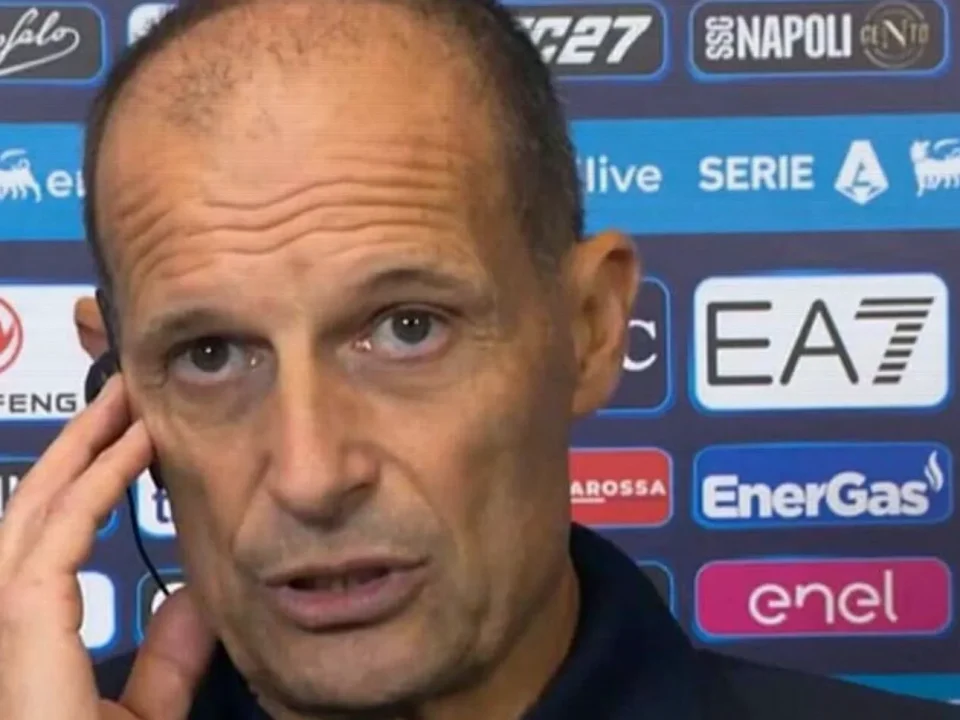
Napoli’s 3-0 home win over Frosinone offered Massimiliano Allegri his most convincing performance of the season so far, but the coach’s post-match assessment remained firmly rooted in the work still to be done. The result at the Maradona brought authority, chances and encouragement from returning players, while also leaving Allegri dissatisfied with the number of shots his side permitted.
The decision
Allegri defended Benoît Badiashile after recent scrutiny of the defender, insisting that one mistake cannot define a player’s standing. He took responsibility for the decision to use Badiashile in Milan, suggesting that the player had been out for too long before that appearance.
“Nobody should be judged on a single error,” Allegri said. “There are countless mistakes in a match and everyone makes them. Sometimes they decide games. Perhaps in Milan I was wrong to put him on, because he had been inactive for a long time. He must be assessed over the season, and his quality is not in question.”
Allegri added that Badiashile possesses “a wonderful pass” and rejected the simplistic idea that a player becomes poor after one costly moment. Napoli, he said, now need to keep working rather than allowing the scoreline to create unnecessary excitement ahead of an important match on Tuesday.
The coach was similarly direct with Noa Lang. While pleased for the player, Allegri said Lang has delivered less than he is capable of and must demand more of himself, especially in front of goal.
“I try to speak with him,” Allegri explained. “I told him that what he has shown until now is below his potential, and that is down to him. There is an old saying: help yourself and God will help you. He has important potential, but he must improve when he gets to the shot.”
Allegri broadened the point into a familiar reflection on managing talented footballers, arguing that coaching champions is usually easier while players with exceptional imagination and ability are not always naturally disciplined. He also called for defenders to rediscover satisfaction in stopping attackers, rather than treating defending as a secondary duty.
Sunday’s picture
Napoli were quickly into the game against Massimiliano Alvini’s Frosinone, and Allegri identified the early aggression and desire as the strongest elements of the evening. Yet he felt his side failed to turn enough promising situations into attempts, a dangerous flaw against opponents capable of breaking forward once an attack has stalled.
“There were six occasions when we did not even shoot,” he said. “If you do not finish an action, they can counterattack and the match becomes end-to-end.”
Napoli became more conservative after the interval, partly because of the energy expended in the opening phase and partly because several players are still building fitness after lengthy absences. Allegri pointed to Kevin De Bruyne, André-Frank Zambo Anguissa and Neres among those requiring patience: De Bruyne missed substantial time last season, while Anguissa managed only 13 matches.
De Bruyne received particular backing from his coach. Allegri recalled the midfielder creating two or three major openings after coming on in Milan and noted his good work with the national team. He believes De Bruyne could prolong his career by a couple of years if he increasingly operates as a deep-lying playmaker, even if the Belgian prefers to enjoy himself further forward.
“In midfield he has more advantages than he does nearer the attack,” Allegri said. “Like the others, he played well. But many players have to recover their condition, and that takes time.”
Napoli nevertheless had chances to make the margin even more emphatic. Allegri counted four late situations in which his team had a two-versus-one or three-versus-two advantage, arguing that at least one should have produced another goal. He also felt the third goal should have arrived earlier.
For all the control suggested by a 3-0 scoreline, the coach returned repeatedly to Napoli’s defensive standards around their own area. “We conceded too many shots again,” he said. “We must become more solid close to goal.”
Giovanni Di Lorenzo’s movement was another positive detail for Allegri, who praised the captain’s habit of making central runs and combining with teammates through quick give-and-go exchanges.
There was also a light moment after Rasmus Hojlund missed a penalty. Allegri said the forward apologised and joked that De Bruyne had given him the ball. The coach’s reply was immediate: Hojlund should simply have returned it to De Bruyne.