Milan’s 3-0 win over Lecce did more than soften the memory of the European defeat to Benfica. It sent Ruben Amorim into the international break with a result, a performance and several selection answers that had seemed distant only days earlier.
The decision
Amorim had come under swift pressure after the Benfica loss, but the response against Eusebio Di Francesco’s Lecce was emphatic. Milan changed both personnel and approach, with the coach showing a willingness to adjust rather than insist on one fixed interpretation of his football.
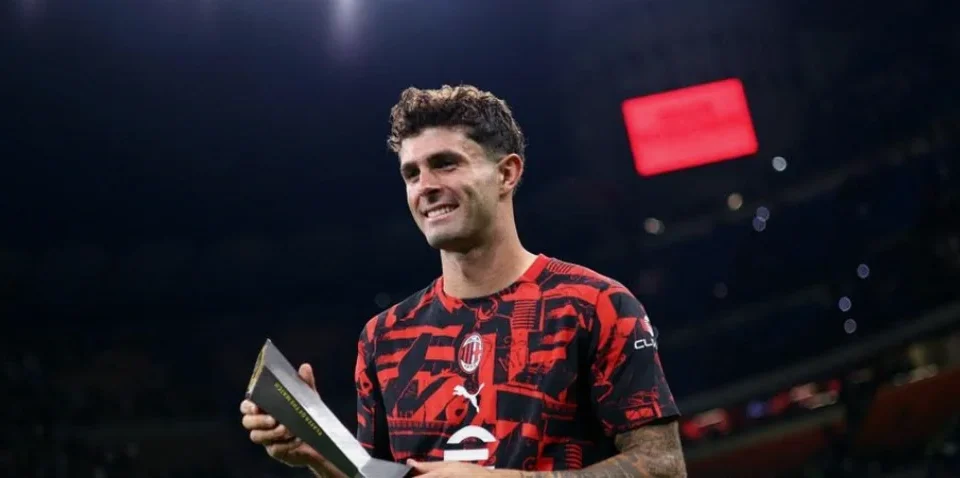
The clearest individual conclusion concerned Christian Pulisic. Handed his first start, the American supplied precisely the attacking uncertainty Milan had lacked. His opening goal came after he ran beyond the Lecce line, controlled Strahinja Pavlovic’s precise pass and beat Wladimiro Falcone on the volley as the goalkeeper advanced.
It was Pulisic’s first Milan goal in 266 days, yet the match underlined his standing within the squad. Ruben Loftus-Cheek, Alexis Saelemaekers, Hutchinson and Cisse offer different qualities, but none carries quite the same threat when attacking space from the attacking midfield positions. Pulisic also helped create Adrien Rabiot’s second goal, releasing the Frenchman with a sharp first-time touch.
For Amorim, the point is broader than a single finish. Pulisic can run in behind, combine with teammates and disturb a defence through his movement. Unless rotation demands otherwise, Milan are unlikely to build their next phase without him.
The coach’s tactical flexibility was another important element. Amorim had once declared that he would not abandon his 3-4-2-1 system even if the Pope asked him to do so. Against Lecce, however, Milan often formed a back four, with Gila moving to the right and Estupinan dropping on the left.
The adjustment caught Lecce off balance and also reduced the defensive workload placed on Samuel Chukwueze, who was not required to spend the full match covering the entire flank. It remains to be seen whether the same structure will suit different opponents, but the larger message was that Amorim is prepared to alter the framework when the match requires it.
That may be a more valuable development than any one formation. Principles remain important, but Milan’s season will not be shaped by tactical rigidity alone. The Lecce match suggested that Amorim has reflected on past errors and recognised the value of adaptation in Serie A.
There were further decisions within the team. Luka Modric remains especially influential when Milan control possession, and his partnership with Rabiot gave the midfield greater authority. Rabiot, restored to central midfield after experiments higher up the pitch, scored his first goal of the season at San Siro.
The Frenchman has the range to be used in several roles, but the performance made a persuasive case for keeping him involved. Moreira, meanwhile, has proved a dangerous option from the bench; whether he earns a larger role is one of the questions Amorim can consider over the next three weeks.
Sunday’s picture
The 3-0 victory over Lecce has restored a calmer mood around Milan before the pause for international football. It does not settle every debate around Amorim’s side, nor does one convincing afternoon provide a permanent identity.
But it has given the coach firmer ground from which to work: Pulisic as a central attacking reference, Rabiot back in midfield, Modric’s control when Milan are on top, and evidence that the team can shift shape without losing its purpose. After a difficult European night, those are foundations Milan can carry into the next chapter of the championship.