Manchester City’s trip to Anfield this weekend arrives with more than the usual edge. Following the Premier League’s verdict on the club’s financial charges and City’s subsequent appeal, the visiting support is expected to close ranks — and there is fresh talk of inflatable bananas returning in force.
Key takeaways
- City supporters first adopted the inflatable banana during a match against Plymouth Argyle on 15 August 1987.
- Frank Newton’s oversized banana became the starting point for a travelling-fan craze that spread through the late 1980s.
- The movement reached its height in 1988-89, including a memorable Boxing Day visit to Stoke City.
- Bananas later carried difficult associations because of racist abuse aimed at Black footballers, including Liverpool great John Barnes.
- Any display at Anfield would be seen chiefly as a show of solidarity from City fans rather than an organised protest against the Premier League.
From Maine Road mischief to a City identity
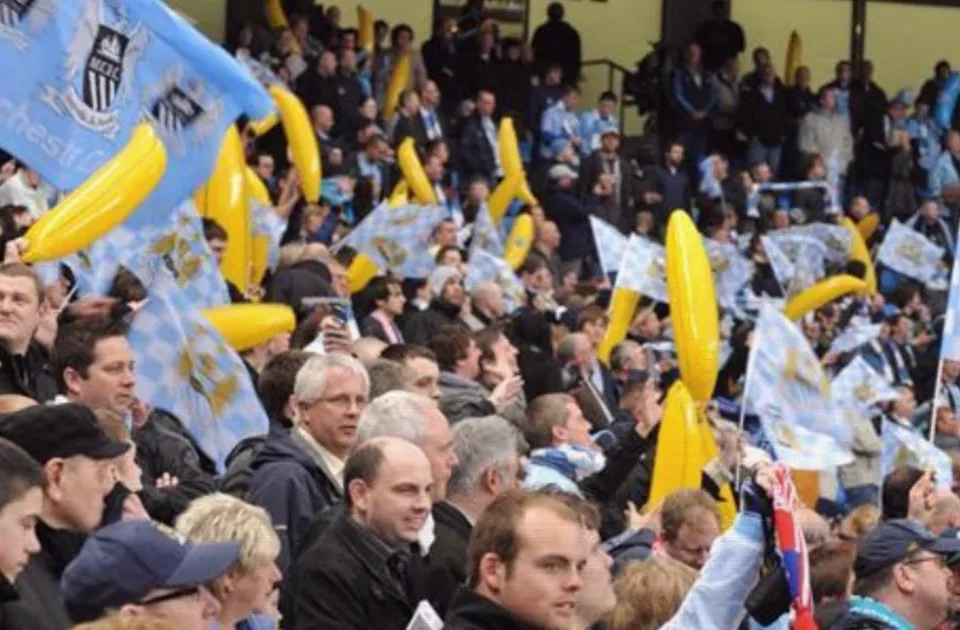
The inflatable banana was born in less polished circumstances, when City were playing in the second tier and English grounds were not much given to colour or cheer. At the Plymouth game in August 1987, supporter Frank Newton turned up with a huge inflatable banana, drawing laughs from those around him. He kept bringing it to matches and away days, and others soon followed suit.
What began as one fan’s joke developed into a travelling terrace tradition. Bananas were joined by inflatable sharks, dinosaurs, monsters and giant hammers, giving City’s following a deliberately absurd look at a bleak point for the English game.
The period was scarred by hooliganism, restrictions on English clubs after the Heysel disaster and a wider sense that football grounds had lost some of their appeal. City fans responded with humour, making the inflatable menagerie part of their support. The peak came during the 1988-89 campaign, particularly at Stoke on Boxing Day 1988, when thousands of City followers arrived with costumes and inflatables.
The craze even reached the dressing-room folklore at Maine Road. Forward Imre Varadi was jokingly known as “Imre Banana”, a nickname that rather neatly captured the spirit of the time.
Anfield’s uncomfortable historical echo
A sea of yellow in the away end at Liverpool would carry a more complicated meaning than a simple nod to City nostalgia. In the 1980s, bananas were used in racist abuse directed at Black players across British football. John Barnes, Liverpool’s outstanding winger and an England international, was among the most prominent players to face it. The image of Barnes flicking a banana away with his foot became one of the era’s defining photographs.
Some later accounts have suggested that City fans helped recast the banana as a communal, playful object rather than one connected with racial hatred. The closest historical accounts of the tradition’s beginning, however, place its roots in terrace comedy and popular culture, not in any planned anti-racism initiative.
That leaves an obvious historical tension should large numbers of bananas appear at Anfield. The ground is closely tied to Barnes, one of the most recognisable victims of racism in English football, while City supporters regard the inflatable as part of their own inherited matchday culture.
The present mood around City gives the prospect extra weight. Fan discussion has been dominated during the international break by the case against the club and the possible punishment following the verdict. With the appeal lodged, supporters have been rallying around the side before the Liverpool fixture.
If bananas do appear, they are likely to amount to a visible declaration of identity and defiance: a reminder that City fans see themselves as standing together in an awkward period, rather than a coordinated demonstration against the league.
Erling Haaland has urged supporters to keep that perspective. He said City fans travelling to Anfield would enjoy themselves, adding: “We need to stick together, support each other and remain positive. Whatever happens in life, we have to smile, stay positive, look ahead, try to win football matches and enjoy the situation.”