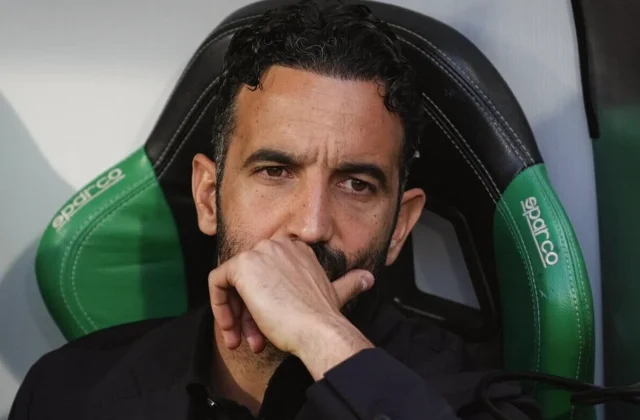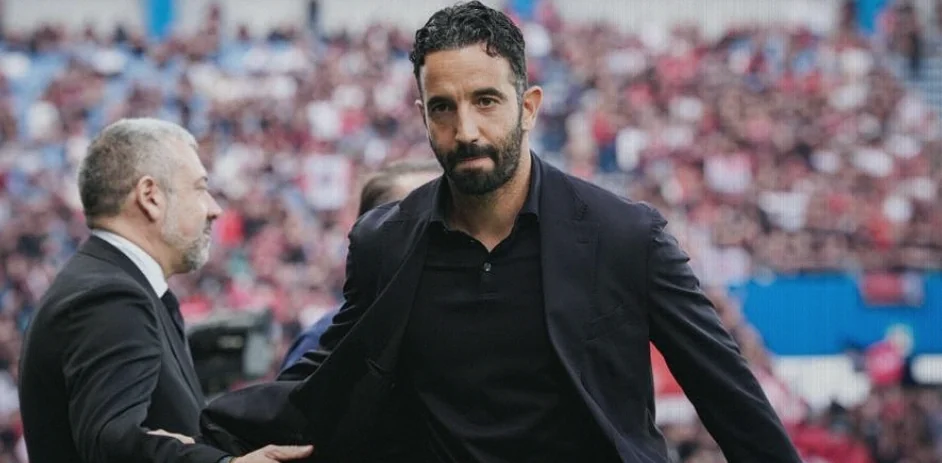
Milan’s season under Ruben Amorim has reached mid-October without offering a fixed identity. Against Sassuolo, the Rossoneri were neither as poor as they had been against Benfica nor as convincing as in the match with Lecce. They created enough chances to win, yet left the field having surrendered two points that mattered in the effort to remain close to the leading group.
The coach and the club
Amorim’s Milan remains a side capable of changing character within the same afternoon. The opening half was overly cautious, before the team found greater intensity late in the first period and again after the restart. That momentum did not last. Sassuolo’s equaliser exposed a serious lapse in concentration, and Milan then lost much of their edge in the final phase.
The coach had opted to begin with a back four, although his system can also shift into a three-man defensive line. He explained that the choice was designed to give Milan more attacking thrust, while stressing that the same players are able to rotate between the two structures.
For Amorim, however, the issue was not simply the number of defenders. Milan had taken the lead and should then have imposed themselves more firmly through possession, slowing Sassuolo’s response and preserving control of the match.
- Milan began cautiously before raising their tempo around the interval.
- The Rossoneri went ahead after creating a considerable number of opportunities.
- Sassuolo levelled from a corner, and Milan could not recover their earlier authority.
“We are never satisfied when we do not win,” Amorim said after the match. “There are still many things to improve. We wanted another goal and reacted well to many of their transitions, but after scoring we had to manage the game better, keep the ball more and stop their reaction.”
He was particularly unhappy with the manner of the equaliser. “We cannot allow ourselves to concede from a corner,” he said. “You cannot be content when you throw away two points in that way.”
Amorim believed Milan deserved their advantage, but felt his players abandoned the approach that had brought it. The intention had been to command the game and find the right combinations, particularly in the final third. He described part of that task as a question of mentality, while acknowledging that the side are still working on their build-up play and need cleaner attacking connections near goal.
A result that leaves questions behind
The draw was not without encouraging elements: Milan produced a substantial volume of chances and showed periods of real intensity. Yet those passages were separated by uncertainty, a familiar theme for a team still searching for continuity from one match to the next.
There was also concern for Matteo Gabbia, who suffered an injury during the game. Amorim could not yet put a precise measure on the problem, but underlined the defender’s importance within the group, adding that the incident was difficult even to watch.
For Milan, the next step is less about choosing between a back three and a back four than about sustaining the standards they have already shown in fragments. If they are to stay attached to the teams ahead of them, matches in which they create so much must become victories rather than another unresolved chapter.