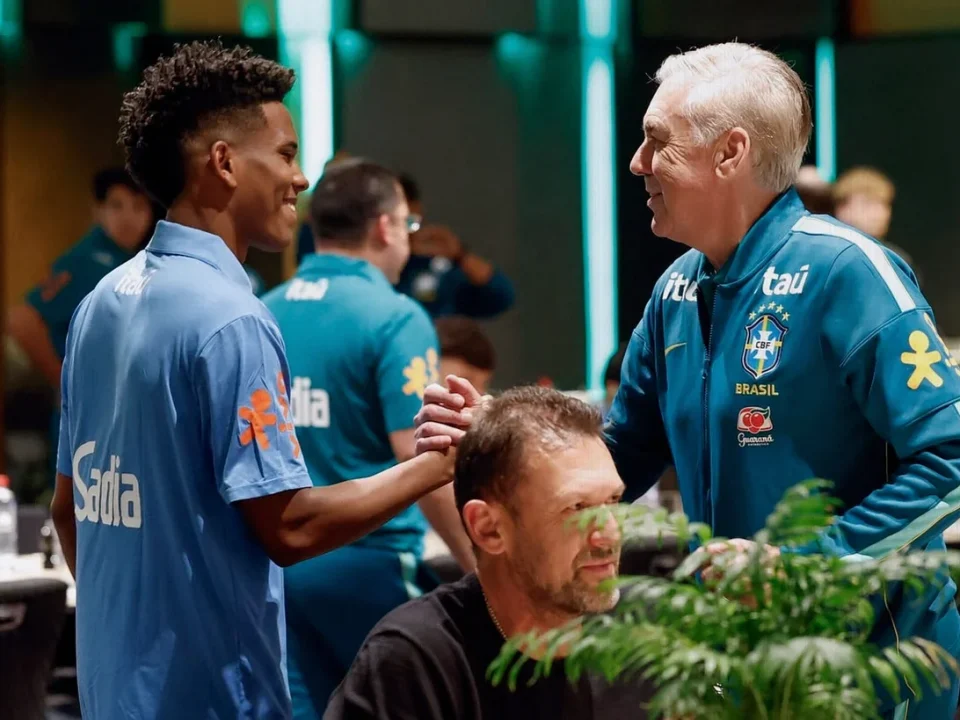
Brisbane is the first stop in Brazil’s unusually long international window, with Carlo Ancelotti beginning to gather his squad for a three-match tour stretching from northern Australia to Kolkata. Estevão was among the early arrivals at the team hotel as the Brazil coach starts the post-World Cup programme.
The 16-day September-October release period, running until 6 October, combines what were previously separate windows. Most other international breaks will remain nine days long.
Quick facts
- Brazil face Australia in Townsville on 25 September and in Brisbane on 29 September.
- Ancelotti’s side then travel to India to play in Kolkata on 3 October.
- Eleven Brazil-based players have been selected, including three from Corinthians and two from Flamengo.
- Brazilian clubs supply 29 further players to South American national teams; Chile are the only CONMEBOL side without one.
- The UEFA Nations League opens its 2026-27 edition with four matchdays during the window.
Corinthians provide goalkeeper Hugo Souza, right-back Matheuzinho and midfielder Breno Bidon for Brazil. Pedro and Samuel Lino represent Flamengo, while Coritiba goalkeeper Pedro Morisco, Cruzeiro’s Otávio, Athletico Paranaense defender Arthur Dias, Botafogo’s Danilo, Santos midfielder Gabriel Bontempo and Fluminense’s Martinelli complete the domestic-club contingent.
The wider South American call-up lists underline the reach of Brazil’s club game across the continent. Palmeiras have Argentina pair Giay and Flaco López, while Santos supply Miguel Terceros and Marcelo Torrez to Bolivia.
Colombia have selected Palmeiras winger Jhon Arias, Atlético Mineiro’s Castaño, Vasco player Andrés Gómez and Athletico Paranaense forward Viveros. Ecuador’s list includes Atlético Mineiro trio Preciado, Alan Franco and Alan Minda, Flamengo duo Plata and Valencia, Internacional’s Félix Torres, Red Bull Bragantino’s Hurtado and Cruzeiro’s Arroyo.
Paraguay take Palmeiras players Gustavo Gómez, Maurício and Sosa, alongside Grêmio’s Villasanti, Internacional’s Sanabria and Santos player Caballero. Peru call up Grêmio’s Noriega and Corinthians midfielder Carrillo.
Uruguay will have Palmeiras left-back Piquerez plus Flamengo pair Arrascaeta and Varela. Venezuela include Botafogo defender Ferraresi and Santos prospect Nicola Profeta.
Argentina also have three fixtures, though all will be played on home soil. Bolivia visit Córdoba on 30 September before Burkina Faso arrive at the Monumental in Buenos Aires on 3 October.
The final match, against Benin at the Monumental on 6 October, is set to be Lionel Messi’s farewell appearance for Argentina. The world runners-up will therefore close their programme with a landmark night in Núñez.
New faces on Europe’s touchlines
Across the Atlantic, the UEFA Nations League begins a new cycle, and several major teams will do so under recently appointed coaches. France open Zinedine Zidane’s tenure against Turkey on 25 September, followed by Belgium on 28 September, Italy on 2 October and Belgium again on 5 October.
Belgium begin with Dutch coach Mark van Bommel, while Italy are now led by Roberto Mancini. France’s schedule gives Zidane immediate tests against both of those newly configured rivals.
Amsterdam hosts another high-profile managerial debut on 24 September, when Xavi’s Netherlands meet Jürgen Klopp’s Germany. Germany then play Greece twice and Serbia once; the Dutch face Serbia twice and Greece once.
Portugal, the reigning Nations League holders, begin Jorge Jesus’s spell in Lisbon against Wales on 24 September. The former Flamengo coach will then lead Portugal into two matches with Norway and one against Denmark.
Spain return as world champions under Luis de la Fuente, who remains in charge after guiding the country to its second World Cup. Their first fixture of the new cycle comes at Wembley against Thomas Tuchel’s England on 26 September.
Spain’s first home game since lifting the World Cup will be against Croatia in Seville on 29 September. They later meet the Czech Republic and Croatia again, while England play the Czechs twice and Croatia once.