
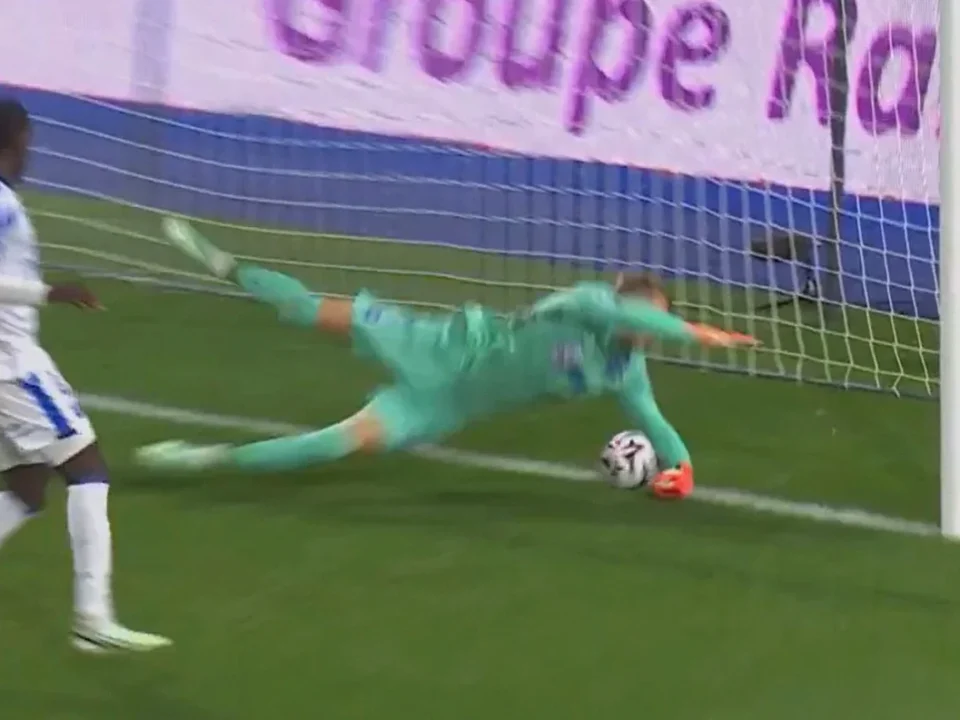
Six seconds of uncertainty turned an ordinary Ligue 1 afternoon into a bitter argument at Auxerre, where a disputed goal in the draw against Le Mans has left the home club demanding answers over the technology used to assist the referee.
The Ligue 1 news
Auxerre president Baptiste Malherbe has described the decision to award Le Mans an early second-half opener as an injustice, arguing that goal-line technology led the officials in the wrong direction.
The incident occurred when Le Mans were awarded a goal despite Auxerre’s belief that the ball had not completely crossed the line. Malherbe said the controversy was especially frustrating because, in his view, the referee’s own judgement had been overridden by a faulty technological signal.
“People say that human error is part of football, but this was worse,” Malherbe said. “The officials had seen the situation, yet the machine pushed them towards the wrong decision.”
Goal-line technology is intended to alert all four match officials in under a second. In this case, six seconds passed before only two of the four watches sounded. With confusion around the alert, referee Willy Delajod then reviewed the available footage.
Malherbe did not blame Delajod personally, saying the official had made almost every one of his many decisions correctly during the match. He argued instead that the referee had been placed in an impossible position after being told by the system that a goal had been scored.
“It may be that the VAR confused the ball with the goalkeeper’s gloves,” Malherbe said. “The ball never entirely crossed the line. If the tools are unreliable and mislead referees, it becomes very difficult, especially given what is at stake.”
He also questioned why Auxerre believed they had access to more useful images than the video officials. Once technology is introduced to help referees, he said, it must provide the clearest possible support rather than create further doubt.
The Auxerre president accepted that the images reviewed by Delajod did not offer conclusive proof that the ball had stayed out. Because the original technological verdict was a goal, the referee would have needed indisputable evidence to overturn it.
“There was no certain picture showing that the ball had not gone over,” Malherbe said. “That is unfortunate, but after the goal-line decision, that level of proof was required.”
Malherbe is not seeking a replay or a walkover victory for Auxerre. His concern is that the episode should force the competition authorities and the refereeing department to examine the failure and prevent a similar error affecting another match.
He said sporting fairness had been damaged by the technological mistake, with the disputed Le Mans goal having altered the course of a match that ultimately ended level.