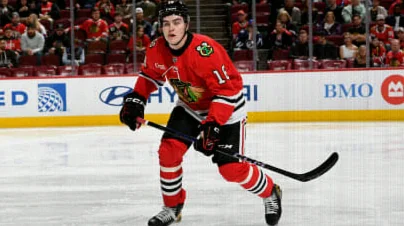
Anton Frondell’s first full stretch in Chicago has come with a learning curve that reaches well beyond the Blackhawks’ rink. The 19-year-old forward is adjusting to a new country, a new home and the day-to-day details of living without family after two seasons with Djurgardens in Sweden.
Frondell said everything from traffic patterns and food to the AM-PM clock format has felt unfamiliar. He is gradually settling in, though he admitted his routine still carries plenty of Sweden with it.
The winger had already sampled North American hockey late last season, appearing in 12 games for Chicago. This season is different: it is the first time he is handling the full off-ice transition that comes with starting a pro career abroad.
Quick facts
- Frondell, 19, is living with Blackhawks captain Connor Bedard.
- Chicago’s young group also includes Roman Kantserov, 22, Sacha Boisvert, 20, and AJ Spellacy, 20, in their first season living independently.
- Oliver Moore, Ryan Greene, Nick Lardis and defenseman Sam Rinzel went through similar adjustments last season.
- The NHL and NHL Players’ Association run a three-day Player Orientation Program each summer for about 90 young players.
Bedard, entering his fourth Blackhawks season, was named Chicago captain Sept. 15. Having an established teammate in the house gives Frondell a softer landing while he learns the practical parts of life in the United States.
For many prospects, the move is as much about bills, meals, laundry and keeping a home in order as it is about earning ice time. Rinzel said players often focus on whether they are prepared for NHL hockey without fully considering whether they are ready for the lifestyle around it.
Rinzel called the change enjoyable rather than overwhelming, but said it can catch young players by surprise. After a season of experience, he feels more at ease both away from the rink and during games, when the game itself begins to slow down.
Lardis had company during his first pro season, sharing a place in Rockford with other players while skating for the Blackhawks’ American Hockey League affiliate. Still, the former Brantford OHL forward said moving away from family required better organization and more attention to chores and household costs.
He felt junior hockey had helped him build those habits before arriving in Rockford and Chicago. That preparation made the professional transition more manageable.
League program covers life beyond hockey
The NHL and NHLPA introduced the Player Orientation Program through collective bargaining in 2012, and it has been included in the CBA since 2013. The program was paused for two years during the COVID-19 period but has since resumed.
Over three days each summer, teams send roughly 90 early-career players to sessions on financial matters, personal branding, sensitivity training and other life skills. NHL Deputy Commissioner Bill Daly said the program gives players exposure to issues they may not have encountered at lower levels and has drawn strong feedback.
NHLPA executive director Marty Walsh said the financial component is particularly important because entry-level players are earning more money than before and may have significant future earning potential. The program also addresses taxes, available resources and the role of the players’ association.
Former players speak to the group about difficult experiences, including substance abuse and incarceration, offering a direct look at pressures that can accompany NHL life. Walsh called the program an important tool for players beginning that transition.
Kantserov finds a new routine in Chicago
Kantserov’s route has been especially different. The 22-year-old spent 2022-26 with Magnitogorsk in the KHL while living with his family in Russia, then spent several weeks in Stamford, Connecticut, training with Russian players, members of the New York Rangers and Blackhawks goaltender Spencer Knight.
He is now staying in a Chicago hotel and has spent his first three months in the United States setting up documents, a Social Security number and bank accounts. His agent helped with that process in Connecticut.
Kantserov said the change in driving rules, city life and restaurant customs has been noticeable, if not unmanageable. For European and Russian players, he said, the move represents a distinctly different way of living.
Other NHL players remember the same first-year hurdles. Calgary Flames forward Matt Coronato said cooking was his biggest test when he entered the League as a rookie in 2023-24. His mother gave him a recipe book, and he gradually found dependable meals in grilled chicken, rice and ground beef.
Philadelphia Flyers defenseman Jamie Drysdale offered a simpler kitchen solution: buy a barbecue. Drysdale, who started in the Anaheim Ducks organization in 2020-21, said the harder part was spending long stretches away from friends and family.
He lived with Hampus Lindholm as a rookie, before Lindholm later joined the Boston Bruins. Drysdale said young players can go roughly six months without seeing people from home, while dealing with a long schedule, heightened pressure and the usual ups and downs of an NHL season.
Veterans remain part of the transition
Housing and guidance often come from older players. San Jose Sharks forward Macklin Celebrini lived with former Sharks captain Joe Thornton during his rookie season, while Dallas Stars forward Wyatt Johnston spent his first two NHL seasons with former Stars forward Joe Pavelski.
Flyers forward Trevor Zegras had been living independently since his sophomore year at Boston University, but still leaned on Anaheim veterans when he reached the Ducks in 2020-21. He pointed to Ryan Getzlaf as a trusted voice and said David Backes also helped him early in his career.
Getzlaf played for Anaheim from 2005-22 and served as Ducks captain from 2010-22. Zegras said the longtime center had seen virtually every part of the NHL experience and was an easy player to approach.
Blackhawks forward Frank Nazar found similar support from Nick Foligno, who played in Chicago from 2023-26. Nazar said Foligno helped every young player who passed through his teams, while also crediting Chicago defenseman Alex Vlasic for making him comfortable during an earlier visit to skate with the club while Nazar was still at Michigan.
For Frondell and Chicago’s newest wave, the adjustment will continue between practices, meals, errands and the rest of a season far from home. The new surroundings eventually become familiar, and that comfort can carry back onto the ice.