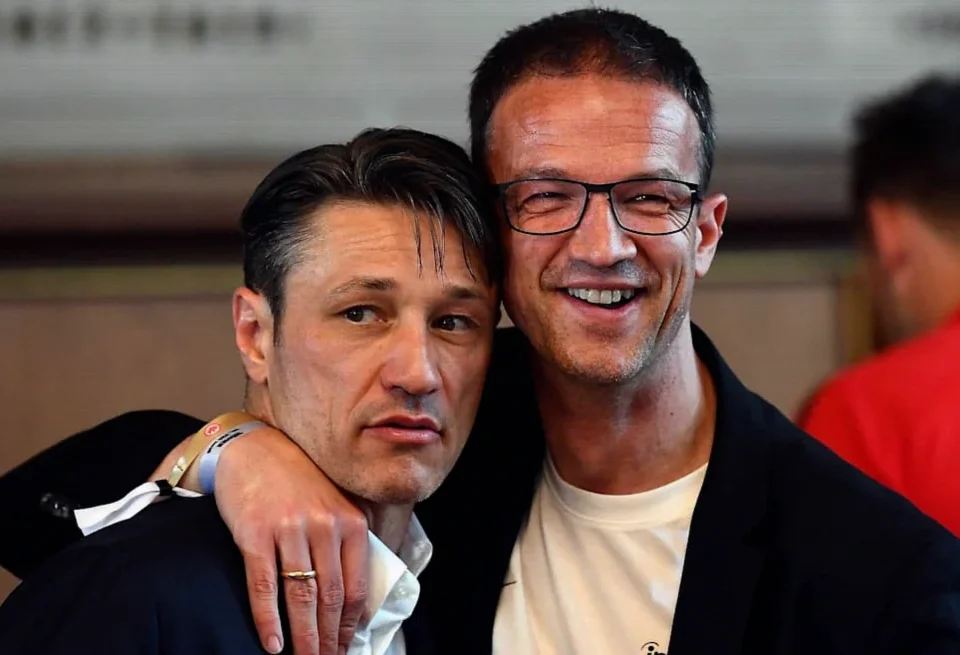
Fredi Bobic sees a more settled Niko Kovac at Borussia Dortmund. The former Eintracht Frankfurt sporting director believes Kovac’s demanding, adaptable approach has helped turn the Bundesliga leaders into a stable side.
The sporting fact
Bobic and Kovac were Hertha BSC team-mates from 2003 to 2005. They later reunited at Eintracht Frankfurt, where Bobic worked as sporting director and Kovac as head coach. Their 2018 DFB-Pokal win remains the high point of that partnership.
Bobic has remained in contact with Kovac and recently watched Dortmund’s match against Paderborn while working as a TV analyst. He identified a clear structure, high fitness levels and rapid transitions in both directions as familiar Kovac traits.
“That is exactly how he has always been,” Bobic said in essence. Kovac expects his players to work hard, live professionally and meet standards with directness. Bobic pointed to Serhou Guirassy’s description of disagreements being resolved quickly within the squad as evidence of mutual respect.
Bobic had already backed Kovac for the Dortmund job during the club’s coaching search early last year. In his view, Dortmund had too often failed to fulfil their potential when matches became difficult. Kovac’s conviction in his own methods can change that.
The coach does not simply impose a fixed model on a new group, Bobic said. He first studies the squad, holds discussions and builds a system around the players available. The collective comes first. His own footballing ideas can then become more prominent over time.
A secure defence is central to Kovac’s teams, but Bobic stressed that this should not be confused with passive football. Attackers must contribute without the ball. Over a full season, he said, pragmatism is necessary alongside attacking quality.
Bobic named Waldemar Anton, Nico Schlotterbeck and Felix Nmecha as Dortmund players who understand Kovac’s requirements and carry them out. Reliability and mentality matter greatly to the coach, including when assessing possible signings.
He also expects players to cope with discomfort. Bobic linked that outlook to their similar backgrounds, saying both had to work their way up as children of migrant families rather than being handed opportunities.
At Frankfurt, Kovac was open to new influences. Bobic recalled him bringing in nutrition specialists and changing the team’s diet so radically that David Abraham, the Argentine defender, became irritated by the lack of meat. Kovac could recognise when he had gone too far, Bobic added, and was capable of apologising after becoming emotional. His brother Robert, the calmer of the two, has been a useful balance.
Bobic believes Kovac made his biggest personal and coaching development at Monaco. Guiding the French club into the Champions League gave him further certainty in his work and in how he speaks to players. He now sees a calmer coach in Dortmund than the one he knew in Frankfurt.
For Bobic, this is Kovac at his strongest: composed, clear and secure in his decisions.