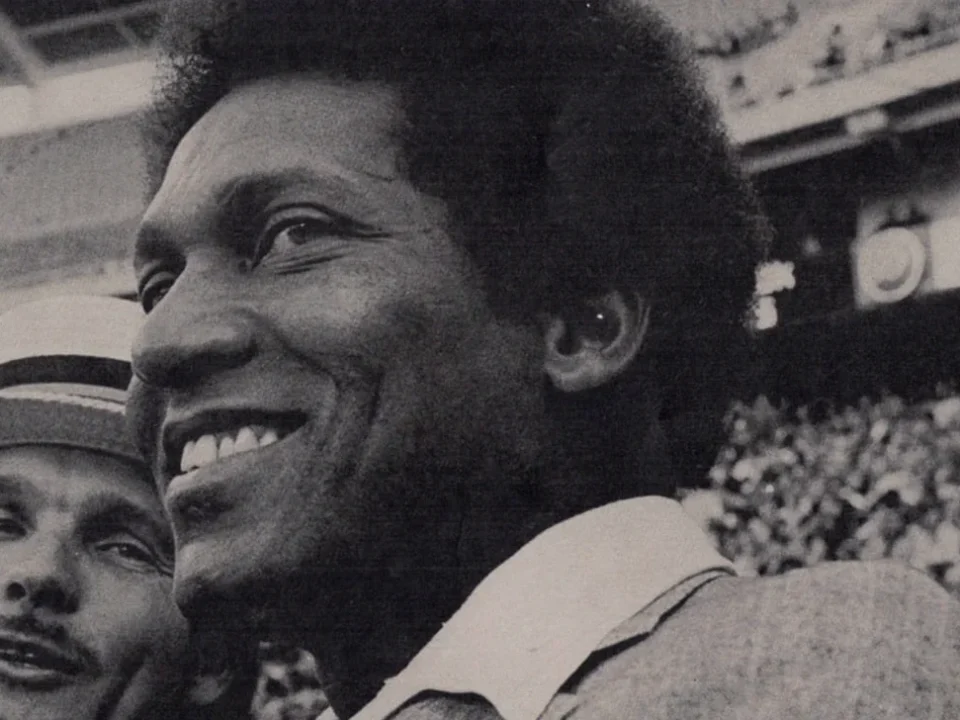
The Braves used Saturday’s game in Houston to remember Bill Lucas, whose imprint on the franchise reached from the front office to the dugout and into the careers of some of Atlanta’s defining players. Fifty years after Lucas became the first Black general manager in Major League Baseball, the club marked the anniversary of a man who helped shape the Braves long before many of the results of his work became visible.
Lucas was appointed vice president of baseball operations on Sept. 19, 1976, by then-owner Ted Turner. Turner retained the general manager title for himself, but Lucas handled the responsibilities that came with running the baseball operation. The Braves recognized Lucas across their social channels and devoted time during the Astros broadcast to his life and influence, including a pregame feature and a remembrance before first pitch.
His path in Atlanta had started well before that front-office promotion. Lucas joined the organization in 1965, one year before the franchise relocated from Milwaukee. As the Braves prepared for their new home, he worked to put integration plans in place and sought greater diversity among both front-office employees and the staff at Atlanta-Fulton County Stadium.
Lucas later made one of the most consequential managerial decisions in club history, bringing in Bobby Cox after the 1977 season. Cox was then a young Yankees first-base coach, and the hire began a relationship that eventually saw Cox serve as Atlanta’s general manager from 1985 through 1990 before building a Hall of Fame managerial career with the Braves from 1990 to 2010.
A mentor in Dale Murphy’s corner
Lucas also played a central role in building the club’s next wave of talent. He selected Bob Horner with the first overall pick in the 1978 Draft, then continued to believe in Dale Murphy through the difficult early years of Murphy’s career. Murphy would ultimately become one of baseball’s premier players of the 1980s and win National League MVP honors in 1982 and 1983.
For Murphy, Lucas was more than an executive who made roster decisions. He remembered Lucas traveling to the Dominican Republic to deliver a bonus to a young player who did not believe he had done enough to merit it.
“Bill did so much for me and this entire organization,” Murphy said. “This is not an easy profession. It can be very challenging. You just have to hope you have somebody like Bill Lucas in your corner.”
Murphy said Lucas managed to maintain the authority required of a baseball executive while making players feel seen through their successes and struggles. “He encouraged me and he walked that tough line while being a boss in the very tough field of professional baseball,” Murphy said. “But I always felt he was my friend. It’s very motivating when you have somebody you feel cares about you and allows you to do your best, while being with you during your ups and downs.”
Lucas did not live to watch Murphy reach those MVP seasons. On May 1, 1979, he watched Phil Niekro collect the 200th victory of his career from his Atlanta home, then called the pitcher to congratulate him. Lucas suffered a massive brain hemorrhage that night and died four days later.
Still, the work remained in plain view: the executive who opened doors in Atlanta, hired Cox, drafted Horner and helped steady Murphy had already left a foundation strong enough to outlast him. Saturday’s anniversary was a reminder that some of the most important figures in a franchise’s history are not always the ones standing under the stadium lights.