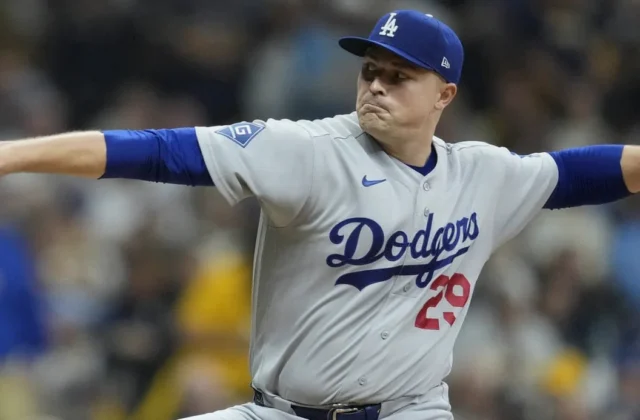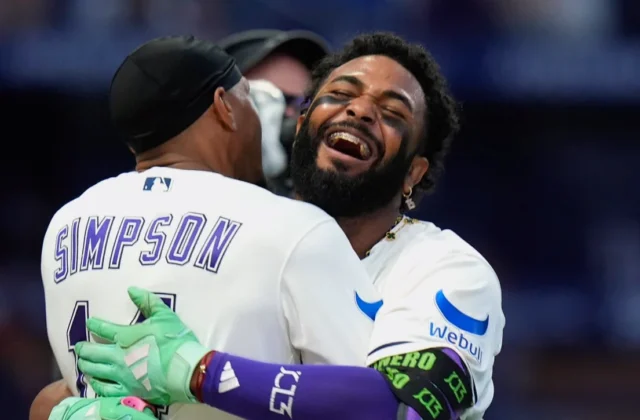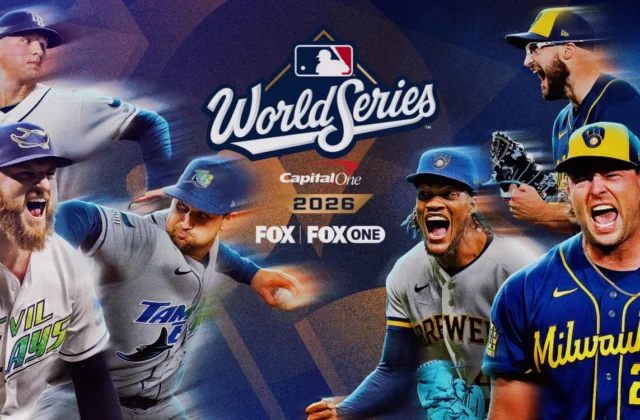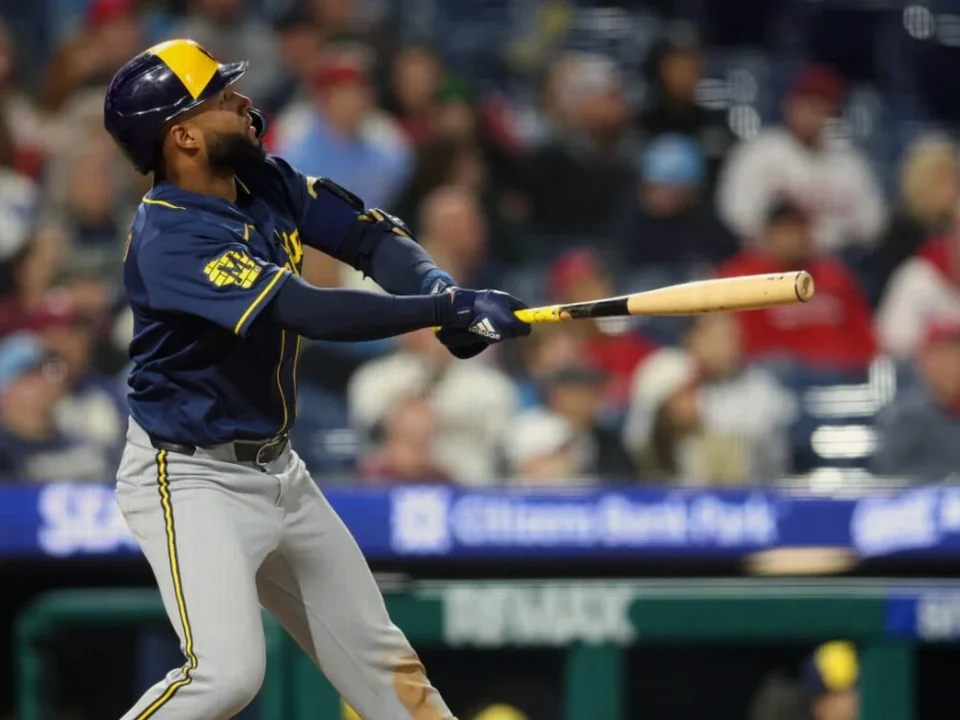
Milwaukee heads into the NLDS with a familiar kind of offense and a potentially different kind of October swing. The Brewers raised their regular-season win total for a fourth straight year while taking a fourth consecutive NL Central crown, and their Game 1 arrives Saturday at 8:30 p.m. ET against the backdrop of last fall’s abrupt finish: a four-game NLCS sweep by the Dodgers in which Milwaukee scored only four runs.
| Season | OPS | wRC+ | Runs per game |
|---|---|---|---|
| 2025 | .736 | 107 | 4.98 |
| 2026 | .743 | 107 | 5.14 |
On the broad offensive line, there is little separation between the last two clubs. The run-production measure was unchanged at 107 wRC+, even as the Brewers added a few points of OPS and scored more often. But the 2025 lineup went quiet against Los Angeles, managing a .384 OPS in the NLCS, and that remains the October scar this group must answer.
A harder brand of contact
The Brewers still do not resemble a typical homer-heavy lineup. Only Toronto hit fewer home runs during the regular season. Milwaukee pulled the ball in the air less than every other club, put more balls on the ground than anyone else and owned baseball’s lowest swing rate.
Yet there is a change beneath that selective approach: Milwaukee has become one of the game’s quickest-swinging teams. A fast swing is measured at 75 mph or better, and those swings around the league produced a .308 batting average and .613 slugging percentage in 2026.
Bat-tracking records extending back to the 2023 All-Star break show that the Brewers have never posted a higher team fast-swing rate. Their five strongest monthly marks have all come within the past five months. Only Cincinnati made a larger year-to-year jump, while Milwaukee improved by 8.4 percentage points from 2025.
| Contact measure | 2025 | 2026 |
|---|---|---|
| Average exit velocity | 88.6 mph | Not listed |
| Hard-hit rate | 39.3% | 40.3% |
| MLB hard-hit rate | 41.0% | 38.7% |
That 40.3% hard-hit rate ranked seventh in the Majors. Milwaukee was one of only four teams to improve in that category while the league’s overall hard-hit rate declined. The club has paired the added bat speed with quality contact: its 33.7% squared-up rate trailed only the Dodgers, and Milwaukee led the Majors in blasts per swing, the combination of elite bat speed and contact on the barrel’s sweet spot.
This is not a wholesale imitation of Toronto’s earlier bat-speed-driven power surge. Milwaukee’s baseball operation has not treated bat speed as a club-wide doctrine. In 2024, president of baseball operations Matt Arnold cautioned that bat speed and actual hitting are different matters, and that evaluators must be careful not to confuse one for the other.
Better pitches, better swings
Lead hitting coach Eric Theisen sees the increased speed as an outcome rather than a target. “There are so many factors” involved, he said, describing it as the result of a broader process.
Some of it is personnel. Garrett Mitchell and Jake Bauers own two of the 15 fastest bats among qualified hitters, and together they received more than 800 additional at-bats in 2026 compared with 2025. Milwaukee also dealt third baseman Caleb Durbin to Boston in February. Durbin had been an NL Rookie of the Year finalist, but his bat speed ranked in the sixth percentile.
The larger story is improvement from returning hitters.
| Hitter | 2025 fast-swing rate | 2026 fast-swing rate | Change |
|---|---|---|---|
| Joey Ortiz | 24.2% | 33.3% | +9.1% |
| Jackson Chourio | 39.9% | 46.5% | +6.6% |
| William Contreras | 34.9% | 37.1% | +2.2% |
Theisen ties that development to Milwaukee’s longstanding emphasis on swing decisions. The Brewers saw 3.97 pitches per plate appearance, tied with Baltimore for the Major League lead. Their 43.9% overall swing rate was the lowest by any team in a full season since the 2019 Angels, and they posted the lowest swing rate on strikes for the third year running.
The point is not simply to lay off pitches outside the zone. It is also to pass on strikes that are not especially hittable. “Pitch selection is the foundation for what we do,” Theisen said. Better pitches, in his view, allow hitters to take their best and fastest swings.
He also stressed that taking pitches is part of the work. Players have to practice making choices and accept the discomfort that comes with it, rather than treating every strike as an automatic green light.
Ortiz and Chourio set the tone
Ortiz offers a clear individual example. Acquired from Baltimore in the Corbin Burnes trade, he ranked as the fourth-worst qualified hitter over the combined 2025-26 period, but his 103 wRC+ this season moved him above league average. His overall swing frequency changed little. Instead, he became more willing to attack pitches in the middle of the zone and higher, an area that suits his strength as a high-ball hitter.
“I just focus on if I’m hitting the ball hard, taking good swings, and swinging at the right pitches,” Ortiz said, adding that bat-speed metrics are not something he dwells on.
Chourio, 22, produced a career-best 130 wRC+ in 2026. Only six qualified hitters reduced their swing rate more than Chourio, a group that also included Chicago’s Pete Crow-Armstrong and Tampa Bay’s Junior Caminero. The Brewers want patience, but not passivity.
“We want to be aggressive to our pitch,” Theisen said, meaning pitches hitters can genuinely drive. Milwaukee believes its players have bought into that idea and can become their best selves when those pitches arrive.
October pitching makes that discipline harder. The good pitch may not show up often, especially against a postseason staff. But Milwaukee’s lineup has arrived at this series with more frequent fast swings, firmer contact and an identity built around waiting for the right moment to unload. After last October’s four-game disappearance, that is the human test behind the numbers.