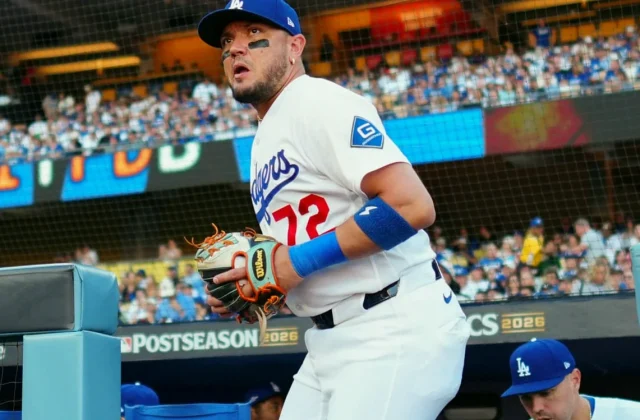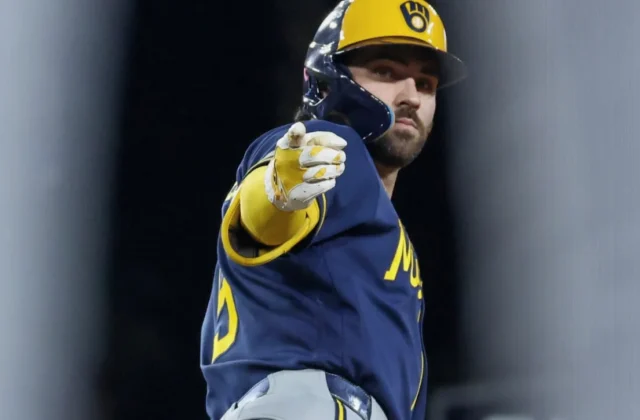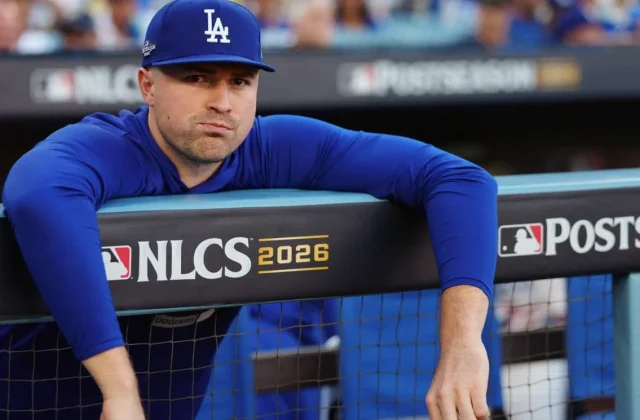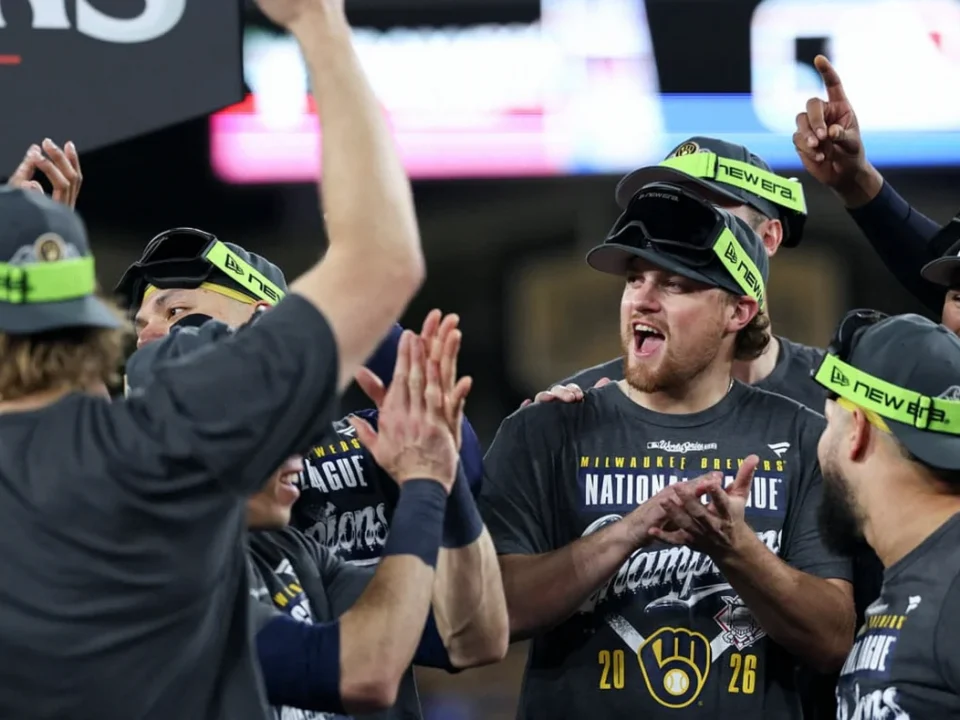
Milwaukee wrote a new chapter Thursday night, beating the Dodgers 6-4 in Game 4 of the National League Championship Series to complete a four-game sweep and send the Brewers to the second World Series in franchise history.
The clincher was another comeback, another bullpen-driven finish and another marker in a postseason run that has kept finding fresh ground. Milwaukee had been swept by Los Angeles a year earlier, then turned around and swept the defending World Series champions in a best-of-seven rematch.
Quick facts
- The Brewers swept the defending champions in the NLCS after being swept by the Dodgers in the previous postseason.
- Milwaukee trailed in all four games of the series, the first team to do that in a best-of-seven postseason sweep.
- All four NLCS victories went to relievers.
- The Brewers erased a four-run deficit in Game 4, the largest comeback ever to finish a best-of-seven sweep.
- World Series Game 1 is scheduled for Oct. 23 on FOX, FOX Deportes and FOX One.
The revenge angle stands alone in baseball. Eight postseason matchups have produced a sweep followed by a rematch between the same clubs the next year, but Milwaukee is the first club to answer a sweep with one of its own.
The 1923 Yankees are the only other team to lose a postseason sweep and defeat that same opponent the following year. They took six games to beat the Giants after being swept in 1922.
Milwaukee’s turnaround also has no direct equivalent across Major League Baseball, the NBA and NHL when both series were best-of-seven. Four teams had previously been swept in one postseason and swept the same opponent the next year, most recently the Warriors and Lakers in the 1967-68 NBA playoffs, but neither case involved two seven-game series.
The Brewers played from behind in every game against Los Angeles. Their Game 4 hole reached four runs before the 6-4 finish, matching the biggest deficit overcome to clinch any League Championship Series since the round began in 1969. The Yankees did it in Game 7 of the 2003 ALCS and Game 6 of the 2000 ALCS.
Comebacks have become the club’s October calling card. Milwaukee has won seven games this postseason, six after falling behind, becoming the first team to collect six comeback wins through its opening eight playoff games.
That resilience showed up long before October. The Brewers went 35-36 during the regular season when the opponent scored first, then improved their full-season mark in those games to 40-37 with the playoffs included. The last non-2020 club to finish over .500 after yielding the first run was the 2009 Yankees, who went 43-41 on the way to a World Series title.
This NLCS was also the 11th best-of-seven postseason matchup between two 100-win teams, and the first of those series to end in a sweep. Milwaukee is the sixth team to sweep a 100-win opponent in a seven-game postseason format, but the first 100-win club to do it against another 100-win team.
The previous teams on that list were the 2004 Red Sox against the Cardinals in the World Series, the 1999 Yankees against the Braves, the 1990 Reds against the Athletics, the 1963 Dodgers against the Yankees and the 1954 Giants against Cleveland.
The Brewers’ relief corps has carried an unusually heavy share of the decision line. A reliever received the win in each of the four NLCS games, making Milwaukee the first team to sweep a best-of-seven postseason series with bullpen arms earning every victory.
Relievers have now taken the win in at least seven of Milwaukee’s first eight playoff games, another first. Only the 2015 Royals, with eight, recorded more relief wins over an entire postseason.
The Dodgers became just the fifth reigning World Series winner swept in a best-of-seven postseason series. The other clubs were the 1990 Athletics, 1966 Dodgers, 1963 Yankees and 1914 Athletics, all swept in the World Series.
Milwaukee’s case carries a different kind of weight: the Brewers did not merely sweep a champion. They chased down the club that had ended their previous October, came back every night, and left the Dodgers without a win on the way to the World Series.