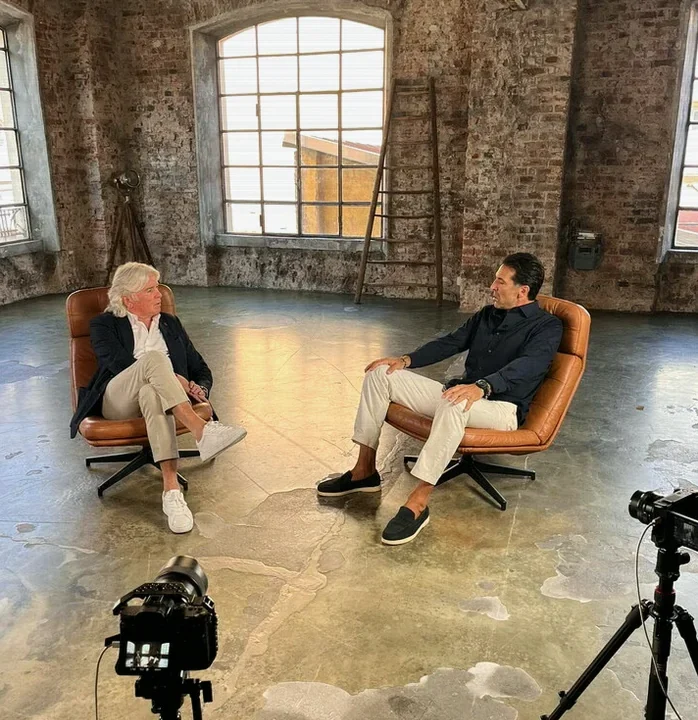
Como’s growth under Cesc Fabregas has earned recognition from Gianluigi Buffon, who sees in the Spanish coach the qualities of someone marked out for the highest level. Yet the former Italy goalkeeper has also explained why Gian Piero Gasperini’s teams have traditionally stirred him more as a spectator.
The coach and the club
Buffon believes Fabregas has a special presence, both in the way he presents himself and in the clarity with which he passes on his ideas. For him, Como have become evidence of that work: a side with a strong organisation and a coach’s identity visible throughout the team.
He described Como’s earlier progress as something close to a miracle, acknowledging the scale of what Fabregas had built. But having watched the club on two or three occasions, including a match against Roma, Buffon felt there was one feature that slowed the experience for him.
Como repeatedly returned possession to their goalkeeper, he said, with the goalkeeper having the ball at his feet for around 20 minutes of a 90-minute match. Buffon understood that this was central to the team’s approach, but felt it affected the rhythm of the contest.
“Fabregas has that light of a predestined coach,” Buffon said. “There is something special in the way he communicates his ideas and in what Como show on the pitch.”
The former Juventus and Italy captain added that he has noticed a change this season. In his view, Como are beginning to adjust the aspect of their football that previously made their matches less engaging for him, and the result is a side he now enjoys more.
Gasperini’s pull
Buffon’s personal preference has long leaned towards Gasperini’s football, particularly because of its intensity. He sees little pause in the matches of a Gasperini team: the game continues, players compete and the tempo remains alive.
That comparison also brought Buffon to Roma. Looking back at last season, he said that, if choosing a match to watch, he would have selected Roma during the second half of the campaign, when their approach and attitude had changed.
Roma had collected results in the earlier period, Buffon noted, but he did not consider them fully formed in Gasperini’s image at that stage. The later version, with a more recognisable identity, was the one he found more compelling.
For Buffon, then, the contrast is not a rejection of Como or Fabregas. It is an appreciation of a young coach whose work has already given the club structure and ambition, alongside a reminder that the most enduring football identities are also judged by what they make people feel across a Sunday afternoon.