Fabio Capello sees Milan’s European setback against Benfica not as an isolated bad night, but as the latest sign of a side still searching for its own reference points. The former Rossoneri coach described a team with problems at both ends of the pitch, too many changes in selection and an uncertain connection between Rúben Amorim’s ideas and the players available to him.
A Milan side without balance or rhythm
Capello’s assessment was severe: Milan’s defensive frailties have not begun with the Benfica defeat. In his view, the warning signs were already visible across the final ten matches of last season, and the new campaign has brought no meaningful correction.
- The midfield does not provide enough protection after possession is lost.
- There are repeated lapses during open play and at set pieces.
- In attack, too many players carry the ball within a slow build-up rather than moving it quickly.
- Milan have produced too few crosses and have repeatedly tried central through balls that break down and hand the initiative back to opponents.
- The centre-forward is then blamed despite receiving little usable service, particularly against organised teams such as Benfica.
Capello also identified a lack of movement beyond the ball. He said Milan’s players rarely attack space in behind, perhaps because they do not expect the pass to arrive. The circulation of possession, he suggested, has often been too harmless to disturb an opponent.
The former coach noted that the much-discussed effort to win the ball high up the pitch has only been properly evident in the opening league match against Torino. Since then, he has seen too little aggression and too little penetration.
The missing core of the team
For Capello, Milan’s principal issue is that Amorim has yet to settle on the small group around which a season can be built. He believes the squad contains players capable of deciding matches, but too many different line-ups have prevented a genuine team identity from developing.
“The key problem is that there is still no established Milan,” Capello said. “A coach needs 12 or 13 essential players as the foundation, and there have been too many alterations.”
That instability affects both understanding and conviction. Capello divided the problem evenly between a reluctance to attempt decisive actions and an unclear tactical plan.
- Milan’s wide players do not often seek a direct duel before delivering the ball.
- Runs into depth are scarce.
- Even when the ball reaches the flank, the penalty area is not occupied in sufficient numbers.
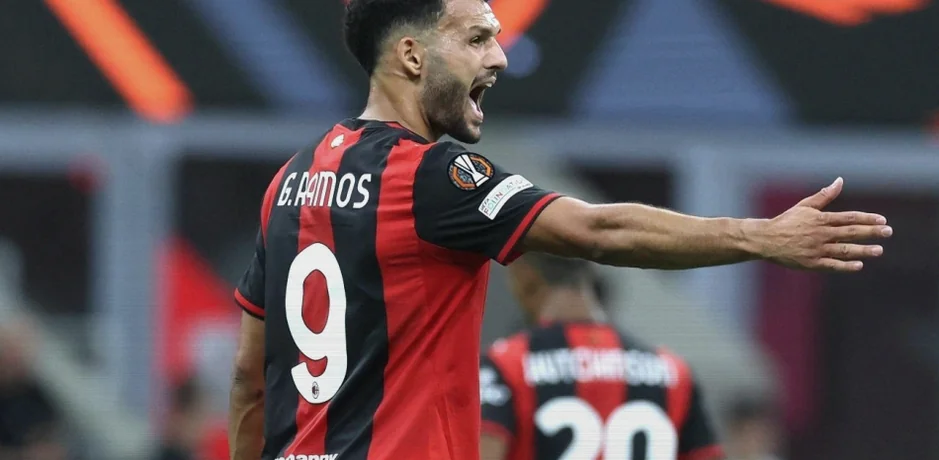
- Ramos is frequently left surrounded by defenders without enough support from team-mates.
“Players learn one another through playing together,” Capello argued. “If the line-up keeps changing, that understanding cannot grow.”
Modric, Amorim and the public message
Capello accepted that Luka Modric has not been at his best, but urged Milan to be cautious about sidelining a player of his calibre. With the team struggling to move the ball forward effectively, he considers Modric one of the few players able to give the passing game a vertical dimension.
He was less comfortable with Amorim’s public remark that the squad does not entirely suit his football. Capello said the comment could indicate that the club had not delivered every player the coach wanted, while also recognising that no manager can expect to be granted every request.
Yet he believes such matters should remain within the club. “It was not a good statement towards the board,” Capello said, while describing Amorim generally as polite and open in his communication.
Capello declined to call the Portuguese coach arrogant, saying it is too early for that judgement. He also offered a broader reminder for Amorim as he continues to find the right shape for Milan: a coach must work with the players he has and place them in the roles where they can perform best. There is no single system, he said, that fits every squad.
Patience rather than another reset
The starting eleven chosen against Benfica raised questions, and Capello admitted he did not fully understand it. Still, he began from the assumption that a coach selects the side he believes gives him the best chance of winning. His conclusion was that Amorim is still looking for that team.
That search should not, in Capello’s opinion, lead Milan towards another coaching change.
- Amorim should be allowed to continue his project.
- The case for backing him is not based on his contract, but on the need to let him complete the work of finding a solution.
- Milan should avoid repeating the cycle of constant changes.
- A sporting director can be important alongside the coach, but only if that figure brings genuine added value rather than merely occupying an office.
For now, Capello’s message is one of concern rather than final condemnation. Milan have quality within the squad, but the season will depend on whether Amorim can turn that collection of players into a recognisable side before the same doubts become the story of every Sunday afternoon.