AC Milan’s difficult start under Ruben Amorim has not, for now, altered Gerry Cardinale’s direction of travel. The RedBird owner has tied the club’s latest rebuild closely to the Portuguese coach, taking a far more direct role in sporting decisions and making clear that a period of poor results should not automatically bring another change of course.
Cardinale’s project rests on Amorim
Andoni Iraola had originally been the preferred candidate, but Cardinale eventually chose Amorim and presented the appointment as more than a conventional replacement on the bench. The coach was to be backed, shielded and involved in recruitment, rather than operating merely as the technical manager of an assembled squad.
That shift in philosophy won broad approval when it was announced. Yet within only two months, questions have already returned as results have failed to arrive consistently. Even so, Milan’s ownership does not appear to be considering an immediate reset, although there remains an obvious point beyond which results cannot be ignored.
The difference lies in how Cardinale now views his own responsibilities. Delegating key matters to the club’s management, as he had previously done, did not produce the outcomes he wanted. Following the complete clear-out the day after Milan’s match against Cagliari, he moved to place himself at the centre of the club’s major decisions.
- New executives were appointed to preserve the club’s day-to-day operation.
- Authority over the most consequential sporting choices was concentrated with Cardinale.
- The head coach became part of that direct ownership responsibility.
- Amorim was entrusted with a broader rebuilding brief than his recent predecessors.
For an owner who has personally selected the coach and the path ahead, a rapid reversal would mean disowning his own work. That is why Amorim’s position is connected not only to results on Sunday afternoons, but to the credibility of Cardinale’s revised Milan model.
A visible owner at Casa Milan and Milanello
Cardinale’s presence has changed noticeably. Once largely remote from Italy and officially absent from the country for more than a year, he has become a regular figure at Casa Milan and the training ground at Milanello.
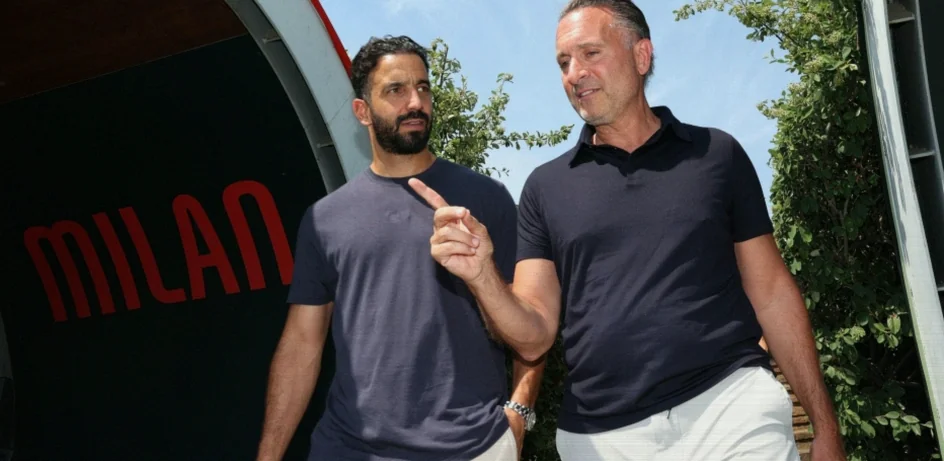
He stood beside Amorim at the coach’s presentation and again on the first working day in Carnago. The two have held operational meetings every week, while Cardinale has publicly indicated that the club would try to meet Amorim’s requirements in the market.
The message has been deliberate: Milan want their coach to work with protection from the club, rather than becoming isolated at the first difficult turn of the season. Amorim arrived precisely as Cardinale decided to manage Milan more directly, giving the former Sporting coach an unusually close relationship with the ownership.
Summer spending underlines the commitment
Milan’s squad required extensive work if the club were to challenge for the Scudetto and return immediately to the Champions League. Such an overhaul cannot realistically be completed in one transfer window, but the summer of 2026 nevertheless represented a significant financial commitment.
- Milan’s net expenditure exceeded €150 million.
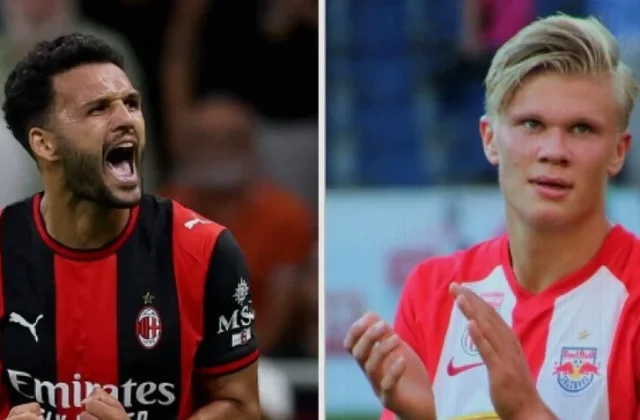
- Ramos, Gila and Moreira were the three major additions specifically requested by, or approved with, Amorim.
- Ramos became the most expensive signing in Milan’s history.
The scale of that investment was intended as a practical vote of confidence in the coach. It also reflected a wider attempt to change both Milan’s recruitment approach and the way the team is expected to play.
Amorim’s contract reinforces the same point. He signed for three years, with an option for a fourth, the longest commitment Cardinale has made to a Milan coach. Football contracts can quickly lose their force when circumstances change, but the length of this agreement suggests that the ownership expected difficult moments and intended to judge the project over a longer horizon.
Patience has become part of Milan’s test
Milan are therefore confronting a familiar pressure point in Italian football: the tension between an immediate demand for results and the time required to rebuild a side properly. The club’s leaders believe the squad needed too many changes to be transformed at once, while the new coach has been given responsibility across a wider sporting project.
How long that patience survives will depend on the team’s response. But after taking control of the crucial decisions himself, backing Amorim in the market and committing to a long contract, Cardinale has made this coach central to Milan’s next chapter. Replacing him quickly would not simply mean changing manager; it would mean reopening the entire project again.