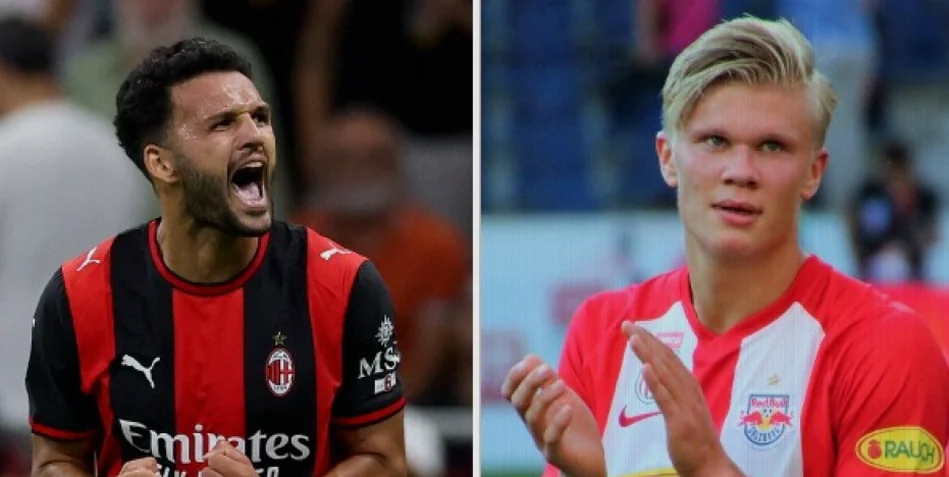
On the evening Salzburg face Milan, the contrast between the two clubs can be measured as much in their summer business as in their histories. Milan committed more than €70 million to Gonçalo Ramos alone, while Salzburg spread €35 million across 10 arrivals, each costing less than €10 million.
The Austrian club brought in Boma, Mazurek, Tabakovic, Matijasevic, Veratschnig, Schmid, Barry, Sulbaran, Ruznic and Fruchtl. It is a model shaped by recruitment volume, development and the expectation that some players will rise quickly through the structure.
Quick facts
- Milan paid more than €70 million for Gonçalo Ramos in the summer.
- Salzburg spent €35 million on 10 signings, with no individual fee above €10 million.
- Liefering, Salzburg’s second team, provides professional minutes in Austria’s second division.
- Andreas Ivanschitz highlighted Mazurek, Zawieschitzky, Zabransky, Aboubacar Camara and Liefering midfielder Johannes Moser.
- Moser finished as top scorer at last year’s Under-17 World Cup.
Salzburg have long operated in that range. Erling Haaland, Karim Adeyemi, Sadio Mané and Pavlovic all arrived for less than €10 million, while Dominik Szoboszlai joined for a minimal fee. The club’s advantage is not merely financial restraint, but an established route for young footballers.
Players who progress through Salzburg’s academy can move to Liefering and test themselves in Austria’s second tier before making the final step to the senior side. The level of the Austrian game is below Serie A, but the pathway gives Salzburg a controlled environment in which to prepare prospects for first-team football.
Andreas Ivanschitz knows the club from inside. The former Austria captain played for Salzburg during Giovanni Trapattoni’s spell in charge, and his son Ilia is now a Liefering midfielder, born in Athens and a regular in Austria’s youth international set-up.
Ivanschitz said Red Bull’s lasting contribution has been its work beyond the senior squad. “They invested in facilities for both the first team and the academy, which are central to the club,” he said. “They have had outstanding players, but it matters that they wanted to build something permanent. There has been criticism, yet they have done very good things for Austrian football.”
For Ivanschitz, the culture remains as relevant as the buildings. He described Salzburg as a place where people remain grounded and do not treat their position at a high level as something guaranteed.
The most immediate name in his selection is Polish midfielder Mazurek, whom he considers Salzburg’s strongest current player. Goalkeeper Zawieschitzky, born in 2007, has already become a key figure and has received a national-team call-up, while centre-back Zabransky and Aboubacar Camara have also impressed.
The fifth player is not yet fully established with the first team. Johannes Moser has recently returned from injury and has been seen less often, but his Under-17 World Cup record last year explains the attention around him.
Moser scored against Saudi Arabia, Mali, Tunisia, England, Japan and Italy, striking twice against both England and Italy. He did not score in the final against Portugal, but still ended the tournament as its leading scorer.
That is the chapter Salzburg bring into a meeting with Milan: not one expensive solution, but a production line built around patience, smaller fees and young players being asked to make the next step.