Gerry Cardinale’s unease around Milan has become part of the atmosphere surrounding a side still trying to turn a new coaching idea into a reliable Serie A identity. The Rossoneri have shown encouraging pieces of Ruben Amorim’s project, but the 1-1 draw with Sassuolo at the Mapei Stadium also exposed the hesitation that continues to interrupt their progress.
There was appreciation for individual moments in Reggio Emilia, including goals from Adrien Rabiot and Moreira, yet the wider judgement remains demanding. Milan are being asked to play with greater initiative, higher pressure and more command of possession, but they can still retreat into uncertainty when matches turn against them. The five minutes after Rabiot put them ahead against Sassuolo were particularly revealing: rather than building on the lead, Milan appeared vulnerable and cautious.
A team between two footballing eras
The change from Massimiliano Allegri to Amorim represents a sharp break in approach. Milan have moved away from a more reactive model towards a system intended to recover the ball high, retain it and force the rhythm of the game. That transition has not yet become automatic.
Too often, the side has looked slow in possession, short of movement and unable to produce sustained pressure. There is also a recognition that the present squad may require further market work before it fully matches the technical and athletic demands of Amorim’s preferred football.
The concern is not principally Milan’s total number of goals. They own the third-best attack in the division. The more serious issue is how they arrive in scoring positions. The penalty area is not populated consistently enough, while runs from attacking midfield and central midfield have been limited. Milan rank among Serie A’s weaker teams for touches and entries in the final 30 metres.
The question for the coaching staff is whether this is still a matter of detail and structure, or whether players must show more conviction in committing bodies forward. The answer may contain elements of both. Milan’s ideas are visible, but their match-day execution remains incomplete.
Gonçalo is not the only issue in attack
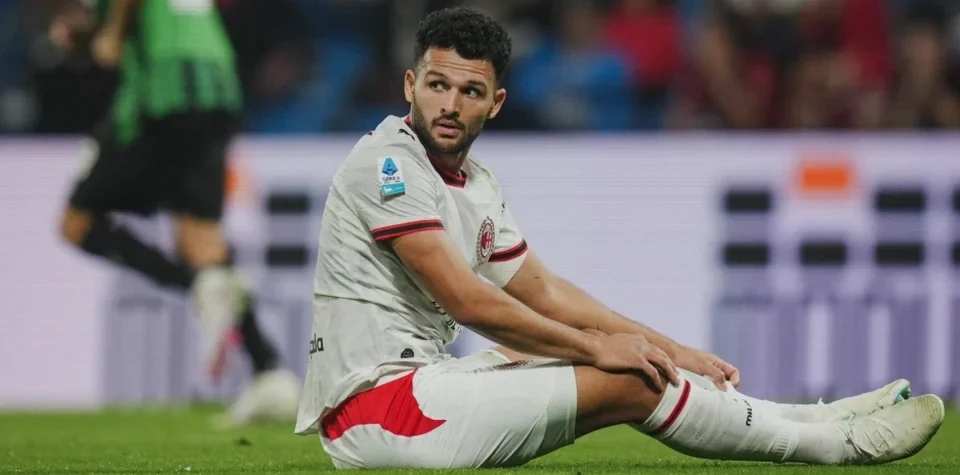
Gonçalo has contributed only one goal in 625 minutes, a return that naturally places his performances under scrutiny. His goal against Venezia came after several missed opportunities, and he could have made better use of a headed chance against Sassuolo.
However, Milan’s centre-forward cannot carry the entire responsibility for such a modest output. The team’s trouble in supplying him, and in attacking the area with enough numbers, has been a greater factor. Until Milan create more frequent and better-supported situations around the opposition box, the striker’s figures will continue to reflect a collective problem.
Rabiot leads the decisive contributions
Rabiot has not always reached the all-round level he displayed last season, particularly in terms of the fluency of his play. Yet his influence is difficult to dispute. With three goals and two assists in seven appearances, he has been Milan’s most decisive player so far.
His role has also shifted between attacking midfield and central midfield, a dual use that does not always help continuity. There were moments of indecision in Reggio Emilia, but Milan cannot readily do without him. His average rating of 6.57 makes him the club’s second-best performer, behind Christian Pulisic.
Pulisic has found stronger form in recent weeks after a quiet start caused by the effects of his long summer lay-off. He was outstanding against Lecce, although less influential at the Mapei Stadium. Even so, he remains one of Milan’s essential players behind the forward line.
Moreira’s promise and the demand for precision
Moreira is viewed as a major resource for both the present side and Milan’s future. His goal against Sassuolo was welcomed, and his capacity to attack space makes him one of the squad’s sharpest options against organised defences.
There is nevertheless a demand for greater accuracy. Against Sassuolo, the Frenchman lost possession 12 times and misplaced nine passes. His work without the ball also needs refinement, while his attempts to run in behind can occasionally be rushed. The talent is evident, but the next stage is to make his contribution more controlled and dependable.
Set pieces remain an unresolved detail
Milan’s unfinished work extends to dead-ball situations. They have conceded three league goals from set pieces, but their own corners have rarely troubled opponents. Deliveries have often been too gentle, too predictable or struck at a height that allows defenders to clear without difficulty.
Luka Modric may need to adjust his delivery from those situations. Milan have appeared to rehearse specific routines during the week, only for them not to materialise when the match begins. In a championship where small margins shape Sunday afternoons, that gap between preparation and performance is becoming increasingly important.