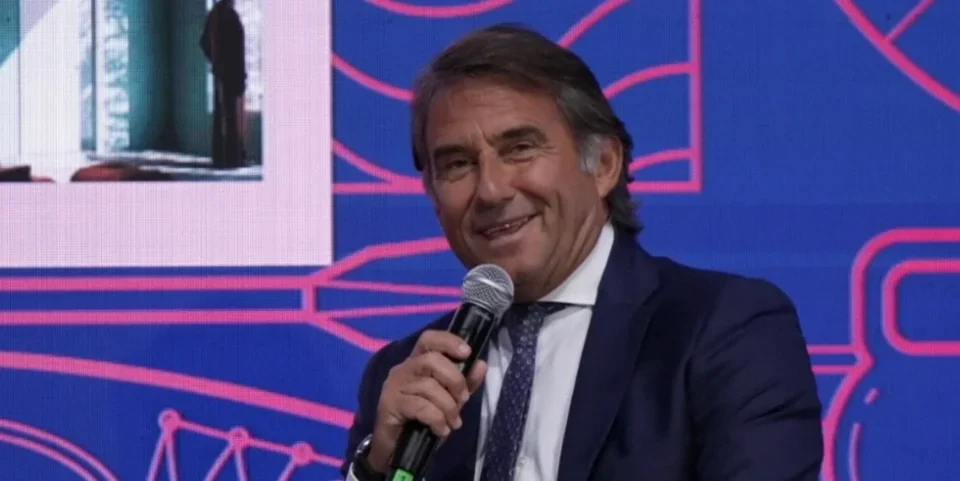
Giovanni Carnevali’s first days at Juventus have begun with the pull of two clubs: the scale of Turin in front of him, and the 13 years at Sassuolo still close behind. Speaking at the Festival dello Sport, the new Juventus chief executive and general manager said his initial reaction to the move was joy, but that his thoughts immediately returned to the club he was leaving.
The coach and the club
Carnevali explained that Sassuolo had already settled on Alberto Aquilani as the coach for their new start, with the agreement completed before Juventus entered the picture. Aquilani learned of Carnevali’s departure only after the executive had gone to Turin and asked why he had not been told sooner. Carnevali replied that he had not known himself.
- Sassuolo decided to begin again with Aquilani and completed the arrangement.
- Carnevali’s Juventus move then materialised unexpectedly.
- After arriving in Turin, he received Aquilani’s surprised call.
Leaving Sassuolo was an emotional moment, Carnevali said. He described the club as a family built under the Squinzi ownership and said that work there had made his Juventus opportunity possible. He said he cried when the time came to depart.
At Juventus, his relationship with John Elkann has quickly become central. Carnevali said the two had spoken again shortly before his appearance and had been in frequent contact during his first days. He praised Elkann’s strength and pointed to the owner’s further investment in the club, made the previous day, as a clear demonstration of belief in Juventus. Carnevali said everyone at the club must respond by giving more.
When asked to describe Juventus’ ambition in one word, his answer was simple: “Win.”
A rebuild with limits
Carnevali did not offer a verdict on every problem Juventus have faced in recent years, stressing that he has only just arrived and prefers to work from the present towards the future. Errors can happen, he said, but his task is to understand what is already in place and identify the areas that need improvement.
The club had wanted to change as many players as possible, he acknowledged, while accepting that the work may not yet be complete. His experience, he believes, can help Juventus shorten the time required to make decisions and improve the structure around the team.
One subject is the Italian core of the squad. Carnevali said Juventus do not currently have a settled group of Italian players, while others have been unavailable through injury. The intention is to add more Italian identity, particularly through younger players, but he noted that high-level domestic talent is difficult to obtain in an international market shaped by regulations that can favour overseas recruitment.
Foreign players remain part of the plan, but Carnevali said Juventus must avoid bringing in players who do not meet the required standard. The priority is not nationality alone, but quality and a squad capable of growing together.
Competitive first, winners after
Carnevali considers Juventus already competitive, although he said the scale of recent change means patience is required before the side can become consistently ready to win. There is, he argued, a meaningful distance between being competitive and lifting trophies.
He would like success immediately, but said the club understands both its starting point and the work still underway. Juventus must aim for something exceptional through collective sacrifice, while building a stable base rather than changing direction every year.
The question of fourth place was treated in financial as well as sporting terms. Carnevali said qualification for the Champions League has become heavily tied to business: reaching the competition has major value, while missing it can have severe consequences. Even so, he insisted Juventus cannot be satisfied merely with securing a top-four finish.
“We have to win,” he said, while adding that the path matters: work, a solid foundation and continuity are needed before a result can be sustained.
The market and the next summer
Carnevali also outlined the economic realism behind Juventus’ recruitment. Discussing a recent signing without naming the player, he said the club had paid a fair price and had invested in potential. Juventus must increasingly pursue players who can develop in value, rather than always attempting to buy established elite names for the highest fees.
He said the player in question could eventually be worth €70 million or €80 million, and revealed that Chelsea had made a higher offer. Juventus were close to losing him because they cannot always compete with the purchasing power available elsewhere in the Champions League market. Carnevali compared the risk to Inter missing out on Palestra.
As for a possible major sale in July, Carnevali kept the position open. Juventus want to preserve a competitive squad but must respect their financial limits. He noted that several players are currently out on loan with purchase options held by their temporary clubs, and that those deals could provide enough room for the club’s needs.
For now, the immediate focus is on results. The larger project, though, is clear: make Juventus stable, improve the squad with discipline and ensure that the demand to win is supported by the work required to make it possible.