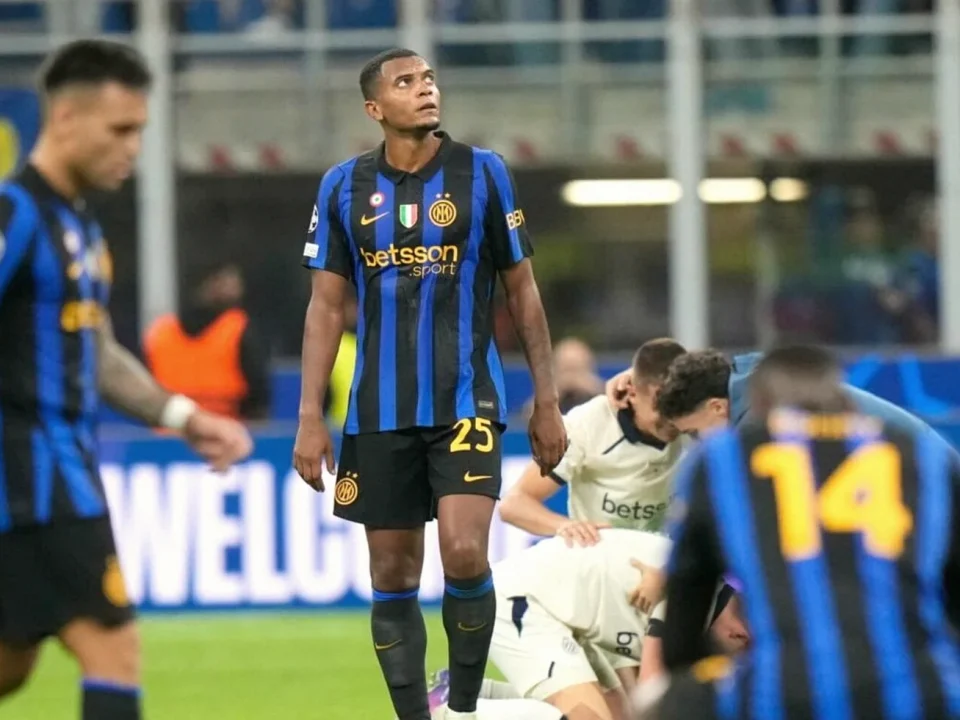
Inter’s domestic authority has not travelled cleanly into Europe, and Cristian Chivu has acknowledged that the side may need to adjust after the Champions League defeat to Club Brugge. The Romanian coach’s message was clear: the principles remain, but the demands of continental football are exposing areas that Serie A has often allowed Inter to manage.
Chivu sees a different Champions League test
After the Brugge match, Chivu said Inter might have to alter certain elements of what they intend to do this season. He also warned that a slow tempo brings no reward in the Champions League.
The contrast with Serie A is central to the issue. Inter have generally been able to impose their quality in Italy, with Lautaro Martinez and his team-mates carrying enough individual and collective threat to turn difficult spells in their favour. In Europe, however, opponents offer less time, punish errors more readily and make it harder for Inter to recover after setbacks.
- Inter have conceded 14 goals in eight official matches.
- Eight of those goals came across six Serie A rounds.
- The remaining six were allowed in two Champions League fixtures.
- Chivu’s team have lost both of their European matches so far.
The numbers underline a defence that has not always looked secure, even in the league. The difference is that Serie A matches have frequently given Inter enough room to respond through their attacking resources. That margin has been absent on Champions League nights.
Balance, distances and the cost of open transitions
Chivu had already insisted before facing Brugge that Inter should approach every opponent with the same mentality. If the team is forced back, it should be because of the rival’s strength rather than a deliberate decision to surrender territory.
There is no suggestion that Inter’s players lack commitment or refuse to run. The concern is instead the level and duration of their intensity. In domestic competition, a few forceful passages can be enough to separate Inter from most opponents. In Europe, the standard requires that urgency for almost the entire match.
That has consequences for the distances between the lines and for the team’s protection when attacks break down. Inter can be caught by counters when too many players move forward, a particular risk for a squad not blessed with exceptional recovery pace. With less time to make decisions, mistakes have also become more frequent.
Shakhtar Donetsk brings an early pressure point
Inter return to Champions League action next Wednesday when Shakhtar Donetsk visit San Siro. After two defeats from two, another error would deepen the problem: direct qualification for the round of 16 is already significantly more difficult, while even a place in the play-offs cannot be treated as secure.
Chivu is not expected to abandon his broad approach. A high defensive line, immediate attempts to win the ball back and direct forward play should remain part of Inter’s identity. The likely changes concern the safeguards around those ideas rather than a complete tactical reversal.
- Inter are expected to retain their proactive attitude.
- Preventive cover behind attacks could receive greater attention.
- The side must become more efficient with scoring opportunities in Europe.
- Greater defensive balance is required if Inter are to avoid another damaging transition-heavy match.
The next European evening will therefore test more than Inter’s response to a poor start. It will show whether Chivu can preserve the authority that has served his side in Serie A while giving it the control and caution required beyond Italy.