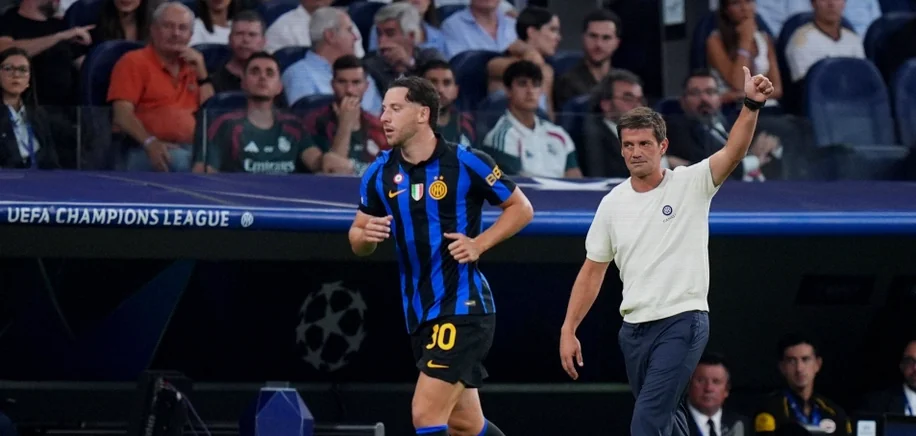
Inter return from the international break at the top of Serie A with the familiar weight of expectation, but Cristian Chivu’s task is broader than simply protecting an early lead. The Nerazzurri have already met Napoli and Roma at the Olimpico, still have major signings to integrate, and retain clear room to improve despite being widely viewed as the championship’s leading side.
After five rounds, the league’s ambitions are beginning to take shape. Sassuolo chief executive Giovanni Carnevali has spoken of a Champions League place, Gian Piero Gasperini has not avoided talk of the Scudetto, and Como coach Cesc Fabregas has framed his own project around the continued development of a young squad.
For Inter, the question is more delicate. A Treble cannot reasonably be presented as a formal target, yet it remains an ambition compatible with the scale of the club and the quality available to Chivu. The memory of two seasons ago offers a warning as much as encouragement: Inter remained involved on every front until the final month, only to finish without a trophy after mistakes, setbacks and costly moments.
Chivu’s management gives Inter another dimension
One of the lessons from that earlier campaign concerned squad use. Some players were asked to carry too much, with fatigue becoming a factor when the decisive fixtures arrived. Chivu has instead sought to keep his group connected, respecting the established hierarchy without allowing a hard division between regular starters and those on the margins.
His approach has drawn comparisons with Jose Mourinho, the coach who helped shape his outlook. Chivu has treated the second line as genuine members of the first-team plan rather than occasional cover, an approach that has helped restore Piotr Zielinski’s standing.
The midfielder had previously been pushed away from the centre of the project despite his pedigree. He has since returned as a significant figure, contributing regularly and producing decisive goals. For Inter, leaving a player of his quality outside the rhythm of the side would be a loss rather than a luxury.
Chivu’s handling of individuals has also been evident in goal. After Martinez made three serious errors, the pressure to remove him was considerable. Instead, the coach publicly protected the player and worked on the psychological side of the situation rather than allowing criticism to define him.
Martinez was subsequently called up by world champions Spain, a development that may have looked far less likely had he been immediately relegated to the bench. It was another example of a coach attempting to build conviction within his squad, much as Mourinho did by placing his players behind a protective wall.
Patience with young players
Chivu’s influence can also be traced to Pio Esposito. Around 15 months ago, he resisted the prospect of sending the striker out on loan, even though an established forward might have offered a more immediate solution. Esposito is now being praised as a centre-forward for Italy’s revived national team, underlining the value of that earlier decision.
There are still football issues for Inter to address when domestic and European competition resume. Hakan Calhanoglu must rediscover his best level, Federico Dimarco is still seeking his highest standard, and the team need to stop relying on the jolt of conceding before finding their full intensity.
Chivu’s Inter are therefore not the finished article. They may be operating at 60, 70 or perhaps 75 per cent of their potential, but that in itself is the significant point. The league leaders have already negotiated demanding tests, while their new faces have yet to show the full extent of their contribution.
The Champions League contains opponents of even greater strength, and Inter will need more than early authority in Serie A to match them. But as the season resumes, their ambition need not be reduced to a single competition. A Treble may not be an official objective, yet it remains a possibility that reflects the standards Inter believe they can reach.