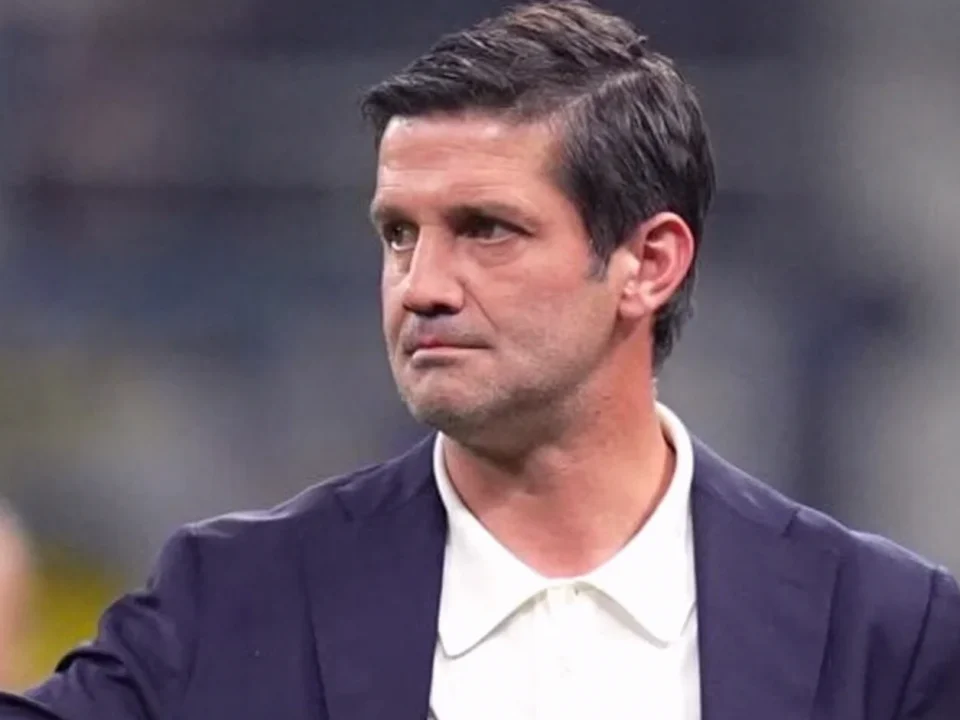
Cristian Chivu’s first public gesture with Futnet is also a statement of how he sees responsibility at Inter: the club’s present cannot be separated from the pathways offered to the players who may shape its future. The Inter coach has funded 200 free assessments for young footballers through the platform, placing himself as the first member of its Honor Wall.
The decision
Chivu said he understands both the scale of his role and the obligation that comes with it. His work at Inter, he explained, is directed towards leaving something lasting in the history of a club he described as extraordinary, while keeping his focus on immediate targets rather than distant promises.
“I know where I am and what this responsibility means,” Chivu said. “Above all, I have a responsibility towards my players. I want to build something that lasts and leaves something important behind. I work through small objectives in the short term, because step by step you can reach the goals that allow you to dream bigger.”
The same measured approach governs his view of the Champions League. Chivu called winning Europe’s leading competition the dream of every player, but stressed that no club can buy certainty through money, planning or reputation alone. The answer, in his view, is built across an entire season.
He pointed to the different emotional atmosphere surrounding Champions League nights when compared with the weekly sequence of a 38-match domestic campaign. Even group-stage fixtures, he said, carry a particular energy for players and teams, similar to representing the senior national side. League football can become routine; European competition and international duty bring an additional stimulus.
Chivu believes the true contenders only become clear around March. A favourite may be obvious on paper, he said, but predicting who will still be standing at the end is much harder. A Champions League triumph comes from a collection of factors rather than one guaranteed formula.
Futnet and the search for talent
Futnet is designed to bring young players closer to professional assessment. The platform allows users to upload their own videos and receive independent evaluations, technical reports and scientific validation. From November, clubs will also be able to access the platform directly.
It is open to male and female players from the age of eight, with no upper age limit. Assessments can lead to the Futnet Player Evaluation certificate, while experts involved in the project include Walter Sabatini, Christian Brocchi, Walter Zenga, Giorgio Perinetti and Dario Marcolin.
For Chivu, technology can help correct one of Italian football’s practical limitations: talented young players in smaller towns or outside major academy systems can go unnoticed. He described the service as useful for players, parents and clubs, particularly because experienced professionals can offer objective feedback on strengths, limits and possible areas of improvement.
“There are many young people who want to emerge and pursue that dream,” he said. “Some do not have the chance to be seen because they are not in big cities or at big clubs. This gives them the chance to be understood and evaluated by people with experience.”
Chivu argued that clubs have a duty to use tools that widen their scouting reach. No organisation can watch every pitch in Italy, he said, whether the football is amateur or professional. His contribution of 200 free evaluations is intended to help players whose families might otherwise be unable to pay for the process.
He said the opportunity could do more than produce a report. Being assessed, he suggested, can strengthen a young player’s self-belief, give shape to ambition and encourage the courage required to pursue a difficult route.
Pio Esposito’s route forward
Chivu used Pio Esposito as an example of a young player prepared to make an uncomfortable choice for his development. Esposito had scored around 17 or 18 goals in his first Primavera season and could have stayed to chase 30 the following year. Instead, he left for Serie B, moving city and starting again in a more demanding environment.
“He had the courage to leave Primavera,” Chivu said. “He could have taken the easier road, but he understood how much work was needed elsewhere.”
Chivu recalled regular conversations with Esposito during that period, when the forward spoke about difficulties, preparation and the challenge of facing defenders at a higher level than those found in youth football. When he returned to the first-team environment, Chivu found a more mature player, still driven by the same hunger to improve.
The Inter coach also reflected on leadership. A captain’s armband can raise confidence and sharpen a player’s sense of responsibility, he said, although it can also bring out an unhelpful ego in those unable to understand its meaning. In Esposito’s case, Chivu saw the right response: sensitivity, maturity and an ability to carry the responsibility well.
Italy’s changing generations
Chivu does not regard the discussion around Italian talent as a crisis. Talent, he said, continues to emerge, while football everywhere moves through generational cycles. The task is not to blame youth coaches or complain that young players no longer exist, but to identify where the football system itself can improve.
He believes responsibility belongs primarily to those with experience. Older generations should not compare today’s players with their own youth, because the environment has changed. Chivu recalled harder coaching methods in his own early years, when stern treatment could provoke a player to respond with determination. He does not believe that approach automatically works now.
“Today is different,” he said. “You have to find the right key.”
A captain’s instinct
Chivu’s idea of responsibility reaches back to Inter’s treble-winning night in Madrid on 22 May 2010. While others celebrated the achievement, he left because he was due to join the Romania national team the following day.
The national coach had offered him a few days off, but Chivu chose to travel with the rest of the squad because he was captain. Even though the upcoming matches were friendlies, he felt an obligation to his country and to the players who regarded him as a leader.
That choice, made immediately after one of Inter’s greatest nights, remains consistent with the message Chivu now gives as a coach: ambition has value only when it is matched by work, accountability and attention to the next responsibility.