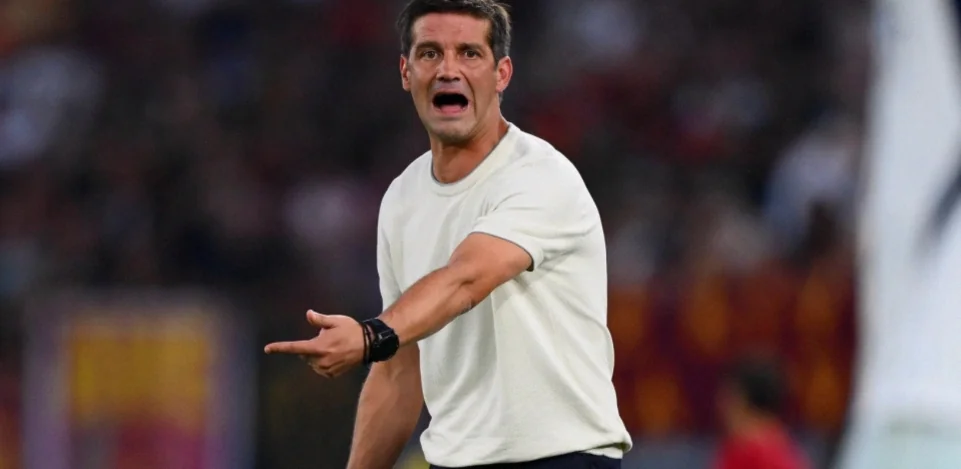
Cristian Chivu is approaching Inter’s next European campaign with the patience that has already shaped his first season in charge. After winning the Scudetto in his debut year on the Nerazzurri bench, the Romanian coach sees the Champions League as the remaining summit in a cycle that has already brought the club major success.
The coach and the club
Chivu’s message is built around steady progress rather than grand declarations. He believes major ambitions are reached through smaller stages, and that approach helped carry Inter to the league title. It is also the principle he wants to take into the Champions League, where Inter hope to go further than they did last season.
“Winning the Champions League is wonderful. It is everyone’s dream,” Chivu said. Yet he rejected the idea that a club can simply purchase a route to Europe’s biggest trophy. In his view, neither financial strength nor a single tactical or sporting idea can guarantee success; a winning run comes from a combination of factors.
For Chivu, the decisive assessment comes later in the season. He pointed to March as the period when teams can properly understand their condition and their prospects. Pre-tournament favourites may be easy to identify on paper, he said, but predicting who will still be standing at the end is far more difficult.
The Inter coach is pursuing more than one successful campaign. “I want to build and leave something important in the history of this wonderful club,” he said, describing the longer-term work he wants to complete at San Siro.
Chivu knows the competition from his own Inter playing days. He was part of the side that won the Champions League in 2009-10, completing the Treble, although he did not stay for the celebrations. Despite being granted extra time off by his national-team coach, he chose to travel back with Romania because he was captain and felt obliged to leave with the rest of the squad. He now hopes to celebrate another European triumph in a different role.
Pio Esposito and a pathway through Inter
One of the clearest examples of Chivu’s work at Inter is his long relationship with Pio Esposito. The coach first worked with the forward in Inter’s Under-14 side, later gave him his Primavera debut and entrusted him with the captain’s armband.
Chivu recalled that Esposito responded with maturity and sensitivity to that responsibility. Their connection continued into the first team, where the coach has backed the striker strongly since they reunited last summer.
Esposito scored 10 goals in 2025-26 and has added two more in 2026-27. Chivu believes the forward has become better prepared and more mature while retaining the hunger to improve.
The coach also praised a difficult choice made by the player during his development. Esposito could have remained at Primavera level for another year, potentially scoring heavily and strengthening his confidence in a familiar environment. Instead, he left that comfort zone to understand the work required at a higher level.
Chivu described the forward’s progress as a blend of opportunity and personal merit: Inter opened doors for him, but the player had the courage to take the less convenient route.
Responsibility for young talent
Having worked extensively in youth football, Chivu does not accept that Italian football is facing an irreversible talent crisis. He sees the issue as one of changing cycles rather than a dramatic collapse in the supply of young players.
He was equally firm that first-team coaches and senior clubs must accept responsibility for creating opportunities. Blaming academy staff or claiming that young players no longer exist, he argued, merely avoids the real question: what those above them have done wrong.
“The responsibility is ours, not of those coming through,” Chivu said. His view is that clubs must find better methods and clearer solutions rather than pointing down the pyramid.
He also highlighted the value of professional assessment tools for identifying emerging players. The FutNet platform, he said, offers useful feedback and objective evaluations from people familiar with youth development.
Chivu intends to contribute to that process himself. He sees it as a chance to give something back to football and to help players or families who may not have the same resources available to them.
At Inter, then, Chivu’s season-long task runs in two directions: chasing the European prize that still eludes the current cycle, and ensuring that the next generation has a genuine route into the club’s future.